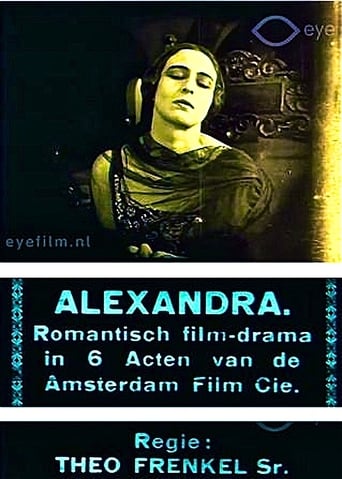
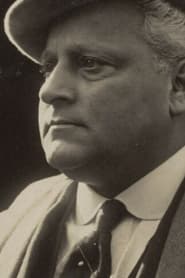
Theo Frenkel Sr.
Actor & Director
- Active
- 1922-1922
Films 1
About Theo Frenkel Sr.
Theo Frenkel Sr. was a Dutch film actor, director, screenwriter, and producer associated with the earliest decades of European cinema, active during the silent era when national film industries were still taking shape. He is credited in surviving film records as both director and actor on Alexandra (1922), which places him among the practitioners who often wore multiple creative hats in the formative years of film production. Frenkel worked in a period when filmmaking was frequently experimental, and many artists moved fluidly between acting, directing, writing, and producing to bring projects to completion. Although detailed biographical documentation is limited in readily available English-language sources, his credit in Alexandra indicates participation in the post-World War I European silent-film landscape. His surviving filmography suggests a career rooted in Dutch and possibly broader continental cinema rather than Hollywood stardom. Because much of his career predates the era of standardized film preservation and international publicity, many personal details, including precise birth and death dates, remain difficult to verify from accessible sources. He is best remembered today by film historians and database researchers as part of the generation of early filmmakers whose work helped establish narrative filmmaking in the Netherlands and surrounding European markets.
More about Theo Frenkel Sr.
On screen
No detailed contemporary critical descriptions of his acting style are readily available in accessible sources. Based on the conventions of silent-era European performance, his work would have relied on expressive facial movement, body language, and clear visual storytelling rather than spoken dialogue. As with many early actors, performance likely balanced theatrical projection with the increasingly naturalistic screen acting that developed in the 1920s. Because surviving documentation is sparse, any more specific stylistic characterization would be speculative.
Behind the camera
No fully documented critical profile of his directing style is readily available in accessible sources. Given the period in which he worked, his direction likely reflected silent-era European methods: visual clarity, economical staging, strong tableau composition, and an emphasis on narrative legibility through gesture and image. Directors of the era often had to work flexibly within modest budgets and with limited technical resources, which encouraged practical, efficient filmmaking. His credit on Alexandra suggests he was part of the generation shaping early Dutch cinematic grammar, but specific stylistic trademarks are not well preserved in widely accessible sources.
In film history
Theo Frenkel Sr.'s cultural importance lies less in broad popular fame than in his place within the foundational years of Dutch and European silent cinema. Filmmakers like Frenkel helped establish the professional roles, production practices, and storytelling conventions that made national cinemas viable before the sound era transformed the industry. His dual credit as actor and director reflects a formative period in which creative specialization was less rigid and filmmakers often carried multiple responsibilities on a single project. For historians, his name is valuable because it connects surviving film records to the otherwise fragmented history of early Dutch screen production. Even where individual films are obscure or lost, credits such as his help reconstruct the networks of labor and artistry behind silent-era filmmaking.
Later reputation
Frenkel's legacy is primarily archival and historical: he remains a traceable figure in the study of early European cinema, particularly because his work is tied to a surviving 1922 credit. In film history, such names matter because they represent the broader body of artists who built the medium before global stardom and modern film preservation became established. His presence in credits as both director and actor demonstrates the collaborative, multifunctional nature of early filmmaking careers. While he may not have achieved the celebrity of later directors or stars, his work contributes to the continuity of Dutch film history and offers researchers evidence of active creative production in the silent era. For database users and scholars, he stands as part of the essential historical record of cinema's development.
Influence
Any direct influence on later filmmakers is difficult to document without more extensive archival evidence. However, as an early Dutch film practitioner, he participated in the cinematic environment that later generations of Dutch artists inherited and expanded. The practical, multi-role approach common to his era influenced the way early cinema professionals understood filmmaking as a holistic craft. His surviving credit also helps contemporary historians trace the lineage of national film culture, which in turn informs broader scholarship on European silent cinema.
Off screen
Reliable information about Theo Frenkel Sr.'s personal life is scarce in commonly accessible English-language film references. Details such as marriage, family background, residence, and education are not consistently documented in public film-history summaries. Like many early European filmmakers, he appears in the historical record primarily through production credits rather than through extensive biographical publicity. Until archival Dutch sources or specialized cinema histories are consulted, his private life must remain largely unconfirmed.
Education
Not documented in readily available sources.
Credits
- Credited as both director and actor on the silent film Alexandra (1922)
- Represents the multi-hyphenate filmmaking tradition of early European cinema
- Associated with Dutch silent-era production at a time when the national industry was still consolidating
- Documented in film records as Theo Frenkel Sr., distinguishing him from similarly named figures
- His surviving credit helps preserve knowledge of early 20th-century Dutch screen culture
Roles
- Role in Alexandra (1922)
Films
- Alexandra (1922)
Notes
- He is credited with both directing and acting in Alexandra (1922).
- His surviving record places him firmly in the silent-film era.
- The suffix Sr. suggests there was likely a younger Theo Frenkel as well, or at least a need to distinguish him from another person with the same name.
- Much of his historical footprint survives through film databases rather than widely circulated biographies.
- He is associated with Dutch cinema, an area of film history that is less internationally documented than Hollywood of the same period.
- Early filmmakers like Frenkel often worked across multiple creative roles, which is reflected in his dual credit.
- His career documentation illustrates the uneven preservation of early European film history.
- Alexandra (1922) is the key title associated with his name in accessible records.
Questions
Who was Theo Frenkel Sr.?
Theo Frenkel Sr. was a Dutch silent-era film figure credited as both an actor and director. He is best known in surviving records for his work on Alexandra (1922), and he belongs to the generation of early European filmmakers who helped shape national cinema before sound films became dominant.
What films is Theo Frenkel Sr. best known for?
The key surviving title associated with him is Alexandra (1922), where he is credited as both director and actor. Additional titles may exist in archival filmographies, but this is the most clearly documented work in readily accessible sources.
When was Theo Frenkel Sr. born and when did he die?
His exact birth and death dates are not readily confirmed in accessible sources, so they should be treated as unknown unless verified through archival records. He is documented as active in 1922, placing him in the silent-era period of Dutch cinema.
What awards did Theo Frenkel Sr. win?
No widely documented awards or formal honors are readily available for Theo Frenkel Sr. in accessible film references. This is common for many early silent-era European filmmakers, whose careers predate the modern awards culture and whose records are often incomplete.
What was Theo Frenkel Sr.'s acting and directing style?
Specific critical descriptions of his style are not well preserved in accessible sources. As a silent-era filmmaker, his work would likely have emphasized visual storytelling, expressive gesture, and clear staging, with direction shaped by the practical constraints of early film production.
What is Theo Frenkel Sr.'s legacy in film history?
His legacy is primarily historical and archival, as part of the generation that helped establish Dutch silent cinema. Even with limited surviving biographical detail, his credits contribute to the reconstruction of early European film culture and the development of filmmaking roles in the 1920s.
Was Theo Frenkel Sr. a major Hollywood star?
No, there is no evidence that Theo Frenkel Sr. was a Hollywood star. He appears to have been an early Dutch cinema professional whose documented work is tied to European silent-film production rather than the American studio system.