Also available on: Archive.org
Alexandra

Alexandra

1922 Netherlands
Illness and recoveryUnhappy marriageRomantic temptationClass difference and wealthFemale vulnerability and agency

Plot

Alexandra is a melodramatic romance centered on a woman trapped in an unhappy marriage and weakened by tuberculosis, who goes to a mountain resort in hopes that the fresh air and rest will restore her health. There she encounters Edgar Buchanan, a wealthy multimillionaire whose presence introduces emotional and social possibilities that contrast sharply with the cold stability of her existing life. The story unfolds as Alexandra is pulled between duty, desire, illness, and the promise of a different future, with the resort setting intensifying the sense of isolation and moral tension. As in many early 1920s dramas, the emotional conflict is expressed through gesture, visual composition, and intertitles rather than dialogue, emphasizing the heroine’s vulnerability and the period’s fascination with illness, class, and romantic rescue.

About the Production

Release Date 1922

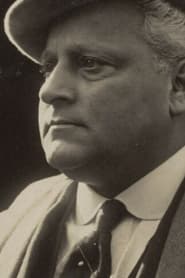
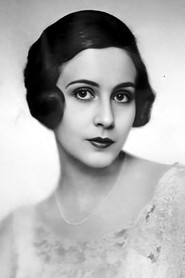
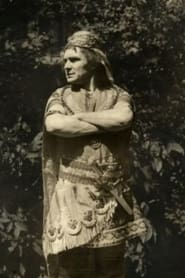
This film was made in the Dutch silent era and directed by Theo Frenkel Sr., a prolific filmmaker active across several European markets. Surviving production documentation is scarce, and many standard industrial details such as budget, shoot schedule, and location photography are not reliably documented in readily accessible sources. Like many early 1920s continental melodramas, it was likely staged with an emphasis on studio-controlled interiors and expressive performance styles suited to silent cinema. Because the film is obscure and from an era when many Dutch productions were not widely distributed internationally, detailed production-company crediting and box-office information are difficult to verify. The known cast includes Margit Barnay, Paul de Groot, and Coen Hissink, indicating a professional production with established performers of the period.

Historical Background

Alexandra was made in 1922, a period when European cinema was still adjusting to the disruptions of World War I and the reshaping of film industries across the continent. In the Netherlands, the silent-film industry was comparatively small, and productions often had limited surviving documentation, making many titles of this era difficult to study outside archive records. The early 1920s also saw a strong international appetite for melodrama, especially stories involving illness, morality, class difference, and female suffering, all of which fit Alexandra’s premise. Tuberculosis was still a deeply familiar and socially resonant illness in everyday life, and filmmakers frequently used it as both a realistic medical concern and a dramatic metaphor for vulnerability and emotional intensity. The film therefore reflects both the tastes of silent-era audiences and the social anxieties of a period shaped by postwar uncertainty, changing gender roles, and modern wealth inequality.

Why This Film Matters

Although Alexandra is not widely known today, it is culturally significant as part of the fragile and under-documented history of Dutch silent cinema. Films like this help illustrate the breadth of melodramatic storytelling in the early 1920s and show how national cinemas outside the dominant American, German, and French industries developed their own versions of romantic and social drama. Its focus on a woman navigating illness, marriage, and desire places it within an important lineage of early screen narratives centered on female agency and emotional constraint. For archivists and film historians, titles such as Alexandra are valuable because they represent the kind of work that shaped local film culture even when it did not achieve broad international circulation. If surviving materials are limited, the film’s significance lies not only in its narrative content but also in what it reveals about lost or partially lost European cinema of the silent era.

Making Of

Very little verified behind-the-scenes information survives for Alexandra, which is typical of many Dutch silent productions from the early 1920s. The film appears to have been mounted as a melodrama built around a strong central female role for Margit Barnay, with the narrative constructed to showcase emotional deterioration, recovery hopes, and a morally fraught romantic encounter. Theo Frenkel Sr. was an experienced director with a broad international background, so the production likely benefited from his familiarity with the conventions of silent storytelling and performance direction. The scarcity of surviving trade coverage and production records means that casting rationale, shooting difficulties, and set design choices are not well documented, but the film clearly belongs to the period’s studio-driven style of intimate, psychologically inflected drama.

Visual Style

Specific cinematographer credit and technical documentation are not reliably confirmed in accessible sources, but the film would have been shot in the expressive silent-era visual style of the early 1920s. Melodramas of this period typically relied on composed interiors, carefully staged blocking, strong contrast in acting posture, and landscape or resort imagery to communicate mood and social status. The mountain-resort setting would have provided a visually symbolic backdrop associated with air, altitude, recuperation, and emotional distance. As a silent film, its cinematography would have needed to carry narrative information through gesture, spatial relationships, and framing, likely favoring clear visual storytelling over elaborate camera movement. The film probably used the conventional visual grammar of the time rather than experimentally innovative techniques.

Innovations

No major technical innovations are specifically documented for this film. Its significance is more historical than technological, representing standard but important silent-era craftsmanship in Dutch cinema. The film’s chief technical demands would have been the clear visualization of emotional conflict, the handling of illness and romantic tension without dialogue, and the use of setting to reinforce mood. If surviving prints exist, their value may lie in preservation rather than innovation, especially given the scarcity of Dutch silent films from this period. The work likely exemplifies competent studio-era production rather than a landmark in film technology.

Music

As a 1922 silent film, Alexandra would not have had a synchronized recorded soundtrack. Like most silent-era releases, it would have been shown with live musical accompaniment in theaters, varying according to venue, pianist, organist, or small ensemble. Any original cue sheet or commissioned score has not been verified in accessible sources. Present-day screenings, if they occur, may use reconstructed or newly commissioned accompaniment depending on archive or festival practice. No definitive surviving musical attribution is currently well documented.

Memorable Scenes

  • Alexandra’s arrival at the mountain resort, where the setting immediately signals both physical fragility and the hope of recovery.
  • The first emotionally charged encounter between Alexandra and the wealthy Edgar Buchanan, which shifts the story from medical concern to romantic uncertainty.
  • Scenes in which Alexandra’s inner conflict is conveyed through silent performance, especially her reactions to the contrast between her marriage and the new emotional possibility before her.
  • The resort sequences that use landscape and isolation to externalize Alexandra’s emotional state and the social distance between the characters.

Did You Know?

  • This is a 1922 Dutch silent film directed by Theo Frenkel Sr., one of the more prolific early filmmakers working in Dutch cinema.
  • The film is a melodrama that combines romance with illness, a common and emotionally charged subject in silent-era storytelling.
  • Its plot centers on tuberculosis, a disease that was frequently used in early 20th-century fiction and film as a symbol of fragility, sacrifice, and moral testing.
  • The character of Edgar Buchanan is a multimillionaire, making wealth and class distinction central to the story’s romantic conflict.
  • Because it is a silent film, the emotional weight of the story would have depended heavily on performance, framing, and intertitles rather than spoken dialogue.
  • The film is obscure enough that many standard production details, including exact runtime and budget, are not easily confirmed in modern reference sources.
  • Theo Frenkel Sr. worked in multiple European contexts, and his career reflects the transnational character of early cinema in the Netherlands and beyond.
  • The title Alexandra appears in multiple later films and literary adaptations, but this 1922 film should not be confused with any later works of the same name.
  • The film’s resort setting places it within a tradition of early cinema that used health retreats and mountain landscapes as spaces of emotional transformation.
  • As with many silent Dutch films, the survival status and accessibility of Alexandra are not widely documented, which makes it of particular archival interest.

What Critics Said

Contemporary critical reception is not well documented in accessible sources, and no extensive modern critical reappraisal appears to be widely available. As a result, the film’s reception history is largely opaque, which is itself common for many minor silent-era Dutch titles. Based on its genre and period, it would likely have been judged by contemporary critics on the effectiveness of its emotional storytelling, performances, and visual clarity rather than on technical novelty. Modern assessment would probably focus on its value as a historical artifact, its place in Theo Frenkel Sr.’s career, and its representation of Dutch melodrama during the silent period. In the absence of surviving reviews or broad rediscovery, Alexandra remains more an archival curiosity than a canonical critical touchstone.

What Audiences Thought

There are no widely preserved reports of audience response, box-office performance, or fan reception for this film. Like many Dutch silent productions from the era, its original audience reach was likely regional and shaped by the distribution conditions of the time. The film’s romantic and illness-driven premise would have been familiar and accessible to silent-era viewers, who were accustomed to emotional, socially legible melodramas. Without surviving exhibitor records or press commentary, it is difficult to determine whether the film was a commercial success, but its existence suggests it was produced for a mainstream audience interested in dramatic romance. Today, audiences are more likely to encounter it as a historical curiosity than as a commonly screened classic.

Film Connections

Influenced By

  • Early 20th-century melodramatic stage and screen romances
  • Silent-era illness dramas featuring consumptive heroines
  • Contemporary European social melodramas
  • Literary traditions of romantic moral dilemma

This Film Influenced

  • Later Dutch melodramas of the silent era
  • Subsequent films using mountain resorts as symbolic spaces of healing and temptation
  • Romantic illness dramas in European cinema

Film Restoration

Preservation status is not clearly documented in widely accessible sources. The film may survive only partially, or its status may be uncertain in mainstream reference databases. Given the high rate of loss among silent films and the relative obscurity of early Dutch productions, it should be treated as a film of uncertain survival until confirmed by archive records. If extant, it would be of special archival interest as part of the surviving corpus of Dutch silent cinema.

Themes & Topics