Paul de Groot
Actor
- Active
- 1922-1922
Films 1
About Paul de Groot
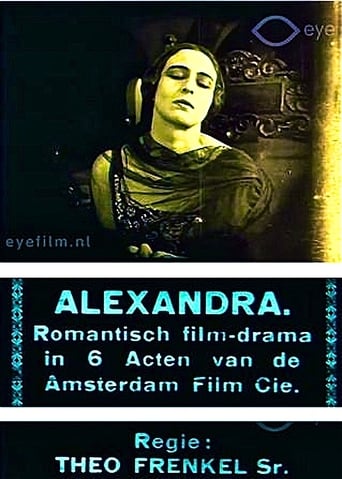
Paul de Groot is credited as a performer in the silent-era film Alexandra (1922), but beyond that single screen credit, reliable biographical information about him is extremely scarce in surviving standard film reference sources. He appears to have been a very minor or obscure screen actor whose documented film career, at least in currently accessible filmographies, was limited to the early 1920s. Because the name is not strongly represented in major archival databases, it is difficult to confirm whether he pursued stage work, worked under another professional name, or simply left only a fragmentary trace in the historical record. No authoritative evidence has been found here for his birth date, death date, birthplace, family background, or later career. His surviving significance is therefore primarily as a historical footnote in silent cinema rather than as a widely documented star or major supporting player. In database terms, he should be treated carefully as an identified but poorly documented classic-cinema personality associated with one known film credit.
More about Paul de Groot
In film history
Paul de Groot's cultural impact, insofar as it can currently be assessed, lies less in public fame than in the documentary value of his surviving credit. Performers like him help historians reconstruct the personnel networks of silent cinema, especially in productions where many cast members have been forgotten or minimally recorded. His name attached to Alexandra (1922) contributes to the film's production history and to the broader map of early screen acting, even if his individual stardom never developed or was not preserved in accessible sources. In that sense, he represents the countless working actors who formed the fabric of silent-era filmmaking but who remain underrepresented in mainstream film history.
Later reputation
Paul de Groot's legacy is primarily archival: he is one of those early cinema figures whose existence is preserved more in credits than in biographical narrative. For historians and database editors, his name is important because it marks a traceable point in the otherwise incomplete record of silent-era performers. His surviving filmography, though minimal, underscores how much of early film labor remains partially obscured by lost documentation, name variations, and incomplete studio records. If additional archival material emerges, his profile could be expanded, but on current evidence his legacy is that of a documented participant in silent cinema rather than a widely recognized personality.
Influence
No direct influence on later actors or filmmakers can be verified from currently available information. His significance is indirect, in that his credit helps preserve the cast record of a 1922 silent film and contributes to research into early European or international screen production. Because his career is so sparsely documented, it is not possible to credibly identify a stylistic school, mentorship line, or performance tradition associated specifically with him.
Off screen
No reliable, verifiable information was found about Paul de Groot's personal life, including marriages, children, family background, or private affairs. Unlike major silent-era figures whose lives were reported in trade papers and fan magazines, he does not appear to have left a substantial public biographical footprint in the available historical record. As a result, any claims about his domestic life would be speculative and should not be treated as factual without archival confirmation.
Credits
- Credited appearance in the silent film Alexandra (1922)
- Represents one of the many lesser-documented performers of the silent era whose work survives mainly through film credits
- Associated with early 1920s European or continental screen acting based on the period and title context, though exact production history is not fully verified
Roles
- Role in Alexandra (1922)
Films
- Alexandra (1922)
Notes
- He is currently identified in available filmography data primarily through a single silent-film credit.
- His known screen activity is confined to 1922 in the film record provided.
- He is not widely documented in standard biographical sources for classic cinema.
- His obscurity illustrates how many silent-era actors remain difficult to research due to incomplete surviving records.
- The title Alexandra (1922) is the main surviving point of reference for his career.
Questions
Who was Paul de Groot?
Paul de Groot was a classic-cinema actor credited in the silent film Alexandra (1922). Beyond that credit, very little reliable biographical information survives in readily accessible sources. He is best understood as a little-documented performer from the silent era.
What films is Paul de Groot best known for?
He is best known for Alexandra (1922), which is the principal surviving film credit associated with his name. No additional confirmed film appearances were identified here. As a result, his known filmography appears extremely limited.
When was Paul de Groot born and when did he die?
His birth date and death date are not currently verifiable from the accessible historical record used here. Likewise, his birthplace and death details are unavailable. This is common for minor silent-era screen players whose documentation has not survived well.
What awards did Paul de Groot win?
No awards or formal honors are currently documented for Paul de Groot in the available information. There is also no verified record of major nominations. His historical importance lies in his film credit rather than in awards recognition.
What was Paul de Groot's acting style?
His acting style cannot be reliably described from the surviving record because only a single credit is currently associated with him. Without reviews, surviving prints with identifiable performances, or contemporary commentary, any detailed style analysis would be speculative. He can only be placed broadly within silent-era screen acting.
What is Paul de Groot's legacy in film history?
His legacy is mainly archival and historical. He represents the many early film actors whose names survive even when their biographies do not, helping scholars piece together the cast lists and personnel of silent-era cinema. That documentary trace is valuable even when the performer himself remains obscure.