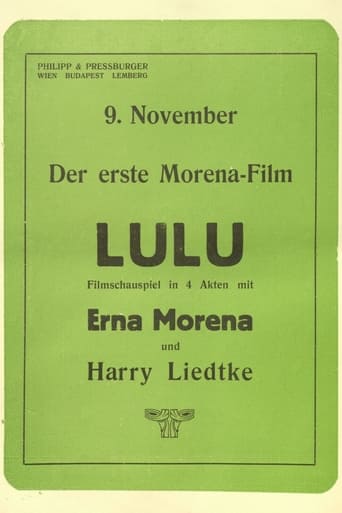
Alexander von Antalffy
Director
- Active
- 1917-1917
Films directed 1
About Alexander von Antalffy
Alexander von Antalffy was a little-documented filmmaker of the European silent era, best remembered for directing the 1917 film Lulu. His surviving screen credit suggests an active career in the mid-1910s, a period when German-language cinema was rapidly expanding during the First World War, but very little biographical detail has survived in standard film reference sources. Because of the scarcity of archival records and the fragmentary nature of many early filmographies, his personal background, training, and later life remain obscure. The available evidence places him among the many directors whose work contributed to the development of silent-era melodrama and literary adaptation in Central European cinema. His association with Lulu indicates participation in the era's interest in modern, psychologically charged stories and theatrical source material. Beyond this single confirmed directing credit, no dependable record of an extended film career, awards, or major studio affiliation has been verified. As a result, Alexander von Antalffy is now chiefly of historical interest to scholars tracing lost or obscure films of the 1910s.
More about Alexander von Antalffy
Behind the camera
No directorial style can be stated with confidence because so little of his body of work is extant or documented. Based on the period and his association with Lulu, his approach would likely have reflected silent-era European filmmaking conventions: dramatic staging, expressive visual storytelling, and an emphasis on mood, gesture, and literary adaptation. Any more specific description would be speculative, since surviving production details, reviews, or film prints have not been securely tied to his name in widely accessible reference sources.
In film history
Alexander von Antalffy's cultural impact is difficult to measure in the usual sense because the documentary record around his career is extremely thin. His importance lies less in celebrity or a large surviving filmography than in what he represents: the many early directors whose work helped shape silent cinema but who have been partially erased by the passage of time, incomplete archives, and lost prints. The 1917 Lulu credit connects him to one of the most significant literary and theatrical characters of early 20th-century European culture, suggesting that he participated in the circulation of advanced modernist themes into film. For historians, figures like von Antalffy are valuable precisely because they illuminate the broader industrial and artistic ecosystem of the silent era, where many contributors remain under-recorded despite having played a role in early screen culture.
Later reputation
His lasting legacy is primarily archival and historiographic rather than popularly visible. Alexander von Antalffy is remembered as an obscure silent-era director whose surviving credit helps document the breadth of early European filmmaking during the 1910s. The absence of extensive surviving records makes him emblematic of a large group of early filmmakers whose work may have been important in its own time but is now difficult to reconstruct. For film historians, his name remains a marker in the study of early German-language cinema, adaptation culture, and lost silent films.
Influence
There is no verifiable evidence that Alexander von Antalffy directly influenced later directors in a documented or traceable way. His influence, if any, would have been indirect, through participation in the silent-film adaptation tradition and the broader development of European screen drama. Because his career is so sparsely recorded, it is not possible to confidently identify protégés or specific artistic descendants. His main historical significance is therefore as part of the larger foundation upon which later, better-documented filmmakers built.
Off screen
No reliable public information has been verified regarding Alexander von Antalffy's personal life, including marriage, family background, residence, or later activities. Standard classic-cinema reference material does not appear to preserve usable biographical data about him beyond his name and the surviving film credit. As a result, any statement about his private life would be speculative and is best left unasserted until archival evidence emerges.
Credits
- Directed Lulu (1917), the only securely identified film credit commonly associated with him.
- Worked during the formative years of German-language silent cinema in the World War I period.
- Represents the category of early European directors whose careers are only partially preserved in surviving film records.
- Contributed to the screen history of Frank Wedekind's Lulu material through an early cinematic adaptation or interpretation.
- Serves as a reference point for research into lost, obscure, or poorly documented silent-era productions.
Films
- Lulu (1917)
Notes
- He is best known today for a single surviving credit, making him one of the more obscure names in silent-era film history.
- His only securely identified film association in commonly consulted filmography references is Lulu (1917).
- The scarcity of information about him is typical of many early European filmmakers whose records were lost, incomplete, or never widely circulated.
- His name suggests a Germanic or Austro-Hungarian background, but no verified biographical source confirms nationality or birthplace.
- Because so many silent films are lost, it is possible that additional credits may once have existed but have not survived in modern databases.
- His association with Lulu places him in the orbit of one of the most enduring figures of modernist theater and film adaptation.
- The use of 'von' in his name has led to occasional assumptions of aristocratic or noble status, but this is not verified.
- He is a good example of how early cinema history often preserves the film title more reliably than the biography of the filmmaker.
Questions
Who was Alexander von Antalffy?
Alexander von Antalffy was a silent-era film director best known for the 1917 film Lulu. Very little biographical information about him has survived, so he is chiefly remembered through this single confirmed screen credit and his place in early European cinema history.
What films is Alexander von Antalffy best known for?
He is best known for directing Lulu (1917). No other widely verified film credits are securely associated with him in the standard references consulted for silent-era cinema.
When was Alexander von Antalffy born and when did he die?
His birth date and death date are not currently verified in accessible standard film-reference sources. Likewise, his birthplace and exact biographical details remain undocumented in the surviving public record.
What awards did Alexander von Antalffy win?
No awards or formal honors are currently documented for Alexander von Antalffy. This is not unusual for early silent-era filmmakers, especially those whose careers are only sparsely preserved.
What was Alexander von Antalffy's directing style?
His directing style cannot be described with certainty because so little of his work has survived in the historical record. Given the period and the nature of Lulu, his work likely followed silent-era European conventions, emphasizing expressive visual staging and dramatic adaptation.
Why is Alexander von Antalffy historically important?
He is historically important because he represents the many early filmmakers whose contributions helped build silent cinema but who are now poorly documented. His name survives as part of the record of early German-language film production and adaptation culture.