Lulu
Plot
Lulu is a seductive circus dancer whose open, freedom-loving manner draws men into her orbit and leaves a trail of emotional and financial ruin. She genuinely cares for Alfredo, the clown who once saved her, but she also becomes involved with the noble Henri von Reithofen, whose devotion to her leads to his ruin and eventual suicide under the strain of extravagant spending. Lulu then moves on to a new and wealthier protector, the much older Baron Waldheim, continuing the pattern of dependence and manipulation that defines her relationships. When Waldheim’s son recognizes Lulu’s destructive influence and warns his father, the warning fails; Waldheim is captivated by her insinuations and turns against his own son. The story presents Lulu as both irresistible and morally dangerous, using her to expose weakness, vanity, and social hypocrisy in the men who pursue her.
About the Production
Lulu (1917) is a German silent drama from the World War I era, produced by the Berlin-based May-Film company. It is one of the early screen treatments of the Lulu figure derived from Frank Wedekind’s plays, and it belongs to the pre-Expressionist and early Expressionist period of German cinema when melodrama, erotic fatalism, and social critique were often blended. Surviving production documentation is limited, and no reliable modern source appears to preserve detailed budget or box-office records for the film. As with many German films of the period, it was made in the studio system centered in Berlin, where sets and controlled interiors were favored for efficiency and visual polish. The film is also notable as an early adaptation of material that would later become far more famous through subsequent film versions, especially the 1929 G. W. Pabst adaptation.
Historical Background
Lulu was produced in Germany in 1917, near the midpoint of World War I, when the country’s film industry was growing more self-confident and increasingly important as a cultural force. Wartime conditions shaped cinema in profound ways: imported foreign films were restricted, domestic production expanded, and German studios developed a distinctive style that would later feed directly into Weimar-era art cinema. The film also belongs to the broader cultural moment in which Wedekind’s Lulu figure symbolized modern anxieties about sexuality, capitalism, class power, and moral decay. Its existence matters historically because it shows how early German cinema was already engaging with material that combined sensational melodrama and social critique, helping establish themes that would recur throughout European film history.
Why This Film Matters
Although not nearly as famous as later Lulu adaptations, this 1917 film is culturally significant as part of the early cinematic life of one of modern European literature’s most potent female archetypes. Lulu became a key figure for stories about desire, exploitation, and the destructive fantasies projected onto women by men, and this film contributes to that tradition in one of its earliest screen incarnations. It also demonstrates how silent German cinema was already mining literary sources for psychologically charged drama, a practice that would become central to the international reputation of German film in the 1920s. For historians, the film is valuable because it helps map the evolution of the Lulu myth from stage to screen and from early melodrama to the more sophisticated psychological and social readings of later decades.
Making Of
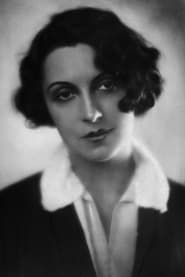
Very little detailed behind-the-scenes information survives for this production, which is typical of many silent films from the 1910s. What can be said with confidence is that it was made in Berlin under the German studio system at a time when productions were becoming more polished and star-driven, with strong emphasis on dramatic poses, expressive acting, and visually controlled interiors. The film’s casting of Erna Morena suggests an effort to present Lulu as a sophisticated and emotionally ambiguous woman rather than a simple stock villainess. As an adaptation of Wedekind-derived material, the production likely had to balance erotic subject matter with the censorship and moral expectations of wartime Germany, which may have influenced how explicitly the character’s sexuality and social transgressions were presented. No reliable documentation is readily available on special production difficulties, surviving set design records, or publicity strategies, so most detailed reconstruction must remain cautious and archival in tone.
Visual Style
No detailed surviving technical analysis of the cinematography is widely documented, but as a 1917 German silent drama it would likely have emphasized carefully arranged compositions, expressive lighting, and theatrical staging suited to silent storytelling. Films of this period often relied on strong visual contrasts, clear body language, and interior spaces that heightened psychological tension. The subject matter suggests a visual style attuned to glamour, seduction, and moral unease, with costume and gesture doing much of the narrative work. Even without surviving frame-by-frame scholarship, the film can be understood as part of the pre-1920 German aesthetic that moved toward heightened stylization and emotionally legible imagery.
Innovations
The film does not appear to be associated with a specific landmark technical innovation, but it belongs to a period in which German studios were refining silent storytelling through tighter production design, more controlled lighting, and sophisticated editing patterns. Its value is therefore historical rather than technically pioneering in a narrow sense. The achievement lies in its participation in the early cinematic shaping of a major literary character and in its contribution to the growing polish of German studio production during the 1910s.
Music
As a silent film, Lulu did not have an original synchronized soundtrack in the modern sense. Like most silent-era releases, it would have been accompanied in exhibition by live music, which varied by theater and could range from a solo pianist to a small orchestra depending on venue and budget. No specific original score is reliably documented in the available record. Any contemporary viewing today would typically rely on a later archival accompaniment, if a print or fragment is available at all.
Memorable Scenes
- Lulu’s introduction as a circus dancer whose charm and independence immediately mark her as both alluring and dangerous.
- Henri von Reithofen’s collapse under the financial and emotional burden of his devotion to Lulu.
- The confrontation in which Baron Waldheim’s son warns his father that Lulu will destroy him as well.
- Waldheim’s surrender to Lulu’s insinuations and his punitive reaction toward his own son, showing how completely Lulu can unsettle family and authority.
Did You Know?
- This 1917 film is an early adaptation of the Lulu character from Frank Wedekind’s work, predating the much better-known silent versions by more than a decade.
- The film stars Erna Morena in the title role, placing her among the important female performers of German silent cinema.
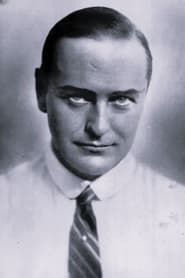
- The cast also includes Harry Liedtke, a major leading man of the German screen during the silent era.
- The plot centers on a chain of wealthy male patrons whose lives are destabilized by Lulu, making the film a classic example of the era’s fascination with femme fatale narratives.
- Because it was produced during World War I, the film emerged from a German film industry that was rapidly expanding in scale and artistic ambition under wartime conditions.
- The film is associated with the May-Film production outfit, part of the broader Berlin-centered industry that helped shape early German cinema.
- Unlike later Lulu adaptations, this film is not widely circulated today and is far less documented in contemporary film histories.
- Its story reflects the period’s interest in decadence, sexual politics, and the destructive collision between desire and social status.
- The character of Lulu became one of the most enduring figures in European literature and cinema, making this film part of a larger cultural lineage rather than a standalone curiosity.
- Modern viewers often encounter the title only through archival references and film databases rather than through easily accessible prints or restorations.
What Critics Said
Contemporary critical records for this film are sparse, and surviving reviews are not widely cited in standard film histories. As a result, there is no robust, consensus critical reputation comparable to the later Pabst version, which became canonical. In modern scholarship, the film is generally treated as an important but obscure precursor within the Lulu adaptation chain rather than as a masterpiece in its own right. Its chief critical interest today lies in historical comparison: how early filmmakers interpreted Wedekind’s material before the Expressionist and postwar cinematic language fully matured.
What Audiences Thought
Audience response is difficult to reconstruct because reliable box-office and attendance records do not appear to be readily preserved. Like many German silent dramas of the period, its reception would have depended heavily on local exhibition conditions, star appeal, and the public’s appetite for melodramatic and morally charged stories. The presence of established actors such as Erna Morena and Harry Liedtke likely helped attract viewers familiar with stage and screen celebrity. Today, the film is largely of interest to archival audiences, film historians, and silent cinema specialists rather than to mainstream viewers.
Film Connections
Influenced By
- Frank Wedekind's Lulu plays
- European fin-de-siècle decadence literature
- Stage melodrama traditions
- Early silent-era femme fatale films
This Film Influenced
- Pandora's Box (1929)
- The Threepenny Opera era of socially critical German cinema
- Later Lulu adaptations and reinterpretations in European film
You Might Also Like
More Drama Films
View allFilm Restoration
Preservation status is uncertain from readily available public references; the film is obscure and not widely circulated, and no commonly cited restoration is known. It may survive only in incomplete form, archival holdings, or as an item with limited access in German film collections, but a definitive publicly documented preservation status could not be verified here.