A Woman of the World
Plot
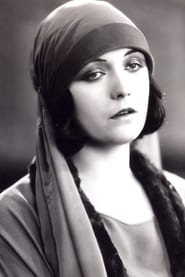
Pola Negri plays Countess Alexandrina, a sophisticated European woman whose relationship with her lover collapses in scandalous fashion, leaving her emotionally isolated and socially adrift. Seeking a fresh start, she travels to America and takes refuge with relatives in a conservative small town in Middle America, where her cosmopolitan style, independence, and frank manner immediately unsettle the local moral order. The townspeople, especially its self-appointed guardians of propriety, react with suspicion and fascination as the countess inadvertently exposes the hypocrisies and repressions beneath their respectable surface. As she becomes entangled with the community’s social intrigues and romantic entanglements, the film turns her foreignness into both a source of comedy and a catalyst for critique, contrasting Old World sophistication with American puritanism. The story ultimately frames her as a woman who, despite being judged by others, possesses more vitality and self-possession than the society that condemns her.
About the Production
A Woman of the World was produced in the mid-1920s at the height of Pola Negri’s stardom in American silent cinema, with Paramount positioning her as a glamorous international presence capable of combining comedy, romance, and social satire. Malcolm St. Clair, known for a lighter touch and visual wit, directed the film in a way that emphasized both Negri’s screen charisma and the culture-clash premise of the story. Like many Paramount productions of the period, it was made within the studio system on standing sets and backlot environments rather than on extensive location production. Surviving documentation does not consistently preserve detailed budget or box-office figures, but the film was clearly designed as a prestige vehicle around one of the era’s most bankable stars.
Historical Background
The film was released in 1925, during the late silent era at a time when Hollywood studios were perfecting star-driven productions and expanding the reach of American cinema both domestically and internationally. The United States was in the midst of the Jazz Age, with rapidly changing gender roles, consumer culture, and anxieties about modernity all feeding into popular entertainment. Silent films of this period often explored the tensions between old-world aristocracy, cosmopolitan sophistication, and American moral self-image, and A Woman of the World is very much a product of that cultural moment. Its story of a foreign countess displaced into small-town America also reflects the era’s fascination with immigration, social mobility, and the uneasy coexistence of modern independence and traditional restraint. The film matters historically as part of Pola Negri’s Hollywood career and as an example of how 1920s cinema used comedy and melodrama to question respectability and gender expectations.
Why This Film Matters
A Woman of the World is significant as an example of how silent-era Hollywood used female stardom to stage social critique. Pola Negri’s performance persona allowed the film to present a woman who is judged by conventional society yet remains visibly more self-possessed and vivid than the people around her, a dynamic that resonates with later depictions of liberated women in cinema. The film also embodies the 1920s fascination with the European aristocrat as both glamorous outsider and disruptive force in American life. For contemporary viewers and scholars, it is a useful artifact of studio-era gender politics, class satire, and the construction of international celebrity. While it is not among the most famous silent comedies, it retains value as a polished, representative example of mid-1920s Paramount production and of Negri’s distinctive screen presence.
Making Of
A Woman of the World was mounted as a showcase for Pola Negri during the period when Paramount was actively adapting European glamour to American commercial filmmaking. Negri’s public image, already shaped by her earlier success in Europe, was especially valuable in a story about a European aristocrat confronting the social codes of the American Midwest. Malcolm St. Clair’s direction likely helped keep the material balanced between social comedy and melodrama, avoiding an overly tragic tone and instead playing up the satirical possibilities of the premise. As with many silent-era productions, the film relied on expressive costume design, physical performance, and carefully staged reactions to communicate class conflict and social unease. Specific production anecdotes are not widely documented in surviving sources, but the film belongs to the studio-era tradition of tailoring scripts, sets, and supporting players around a major star’s screen identity.
Visual Style
The film’s visual style is rooted in polished mid-1920s studio cinematography, with an emphasis on clear staging, expressive close-ups, and elegant framing that highlights Pola Negri’s costume and physical expressiveness. Silent comedy-drama of this kind depended on visual contrast, so the cinematography likely underscores the difference between the countess’s refined bearing and the more rigid, orderly small-town spaces she enters. The camera work would have been designed to support performance and social observation rather than flashy technical display, using composition and reaction shots to sharpen the film’s satire. As with many Paramount pictures of the period, the emphasis was on glamour and legibility, ensuring that costume, gesture, and setting all worked together to communicate character relationships quickly and effectively.
Innovations
The film does not appear to be associated with any major technical innovation, but it is representative of the high level of craft achieved in mainstream silent-era studio production. Its achievement lies in the precise orchestration of performance, costume, set design, and editing to convey satire and character without dialogue. The film’s use of intertitles, reaction shots, and visual contrast would have been central to its humor and social commentary. Its technical significance is therefore historical and stylistic rather than pioneering in a strictly technological sense.
Music
As a silent film, A Woman of the World did not have a synchronized recorded soundtrack at its original release. It would have been exhibited with live musical accompaniment, typically by a theater organist, pianist, or small orchestra depending on the venue and exhibition budget. No single original score is universally documented as surviving for the film, and musical accompaniment would have varied from theater to theater. Modern presentations of the film, when available, may use reconstructed or newly commissioned silent-film scores depending on the archive or distributor.
Famous Quotes
No verified surviving famous quotes from the film are consistently documented in accessible sources.
As a silent film, the movie was primarily experienced through intertitles and visual performance rather than spoken dialogue.
Memorable Scenes
- The countess’s arrival in the conservative town, where her elegance immediately marks her as an outsider.
- Scenes in which the local moral guardians react with shock and fascination to her unconventional behavior.
- The film’s social gatherings, where the contrast between polished European bearing and small-town propriety becomes a source of comedy.
- Moments in which Pola Negri uses gesture and expression to turn humiliation or suspicion into a display of poise.
- The climactic social reversals, where the town’s judgment is undermined by the countess’s resilience and charm.
Did You Know?
- This film is one of Pola Negri’s key American silent-era vehicles, showcasing her image as an exotic, worldly aristocrat.
- Malcolm St. Clair was better known for comedy and breezy direction, which made him a fitting choice for the film’s satire of small-town respectability.
- The plot’s culture clash between a European countess and American puritans reflects a common silent-era fascination with transatlantic sophistication versus domestic moralism.
- The film is often noted by historians as part of the wave of Paramount productions built around strong female stars in the 1920s.
- Charles Emmett Mack and Holmes Herbert appear in support of Negri, helping anchor the romantic and social tensions around her character.
- As a silent film from 1925, it was originally exhibited with live musical accompaniment, which could vary from theater to theater.
- Because it is a silent-era production, many original intertitles and promotional materials are of particular interest to archivists and historians.
- The film’s moral comedy depends heavily on performance, gesture, and costume, all of which were central to silent filmmaking.
- The title suggests a broad, worldly woman, but the film also uses that idea to critique the narrowness of the society that judges her.
- Pola Negri’s star persona in this period often mixed glamour, independence, and danger, all of which are present in the film.
What Critics Said
Contemporary reviews from the silent era generally treated the film as a polished star vehicle, with attention focused on Pola Negri’s charisma, the film’s cosmopolitan premise, and its comic clash between sophistication and provincialism. Critics of the period often praised Negri’s ability to suggest glamour and emotional intensity even in a lighter, socially satirical role. In later decades, the film has been discussed more by silent-film historians than by mainstream critics, largely because of its place in Negri’s filmography and in the broader study of Paramount’s 1920s output. Modern assessments tend to value it for star performance, period atmosphere, and its window into contemporary attitudes toward women and social conformity. Where surviving prints are available, scholars typically approach it as a historically revealing, modestly scaled comedy-drama rather than as a major canonical masterpiece.
What Audiences Thought
At the time of its release, the film likely appealed most strongly to audiences drawn to Pola Negri’s glamour and to light social comedy built around class and culture clash. The combination of romance, satire, and a strong central star would have made it accessible to urban and small-town audiences alike, even as the film playfully mocked the values of provincial respectability. Like many silent-era features, its reception would have varied depending on local exhibition practices, especially the quality of musical accompaniment and the charisma of the live presentation. Surviving evidence does not provide a detailed audience-response record, but the film’s production as a Pola Negri vehicle suggests that Paramount expected broad commercial appeal. Today, audience interest is primarily among silent-film enthusiasts, classic film collectors, and viewers interested in Negri’s career.
Film Connections
Influenced By
- European aristocratic dramas popular in early and mid-1920s cinema
- Silent-era social comedies about modern women and provincial society
- The star persona of Pola Negri in her European and Hollywood roles
This Film Influenced
- Later culture-clash comedies featuring sophisticated outsiders in conservative communities
- Subsequent Hollywood vehicles for glamorous European women stars
You Might Also Like
More Comedy Films
View allMore from Malcolm St. Clair
View allFilm Restoration
The film is preserved in surviving archival form, though availability may be limited compared with more famous silent titles; it is not generally regarded as a completely lost film.