Are Parents People?
“A Comedy for the Modern Generation—and Their Parents!”
About Are Parents People?
Lita Hazlitt, a spirited teenage girl attending a strict boarding school, is devastated to learn that her wealthy parents, Alice and Jozef, are on the verge of a permanent separation due to their constant bickering and incompatibility. Desperate to save her family unit, Lita devises a clever but risky scheme to provide her parents with a common enemy that will force them to unite in parental concern. She begins a faux-romance with a dim-witted and somewhat disreputable silent film actor named Maurice Manning, intentionally flaunting the relationship to scandalize her social circle. As she hoped, her parents are horrified by the prospect of their daughter throwing her life away on a 'movie person,' leading them to set aside their petty grievances to intervene. The plan culminates in a series of comedic misunderstandings that ultimately force the parents to realize their own selfishness and rediscover their love for one another through their shared devotion to their daughter.
Cast & crew

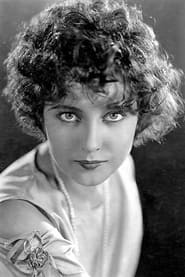
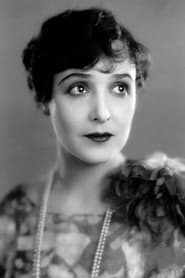

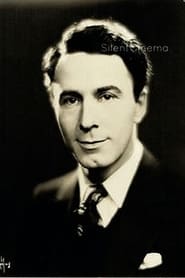
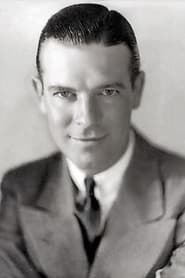


More films like this
More from Malcolm St. Clair
View all →

More about Are Parents People?
Production
- Release date
- June 14, 1925
- Country
- USA
- Production
- Famous Players-Lasky Corporation, Paramount Pictures
- Filmed in
- Paramount Studios, Hollywood, Los Angeles, California, USA
The film was based on a popular short story by Alice Duer Miller, which had appeared in the Saturday Evening Post. Director Malcolm St. Clair was specifically chosen for his 'Lubitsch-like' touch, as Paramount wanted a sophisticated domestic comedy that felt European in its wit but American in its setting. The production was noted for its high-fashion costumes, particularly those worn by Florence Vidor, which were intended to set trends for the 1925 season. Adolphe Menjou was already established as the screen's premier 'sophisticated gentleman,' and this film further cemented that persona.
Themes & topics
Historical background
Released in 1925, the film arrived during the height of the 'Roaring Twenties,' a period of significant social upheaval in America. The concept of divorce was becoming more socially visible, though still scandalous, and the film reflects the anxieties of the time regarding the stability of the nuclear family. It also captures the rise of the 'New Woman' and the independent teenager, as Lita takes an active, almost directorial role in managing her parents' lives. The film serves as a bridge between the Victorian moralism of the early century and the more cynical, fast-paced modernism of the late 1920s.
Why this film matters
The film is a prime example of the 'sophisticated comedy' genre that flourished before the Hays Code tightened its grip on Hollywood. It treated the subject of divorce with a level of wit and lightness that was revolutionary for the time. It also helped define the 'flapper' archetype on screen—not just as a party girl, but as a clever, resourceful young woman who understood the world better than her elders. Furthermore, it contributed to the mythos of Hollywood by featuring a character who was a movie star, reflecting the public's growing obsession with celebrity culture.
Making of
Director Malcolm St. Clair utilized a very relaxed set to encourage improvisational moments between the actors, particularly during the bickering scenes between Menjou and Vidor. The chemistry between the leads was considered so successful that they were paired again in subsequent projects. The production design was overseen by Hans Dreier, who brought a sleek, Art Deco-influenced look to the Hazlitt household, emphasizing their wealth and the coldness of their domestic life. During filming, Betty Bronson was reportedly very different from her 'Peter Pan' persona, embracing the more mature, albeit manipulative, role of Lita.
What critics said
At the time of its release, Mordaunt Hall of The New York Times praised the film for its cleverness and the performances of the lead trio, noting that it was 'an exceptionally clever and amusing piece of work.' Critics generally lauded Malcolm St. Clair's direction for its subtlety and lack of heavy-handed moralizing. Modern critics and film historians view it as a sophisticated precursor to the screwball comedies of the 1930s, noting its sharp dialogue (via intertitles) and elegant visual storytelling.
What audiences thought
The film was a significant hit with urban audiences who identified with the chic, upper-class setting and the modern domestic dilemmas. Betty Bronson's transition from the fantasy of 'Peter Pan' to a contemporary role was well-received by her fans, proving her versatility. It was particularly popular with younger female audiences who enjoyed seeing a teenage protagonist outsmarting the adults in her life.
Visual style
The cinematography by Bert Glennon is characterized by clean lines and high-key lighting that emphasizes the glamour of the settings. Glennon used innovative framing to capture the emotional distance between the parents, often placing them on opposite sides of large, opulent rooms. The use of close-ups on Betty Bronson helped convey her character's internal scheming without the need for excessive intertitles.
Innovations
The film is noted for its sophisticated use of 'visual wit,' where the placement of objects and the movement of actors tell the story more effectively than the text. It was also one of the early films to use subtle editing rhythms to enhance the comedic timing of the arguments between the parents.
Music
As a silent film, there was no synchronized soundtrack. However, Paramount provided theaters with a suggested musical cue sheet that featured popular light classical pieces and contemporary fox-trots to match the film's sophisticated and upbeat tone.
Film restoration
The film is fortunately preserved and exists in the film archives of the Library of Congress and the Museum of Modern Art (MoMA). It has been screened at various silent film festivals in restored versions.
Did you know?
- The film is based on a short story by Alice Duer Miller, who also wrote 'The White Cliffs' and 'Roberta'.
- This was one of the films that established Malcolm St. Clair as a major director of 'sophisticated comedy' during the silent era.
- Betty Bronson was at the height of her fame when this was filmed, having just starred in the 1924 version of 'Peter Pan'.
- Adolphe Menjou's character is a quintessential example of his 'man of the world' archetype that he played throughout the 1920s.
- The film features a satirical look at the motion picture industry itself through the character of the actor Maurice Manning.
- It was considered a 'flapper' era film, focusing on the changing dynamics between traditional parents and their more liberated children.
- The title is a play on the common teenage sentiment that parents are obstacles rather than human beings with their own feelings.
- The film was praised for its 'naturalistic' acting, which was a departure from the more exaggerated pantomime of earlier silent films.
Memorable scenes
- The opening sequence where the parents argue over a trivial matter while Lita watches with a mixture of boredom and concern.
- The scene where Lita introduces the flamboyant and dim-witted actor to her horrified parents at a formal tea.
- The climactic 'confrontation' where the parents realize they have been played, leading to a laughing reconciliation.
Influenced by
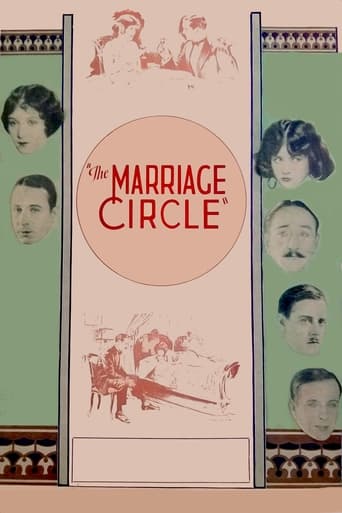
- The 'Marriage Circle' (1924) by Ernst Lubitsch
- The sophisticated stage comedies of the early 1920s
This film influenced
- The Parent Trap (1961)
- The Awful Truth (1937)
- Trouble in Paradise (1932)
Where else to watch
- Available for viewing at the Library of Congress (by appointment)
- Occasionally screened at the Museum of Modern Art (MoMA)
- Specialty silent film distributors (DVD/Blu-ray)
- Rarely found on streaming platforms specializing in public domain or silent archives
Famous quotes
Intertitle: 'Lita discovered that while parents are people, they are sometimes very difficult people.'
Intertitle: 'A common enemy is the best recipe for a family reunion.'
Intertitle: 'In the Hazlitt household, the only thing they shared was a disagreement.'