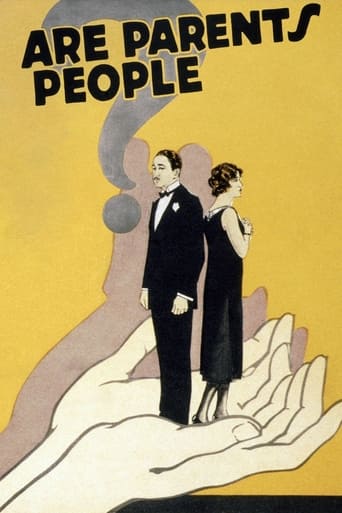

Mary Beth Milford
Actor
- Born
- circa 1900-1905, United States
- Active
- 1923-1940
Films 1
About Mary Beth Milford
Mary Beth Milford was an American actress and dancer who rose to prominence during the silent film era of the early 1920s. Born in the late 19th or early 20th century, she began her career on the New York stage as a child performer, notably appearing as a 'starlet' in Irving Berlin's famed 'Music Box Revue.' Her transition to Hollywood was marked by her casting in the popular 'Fighting Blood' series (1923), where she played leading feminine roles opposite George O'Hara. Milford was frequently described by contemporary film magazines as an 'exquisite little blonde' and a dancer of significant talent. Her most enduring screen contribution came in 1925 with the Paramount comedy-drama 'Are Parents People?', directed by Malcolm St. Clair, in which she played the pivotal role of Aurella Wilton, the sentimental roommate whose romantic letters trigger the film's central plot. Although her primary period of activity was the mid-1920s, she made sporadic appearances in later years, including uncredited or small roles in early sound-era productions like the 1939 'Our Gang' short 'Duel Personalities' and the 1940 comedy 'Millionaire Playboy.'
More about Mary Beth Milford
On screen
Milford was noted for her 'charming presence' and ability to portray sentimental, youthful characters. As a trained dancer from the age of four, she brought a physical grace to her silent film performances, often playing the 'ingenue' or the loyal friend. Her style was typical of the 1920s 'flapper' era—expressive and energetic, yet capable of the 'exquisite' delicacy required for romantic comedy-dramas.
Impact on culture
Mary Beth Milford represented the 'New York to Hollywood' pipeline of the 1920s, where stage-trained dancers were recruited for their visual appeal and physical discipline. Her role in 'Are Parents People?' contributed to one of the era's sophisticated 'divorce comedies,' a genre that explored modern social dynamics with a light touch. While not a top-tier superstar, her presence in major studio productions and on the covers of film magazines illustrates the 'starlet' system that fueled the Golden Age's publicity machine.
Lasting legacy
Milford's legacy is preserved primarily through the survival of 'Are Parents People?', which remains a noted example of director Malcolm St. Clair's 'sophisticated' style. She serves as a representative of the many talented performers of the silent era whose careers were brief but vibrant, bridging the gap between the vaudeville stage and the silver screen.
Who they inspired
As a dancer-turned-actress, she was part of the movement that emphasized rhythmic movement and poise in silent acting, influencing the way 'ingenue' roles were performed in the mid-1920s.
Off screen
Little is recorded of Milford's personal life outside of her professional credits. She was known to have been a stage performer since the age of four, indicating a family background in entertainment or a very early start as a professional child dancer in New York.
Education
Trained in dance and stagecraft from early childhood in New York City.
Career milestones
- Featured performer in Irving Berlin's 'Music Box Revue' on Broadway
- Leading lady in the 'Fighting Blood' film series (1923) for F.B.O.
- Co-starred in the Paramount Pictures hit 'Are Parents People?' (1925)
- Appeared on the cover of 'Moving Picture Stories' in July 1923
- Cast in Western features such as 'The Covered Trail' (1924) alongside Bob Custer
Iconic roles
- Aurella Wilton in 'Are Parents People?' (1925)
- Leading feminine roles in the 'Fighting Blood' series (1923)
- Bertha in 'Millionaire Playboy' (1940)
Must-see films
- Are Parents People? (1925)
- Fighting Blood (1923)
- The Covered Trail (1924)
- Millionaire Playboy (1940)
Special recognition
- Featured on the cover of 'Moving Picture Stories' (July 17, 1923)
Worked often with
- Malcolm St. Clair (Director)
- George O'Hara (Actor)
- William Courtright (Actor)
- Betty Bronson (Actor)
Studios
- F.B.O. (Film Booking Offices of America)
- Paramount Pictures (Famous Players-Lasky)
- RKO Radio Pictures
- Universal Pictures
Did you know?
- She began her professional stage career at the age of four.
- She was a featured 'starlet' in Irving Berlin's 'Music Box Revue' before moving to films.
- She appeared in the 'Fighting Blood' series, which was based on stories by H.C. Witwer.
- In 'Are Parents People?', her character's romantic letters are the catalyst for the entire plot.
- She made a late-career appearance as a 'Woman in crowd' in the Our Gang short 'Duel Personalities' (1939).
- She was frequently praised in trade journals for her 'exquisite' blonde looks and dancing ability.
Questions and answers
Who was Mary Beth Milford?
Mary Beth Milford was an American silent film actress and dancer best known for her roles in the 1920s. She transitioned from Broadway's 'Music Box Revue' to Hollywood, starring in the 'Fighting Blood' series and the Paramount hit 'Are Parents People?'.
What films is Mary Beth Milford best known for?
She is most recognized for playing Aurella Wilton in the 1925 comedy-drama 'Are Parents People?' alongside Betty Bronson and Adolphe Menjou. She also gained fame for her leading roles in the 1923 'Fighting Blood' series.
When was Mary Beth Milford active in the film industry?
Her primary period of activity was during the silent era, specifically between 1923 and 1925. However, she appeared in small roles as late as 1940 in films like 'Millionaire Playboy'.
What was Mary Beth Milford's background before movies?
She was a highly skilled dancer who began performing on stage at the age of four. Before her film career, she was a notable performer in New York theater, including Irving Berlin's prestigious revues.
Did Mary Beth Milford win any awards?
There are no records of major film awards for Milford, as her career predated the Academy Awards and she primarily played supporting or ingenue roles during the silent era.