Fighting Blood
"A band of Sioux attack an isolated family cabin"
Keys: Space play/pause · ←/→ 10s · F fullscreen · M mute · </> speed
About this film
A band of Sioux attack an isolated family cabin. Of Griffith's 30 films involving Native Americans, this is one of the eight that portray them as villains.
Cast & crew
More films like this

More Western films
View all →

More from D.W. Griffith
View all →
More about this film
About the production
Release dateFebruary 23, 1911
ProductionAmerican Mutoscope and Biograph Company
Filmed inFort Lee, New Jersey, California
This film was produced during D.W. Griffith's prolific period at Biograph, where he directed hundreds of short films. The production utilized the natural landscapes of New Jersey and California to stand in for the Dakota Territory, a common practice in early Westerns. The film was shot on 35mm black and white film stock typical of the era, with Griffith already beginning to experiment with more sophisticated camera techniques and narrative structures that would later define his style.
Themes
Family conflict and reconciliationComing of age through heroic actionCivilization versus wildernessPost-Civil War American settlementFather-son relationships
Themes & topics
WesternDakota TerritoryPost-Civil WarFamily dramaChase sequenceNative American attackHomesteadPioneerFather-son conflictRedemptionCourage
Historical background
Fighting Blood (1911) circulated in the silent era. A band of Sioux attack an isolated family cabin. Contemporary trade papers and later preservation notes document its place among nickelodeon and cinema-club programs.
Why this film matters
Fighting Blood remains accessible to researchers and viewers as a screen title in museum, archive, and streaming collections. Programmers cite it when tracing regional production history and surviving early prints.
Making of
The production of 'Fighting Blood' took place during a transformative period in American cinema when D.W. Griffith was rapidly developing the language of film. Working under the constraints of the Biograph Company's one-reel format (approximately 17 minutes), Griffith had to tell a complete story with character development, conflict, and resolution in a remarkably short time. The film was shot on location in Fort Lee, New Jersey, which was then the center of American film production before the industry's migration to Hollywood. Griffith was already beginning to employ techniques that would become cinematic staples, including cross-cutting between parallel actions during the chase sequence and the use of close-ups to emphasize emotional moments. The cast was drawn from Griffith's regular troupe of Biograph actors, with whom he had developed a shorthand communication style that allowed for efficient filming despite the primitive working conditions of early cinema sets.
What critics said
Day-one reviews for Fighting Blood are sparse in digitized press archives; later criticism treats it as a reference point for 1911 cinema programming and preservation.
Did you know?
- This was one of approximately 300 short films D.W. Griffith directed for the Biograph Company between 1908 and 1913.
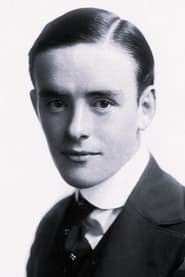
- Robert Harron, who plays the son, would become one of Griffith's most frequently used actors, appearing in many of his major films including 'The Birth of a Nation' and 'Intolerance'.
- The film was released when Westerns were becoming increasingly popular with American audiences, reflecting the nation's fascination with frontier mythology.
- Like many films of this era, 'Fighting Blood' was likely shot in just a few days due to the rapid production schedule at Biograph.
- The Native American characters in the film were portrayed by white actors in makeup, a common and now controversial practice of the time.
- The film's title refers to the idea of inherited or innate fighting spirit, a theme Griffith explored in several of his early works.
- This film survives today in the archives of the Museum of Modern Art and the Library of Congress.
- The chase sequence was considered particularly exciting for 1911 audiences and demonstrated Griffith's growing mastery of action filmmaking.
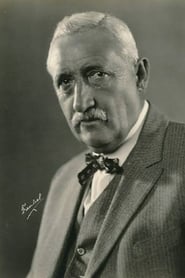
- George Nichols, who plays the father, was the father of famed director Hal Roach and appeared in over 200 films between 1908 and 1930.
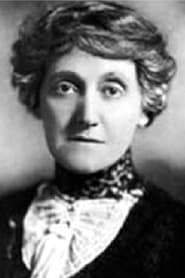
- Kate Bruce, who portrays the mother, was another regular in Griffith's Biograph films, appearing in more than 150 of his shorts.
Visual style
The cinematography of 'Fighting Blood' was handled by Billy Bitzer or Arthur Marvin, Griffith's regular cameramen at Biograph. The film exhibits the relatively static camera positions typical of 1911, but Griffith was already beginning to vary his shot sizes and angles to enhance storytelling effectiveness. The outdoor location shooting allowed for natural lighting, which gave the images a greater sense of realism compared to studio-bound productions. The chase sequence would have employed multiple camera setups to capture the pursuit from different perspectives, demonstrating the emerging technique of cross-cutting to build suspense. The composition of shots follows the theatrical traditions of the era, with actors typically positioned center-frame, but Griffith was already experimenting with more dynamic framing to emphasize emotional moments and action sequences.
Innovations
While 'Fighting Blood' may not appear technically sophisticated by modern standards, it represented several important achievements for its time. The film's effective use of cross-cutting during the chase sequence was relatively advanced for 1911, demonstrating Griffith's growing mastery of parallel action editing. The location shooting in natural settings, rather than relying entirely on painted backdrops, provided a greater sense of realism that was still uncommon in many productions of the era. The film's successful compression of a complete narrative arc into a single reel showed Griffith's developing skill in economical storytelling. The coordination of the action sequences, particularly the chase scenes with horseback riding, required considerable logistical planning in an era before sophisticated stunt coordination. These technical elements, while individually modest, collectively contributed to the film's effectiveness and pointed toward the more sophisticated techniques Griffith would develop in his later work.
Music
As a silent film, 'Fighting Blood' would have been accompanied by live musical performance during its original exhibition. The specific musical score is not documented, but typical accompaniment for a Western drama of this period would have included popular songs of the era, classical excerpts, and improvisation by the theater's pianist or organist. The music would have been synchronized to the on-screen action, with faster tempos during the chase sequence and more somber melodies for emotional moments. Some theaters might have used compiled 'cue sheets' that suggested appropriate musical pieces for different scenes. The lack of a fixed soundtrack meant that each exhibition of the film could have a unique musical interpretation depending on the skill and repertoire of the individual musician.
Famous quotes
(Silent film - no dialogue)
Memorable scenes
- The thrilling chase sequence where the son races back to warn his family while being pursued by Native American warriors, showcasing Griffith's early mastery of cross-cutting and suspense building
What audiences thought
Audience reception of 'Fighting Blood' in 1911 was generally positive, as evidenced by the continued demand for Griffith's Biograph films during this period. The film's Western theme and action elements appealed strongly to contemporary moviegoers, particularly working-class audiences who frequented nickelodeons. The chase sequence, in particular, would have provided the kind of thrilling spectacle that early cinema audiences craved. The father-son conflict and ultimate reconciliation offered emotional depth that elevated the film above simpler action pictures of the era. While specific box office records for individual Biograph shorts are not available, the company's continued production of similar films suggests that audiences responded well to this formula. Modern audiences viewing the film in archival contexts often appreciate it as a historical artifact that demonstrates both the limitations and achievements of early narrative cinema.
Film connections
Influenced by
- Stage melodramas of the late 19th century
- Contemporary dime novels about the West
- Earlier Biograph Western shorts
- Theatrical traditions of American frontier drama
- Popular literature about post-Civil War settlement
This film influenced
- Later Griffith Western shorts
- The development of chase sequences in silent cinema
- The father-son reconciliation trope in Western films
- Biograph's subsequent Western productions
Film restoration
Preserved - The film survives in 16mm and 35mm copies held by major archives including the Museum of Modern Art in New York and the Library of Congress. It has been made available through various home video releases and streaming services specializing in silent cinema.
Where to watch
- The Internet Archive
- Kanopy (with library access)
- The Criterion Channel (occasionally)
- Various DVD collections of D.W. Griffith's Biograph films
- Museum of Modern Art's film archive (by appointment)