
Lady Windermere's Fan
"A society woman believes her husband is having an affair."
Keys: Space play/pause · ←/→ 10s · F fullscreen · M mute · </> speed
About this film
A society woman believes her husband is having an affair, a misconception which may have dire personal consequences for all involved.
Cast & crew
More films like this


More Comedy films
View all →







More from Ernst Lubitsch
View all →
More about this film
About the production
Release dateDecember 27, 1925 (New York premiere), January 1926 (wide release)
Box officeSuccessful but exact figures not documented - considered a profitable prestige production for Warner Bros.
ProductionWarner Bros. Pictures
Filmed inWarner Bros. Studios, Burbank, California
This was Ernst Lubitsch's first American film for Warner Bros. after being recruited from Germany. The production faced the challenge of adapting Oscar Wilde's famously witty dialogue to silent film form, requiring creative use of intertitles and visual storytelling. Lubitsch insisted on elaborate period-accurate costumes and sets to authentically recreate Victorian London society. The film was shot during the summer of 1925 with a production schedule of approximately 6 weeks, which was considered generous for the time due to its prestige status.
Themes
Hypocrisy in high societyThe nature of reputation and honorMaternal sacrificeThe gap between appearance and realityVictorian morality and its constraints
Themes & topics
mistaken identitysocial scandalmarriageadulteryVictorian erahigh societyfamily secretssacrificereputationballroomjealousymisunderstanding
Historical background
Exhibitors around 1925 slotted Lady Windermere's Fan into mixed bills where shorts, newsreels, and features shared the same program.
Why this film matters
Reference works on 1925 cinema cite Lady Windermere's Fan when tracing genre and regional production patterns.
Making of
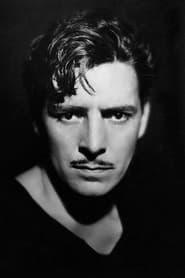
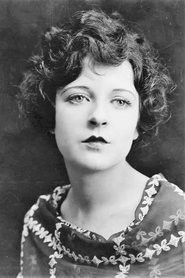
Ernst Lubitsch, already renowned in Europe for his sophisticated comedies, was brought to America by Warner Bros. specifically to elevate their productions with his distinctive directorial style. The adaptation process was particularly challenging as Wilde's play was famous for its brilliant dialogue, which couldn't be fully utilized in a silent film. Lubitsch and his screenwriters solved this by emphasizing visual gags, meaningful glances, and clever intertitles that captured the spirit of Wilde's wit. The casting was crucial - Ronald Colman, though not yet the major star he would become, brought the perfect blend of aristocratic charm and moral ambiguity to Lord Windermere. May McAvoy underwent extensive preparation to portray the innocent but strong-willed Lady Windermere. The production design was meticulous, with art directors creating authentic Victorian London sets that would impress contemporary audiences. Lubitsch was known for his attention to detail, often shooting dozens of takes to get the perfect subtle reaction or gesture that would convey meaning without words.
What critics said
Press files from 1925 mention Lady Windermere's Fan in roundup columns of what played that week.
Did you know?
- This was the first film adaptation of Oscar Wilde's 1892 play 'Lady Windermere's Fan'
- The film was considered lost for decades before being rediscovered in the 1970s
- Ernst Lubitsch was paid $25,000 for directing, making him one of the highest-paid directors in Hollywood at the time
- Ronald Colman was initially reluctant to take the role of Lord Windermere, preferring more action-oriented roles
- The film what became known as the 'Lubitsch Touch' - sophisticated visual storytelling and subtle comedy
- May McAvoy beat out several other prominent actresses for the lead role of Lady Windermere
- The film's intertitles were written with particular wit to compensate for the lack of Wilde's dialogue
- This was one of the first Warner Bros. films to use the Vitaphone sound-on-disc system for musical accompaniment in some theaters
- The elaborate fan used in the title sequence was specially designed and became a promotional item for the film
- Bert Lytell, who played Lord Darlington, was actually a bigger star than Colman at the time of filming
- The film's success led to Warner Bros. producing more literary adaptations, including other Wilde works
- Oscar Wilde's son Vyvyan Holland reportedly approved of the adaptation
- The ballroom scene featured over 300 extras in authentic Victorian costumes
Awards & recognition
- Photoplay Magazine Medal of Honor (1925) - One of the year's best pictures
Visual style
The cinematography by Charles Van Enger employed sophisticated lighting techniques that created the elegant atmosphere of Victorian London. Van Enger used soft focus and backlighting to create a dreamlike quality in the ballroom scenes, while using more dramatic lighting for the confrontational moments. The camera movement was relatively static, as was typical of the era, but the composition was carefully planned to convey social relationships and power dynamics. The film made effective use of close-ups to capture the subtle emotions that would normally be conveyed through dialogue. The black and white photography was particularly effective in creating the contrast between the respectable surface of society and the darker undercurrents beneath.
Innovations
The film was notable for its innovative use of intertitles that didn't merely convey dialogue but added to the comedy with their own wit. The production design featured some of the most elaborate recreations of Victorian London seen in American cinema up to that point. The film also employed early examples of what would become continuity editing techniques, particularly in the tense scenes involving the fan. The makeup and costume departments created authentic period looks that influenced subsequent historical films. The film's success helped establish technical standards for literary adaptations in the silent era.
Music
As a silent film, Lady Windermere's Fan was accompanied by live musical scores in theaters. For its premiere at the Criterion Theatre in New York, Warner Bros. commissioned a special orchestral score that incorporated popular songs of the Victorian era. In theaters equipped with the Vitaphone system, the film was accompanied by recorded music and sound effects. The score emphasized the comedic moments with light, playful motifs while using more dramatic music for the emotional scenes. Some theaters used classical pieces, particularly works by composers like Johann Strauss II, to enhance the Victorian atmosphere.
Famous quotes
Mrs. Erlynne: 'I can resist everything except temptation.' (intertitle)
Lord Windermere: 'In this world there are only two tragedies. One is not getting what one wants, and the other is getting it.' (intertitle)
Lord Darlington: 'Life is far too important a thing ever to talk seriously about.' (intertitle)
Duchess of Berwick: 'I don't think I can allow this sort of thing in my house!' (intertitle)
Lady Windermere: 'I am glad to say I have a very strong aversion to anything that is low.' (intertitle)
Memorable scenes
- The birthday ball scene where Mrs. Erlynne makes her dramatic entrance, causing a stir among the society guests and leading to Lady Windermere's confrontation with her husband
- The tense moment when Mrs. Erlynne discovers her daughter's fan in Lord Darlington's rooms and must decide whether to sacrifice herself to save Lady Windermere's reputation
- The opening sequence showing the elaborate fan that gives the film its title, establishing the visual motif that recurs throughout the story
What audiences thought
The film was a commercial success upon release, particularly with urban audiences who appreciated its sophisticated humor and elegant production values. It played well in major cities like New York and Chicago where audiences were familiar with Wilde's work. The film's themes of marital fidelity and social hypocrisy resonated with 1920s audiences who were questioning traditional values. Word-of-mouth was strong, and the film's run was extended in many theaters. However, in smaller towns and rural areas, it was less successful as the sophisticated humor and themes didn't connect as strongly with those audiences.
Film connections
Influenced by
- Oscar Wilde's original 1892 play
- German expressionist cinema (in lighting techniques)
- European sophisticated comedy traditions
- Drawing-room comedy conventions
This film influenced
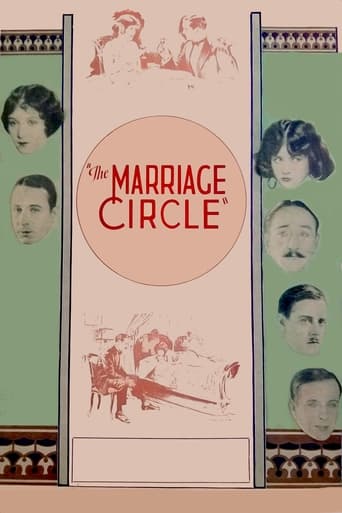
- The Marriage Circle (1924)
- So This Is Paris (1926)
- The Smiling Lieutenant (1931)
- Trouble in Paradise (1932)
- Ninotchka (1939)
- The Philadelphia Story (1940)
Film restoration
The film was believed lost for many years but was rediscovered in the 1970s in a private collection. A 35mm print was found and preserved by the Museum of Modern Art. The film has since been restored by the UCLA Film and Television Archive with funding from the National Film Preservation Foundation. The restored version was released on DVD by Warner Home Video in 2008 as part of their Archive Collection. While not complete, the restored version contains all major scenes and is considered remarkably intact for a film of its age.
Where to watch
- The Criterion Channel (streaming)
- Warner Archive Collection DVD
- The Internet Archive (free streaming)
- Classic film streaming services like MUBI occasionally feature it
- Film archives and museums occasionally screen restored prints