

Montana Moon
"Moon over Montana"
Keys: Space play/pause · ←/→ 10s · F fullscreen · M mute · </> speed
About this film
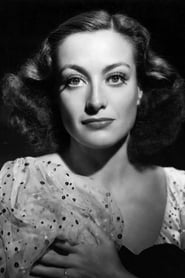
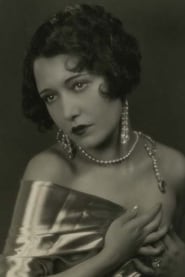
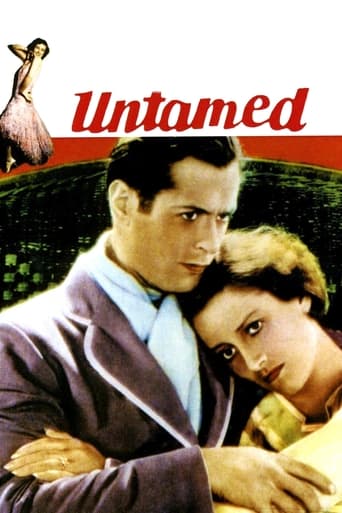
Clara Bow party girl marries Montana rancher and struggles with western domestic life. A wild-partying flapper marries a cowboy and tries to adjust to life on a western ranch.
Cast & crew
More films like this
More Drama films
View all →







More from Malcolm St. Clair
View all →

More about this film
About the production
Release dateMarch 20, 1930
Budget$277,000
Box office$960,000
ProductionMetro-Goldwyn-Mayer (MGM)
Filmed inMontana (Location shooting), Idyllwild, California, Chatsworth, California (Train station scenes)
The film was a significant undertaking for MGM, which sent the cast and crew on a rare location shoot to Montana to capture authentic scenery, though some pick-up shots were later filmed in California. The production faced major hurdles with the Production Code Administration (Hays Office); because the script wasn't approved before filming, many scenes featuring alcohol consumption during Prohibition had to be cut entirely. This resulted in narrative gaps, particularly regarding Joan's behavior at her wedding, which appeared promiscuous rather than merely tipsy to audiences of the time.
Themes
Class ConflictUrban vs. Rural ValuesMarital ReconciliationThe Taming of the ShrewCultural Identity
Themes & topics
flappercowboywhistle-stopforced marriagewestern ranchjealousytrain robberysinging cowboypre-code
Historical background
1930 placed Montana Moon within United States cinema as Metro-Goldwyn-Mayer (MGM) navigated wartime markets, immigration audiences, and the shift from intertitles to sound.
Why this film matters
Archivists revisit Montana Moon (1930) for Malcolm St. Clair style, genre norms at Metro-Goldwyn-Mayer (MGM), and the exhibition context of 89 minutes programming.
Making of
The location shoot in Montana was intended to foster a sense of realism and camaraderie among the cast. The actors spent their off-hours playing games and rehearsing, which helped bridge the gap between the established stars like Crawford and the supporting players. However, the lack of immediate feedback from the Hays Office meant that director Malcolm St. Clair filmed several 'risqué' pre-Code sequences—including drinking and suggestive dancing—that were later ordered to be cut. Because the crew had already returned from Montana, these scenes could not be reshot, leading to a final edit that felt disjointed to some contemporary critics.
What critics said
Retrospective writing on Montana Moon stresses craft by Malcolm St. Clair, print survival, and repertory value rather than opening-week gross alone.
Did you know?
- Montana Moon is widely credited by film historians as the movie that introduced the 'singing cowboy' archetype to the screen.
- Despite being a 'talkie,' MGM released a silent version of the film for theaters that had not yet upgraded to sound technology.
- Joan Crawford sprained her ankle during dance rehearsals, which delayed the start of principal photography.
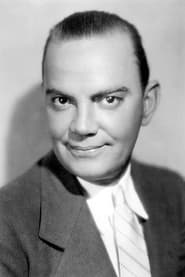
- The film features Cliff Edwards, also known as 'Ukulele Ike,' who later became the iconic voice of Jiminy Cricket in Disney's Pinocchio.
- The screenplay was co-written by Sylvia Thalberg, the sister of MGM's 'Boy Wonder' producer Irving Thalberg.
- The film's leading man, Johnny Mack Brown, was a former All-American football star for the University of Alabama before becoming a Western icon.
- Director Malcolm St. Clair was a veteran of silent comedy who struggled with the transition to sound, and this was one of his few talkie efforts for MGM.
- The word 'patio' was flagged by censors as potentially obscene in the context of a joke about a miracle medicine.
- The film was shot by William H. Daniels, who was Greta Garbo's preferred cinematographer and known for his glamorous lighting style.
Visual style
The film was lensed by William H. Daniels, who utilized high-contrast lighting and soft-focus techniques to maintain Crawford's glamorous image even in rugged outdoor settings. The use of actual Montana locations provided a scale and depth that was often missing from the backlot Westerns of the period, though some scenes still utilized painted backdrops and miniatures for train sequences.
Innovations
The film is notable for its early use of location sound recording in remote areas, a difficult feat given the bulky equipment of the time. It also successfully integrated musical sequences into a non-stage setting, helping to move the musical genre away from 'backstage' plots and into more varied environments.
Music
The score and songs were composed by the prolific team of Nacio Herb Brown and Arthur Freed. Notable songs include 'The Moon is Low,' 'Happy Cowboy,' 'Let Me Give You Love,' and the title track 'Montana Moon.' The music was recorded using the Movietone optical sound system, which was state-of-the-art for 1930.
Famous quotes
Larry: 'We're different, Montana, me and you. As different as velvet and cactus.'
Larry: 'I'm a' saying I shouldn't have gone an' put a Western saddle on a New York thoroughbred.'
Joan: 'I can't hardly look at you without getting sort of juggled up.'
Larry: 'Why I'd turn them ends up across my knee and I'd play "Home, Sweet, Home" on their southern exposures.'
Memorable scenes
- The 'Whistle-Stop' Meeting: Joan impulsively jumps off the train in the middle of nowhere and encounters Larry, establishing their 'velvet and cactus' dynamic.
- The Wedding Dance: Joan performs a seductive tango with her old flame Jeff, leading to a violent confrontation when Larry punches the rival suitor.
- The Fake Train Robbery: In the film's climax, Larry and his cowboy friends stage a holdup to kidnap Joan and prevent her from returning to New York.
What audiences thought
Audiences were generally more receptive than critics, largely due to the popularity of Joan Crawford and the novelty of the Western-Musical hybrid. The film turned a profit of over $326,000 for MGM, proving that the public was still interested in 'flapper' stories even as the genre began to evolve.
Film connections
Influenced by
- Our Dancing Daughters (1928)
- The Taming of the Shrew
- Early Broadway musicals
This film influenced
- The Singing Cowboy (1936)
- Tumblin' Tumbleweeds (1935)
- Oklahoma! (1955)
Film restoration
The film is preserved and remains available. It was released on DVD-on-demand via the Warner Archive Collection in 2014 and has been aired on Turner Classic Movies (TCM).
Where to watch
- Warner Archive DVD
- Amazon Video (Rent/Buy)
- Apple TV
- TCM (Periodic broadcasts)
- Fawesome (Streaming)