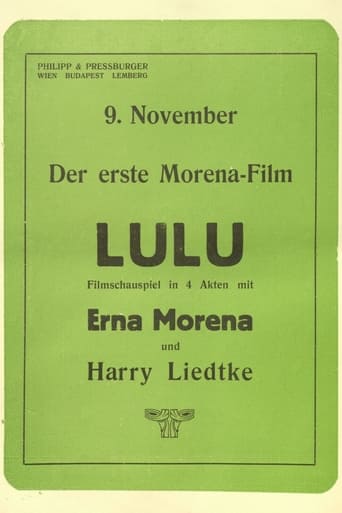
Rolf Brunner
Actor
- Active
- 1917-1917
Films 1
About Rolf Brunner
Rolf Brunner is a little-documented screen actor associated with the German silent film era, and the surviving record places him in the cast of the 1917 film Lulu. Beyond that confirmed credit, widely available biographical details about his life, training, and later career remain scarce, which is not unusual for many performers from early German cinema whose work was not comprehensively archived. His known screen activity appears to have been brief, and extant filmographies suggest that he was active in 1917 only, or at least that this is the only period for which verified film credit survives. Because archival sources do not consistently preserve personal data for minor silent-era performers, his birth and death dates, birthplace, and family background are not reliably documented in standard reference works. He should therefore be understood as a fragmentarily documented early film actor whose surviving significance rests primarily on his participation in Lulu and the historical context of German filmmaking during the First World War. Further research in archival production records, trade journals, and regional civil registries would likely be required to establish a fuller biography.
More about Rolf Brunner
In film history
Rolf Brunner's cultural impact is primarily archival and historical rather than star-driven. He is part of the large body of early German screen talent whose names help reconstruct the personnel of silent-era production, even when their individual biographies are poorly preserved. His appearance in Lulu places him within the broader tradition of pre-Weimar German cinema, which contributed significantly to the evolution of film acting, mise-en-scène, and literary adaptation on screen. Although he does not appear to have left behind a widely recognized public persona, his credit helps historians and databases map the cast networks that supported the era's filmmaking culture. In the larger picture of cinema history, performers like Brunner matter because they illustrate how many artists participated in foundational film movements without becoming enduring celebrities. Their careers are often recoverable only through surviving film credits, contemporary newspaper notices, and later archival compilations. As a result, his legacy lies in the documentation of silent film history itself: he is one of the many names that, when assembled together, reveal the labor and scale of early European film production.
Later reputation
Rolf Brunner's legacy is limited but still meaningful within silent-film scholarship, since even sparse credits can help authenticate cast lists and production histories. His recorded participation in Lulu makes him a small but real part of the surviving record of early German cinema, a field where many performances and performers have otherwise disappeared from public memory. For film historians, such names are essential evidence in reconstructing the industrial and artistic life of the era. While he does not appear to have become a major star or left a large body of work, his documented presence contributes to the completeness and accuracy of classic film archives.
Influence
There is no evidence that Rolf Brunner exerted a documented influence on later actors or directors in the way major silent-era stars did. His influence is indirect, insofar as his recorded work contributes to the historical fabric of early German screen performance. By preserving his credit, film history acknowledges the many supporting artists whose work sustained the silent era and helped shape the ensemble traditions of European cinema.
Off screen
No reliable biographical information about Rolf Brunner's personal life has been established in standard film reference sources. His marital status, family background, and private life are not documented in the readily available historical record. As with many obscure silent-era performers, the surviving evidence is largely limited to a small number of screen credits rather than personal correspondence, interviews, or later biographical profiles.
Credits
- Appeared in the 1917 silent film Lulu, a surviving credit that anchors his presence in early German cinema.
- Represents the network of lesser-known performers who populated German film production during the wartime silent era.
- His documented screen work belongs to a historically important period in which German cinema was developing the visual and expressive conventions that would later flourish in the Weimar years.
Roles
- Role in Lulu (1917)
Films
- Lulu (1917)
Notes
- Rolf Brunner is known from surviving film records rather than from a substantial biographical paper trail.
- His only clearly documented film credit in the available record is Lulu (1917).
- He is associated with German silent cinema during World War I.
- Many performers from his era were not extensively credited in later reference works, which is why his biography remains sparse.
- His recorded activity window of 1917-1917 suggests either a very brief screen career or incomplete surviving documentation.
- Because his role in Lulu is the main surviving clue, researchers may need archival German sources to uncover more about him.
Questions
Who was Rolf Brunner?
Rolf Brunner was a German actor from the silent-film era, known primarily for appearing in Lulu (1917). Surviving sources about his life are very limited, so he is best understood as an obscure but documented participant in early German cinema.
What films is Rolf Brunner best known for?
He is best known for Lulu (1917), which is the main surviving screen credit associated with his name. No broader filmography is reliably established in the available record.
When was Rolf Brunner born and when did he die?
His birth and death dates are not reliably documented in the standard accessible record. Likewise, his birthplace and life span remain unverified by widely available sources.
What awards did Rolf Brunner win?
No awards or major honors are documented for Rolf Brunner in the available historical record. This is not unusual for lesser-documented performers from the silent era.
What was Rolf Brunner's acting style?
No detailed critical description of his acting style survives in the accessible record. As a silent-era actor, he would have worked within the expressive performance conventions of the time, but specific evaluations of his technique are not available.
What is Rolf Brunner's legacy in film history?
His legacy is archival rather than celebrity-based: he is part of the documented cast history of early German cinema. That makes him valuable to film historians and database researchers trying to reconstruct the personnel of silent-era productions.