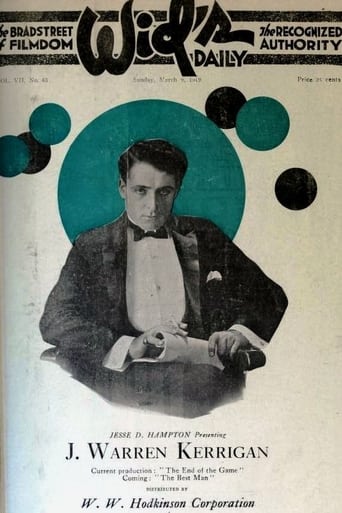
Films
1 film
About Jesse D. Hampton
American film director active during the silent era of Hollywood, with an extremely brief but notable career in 1919. His sole known directorial credit was 'The End of the Game,' a silent drama that reflected the storytelling techniques and visual style characteristic of late silent cinema. Hampton emerged during a transitional period in American film history when the industry was consolidating its power and developing more sophisticated narrative techniques. Despite his limited filmography, his work represents the thousands of independent filmmakers who contributed to the early American cinema. His career, though brief, coincided with the peak of silent film production before the industry's shift to sound technology. Hampton's disappearance from the film industry after 1919 was not uncommon during this era, as many directors and producers either moved to other industries or were unable to adapt to the rapidly changing business of Hollywood. His single known work to the vast number of lost or forgotten films from this pivotal period in cinema history.
The Craft
Behind the Camera
Representative of late silent era dramatic filmmaking, likely employing the visual storytelling techniques common in 1919 cinema including expressive acting, intertitle cards, and composed shots typical of the period before the transition to sound.
Milestones
- Directed 'The End of the Game' (1919)
- Active during the golden age of silent cinema
Best Known For
Must-See Films
Working Relationships
Studios
Why They Matter
Impact on Culture
Jesse D. Hampton's cultural impact, while minimal due to his brief career, represents the broader landscape of early American cinema where hundreds of directors and producers contributed to the development of film as an art form and industry. His work during 1919 places him at a crucial juncture in cinema history, just before the transformation that would come with sound technology. Directors like Hampton, though largely forgotten, were part of the foundation upon which Hollywood's golden age was built, contributing to the evolution of film language and storytelling techniques that would influence generations of filmmakers.
Lasting Legacy
Jesse D. Hampton's legacy is primarily that of representing the countless filmmakers from the silent era whose work has been largely lost to history. His single known film, 'The End of the Game' (1919), serves as a reminder of the vast output of early American cinema and the many creative voices that shaped the industry's early years. While not a major figure in film history, Hampton exemplifies the entrepreneurial spirit and creative experimentation that characterized Hollywood's formative years.
Who They Inspired
Due to the brevity and obscurity of his career, Jesse D. Hampton's direct influence on other filmmakers is not documented. However, like all directors working during the silent era, he contributed to the collective development of cinematic language and storytelling techniques that would influence subsequent generations of filmmakers, even if his individual contributions cannot be specifically traced.
Off Screen
Very little is known about Jesse D. Hampton's personal life, which is not uncommon for figures from the silent era who had brief careers. Like many independent filmmakers of his time, he appears to have been active in Hollywood during the late 1910s but did not achieve lasting fame or extensive documentation of his life beyond his film work.
Did You Know?
- Jesse D. Hampton had an extremely brief career, with only one known film credit from 1919
- His film 'The End of the Game' was produced during the peak year of silent film production in America
- Like many directors from this era, most biographical information about Hampton has been lost to time
- All film credits listed here fall in a single year
- The year 1919 saw the production of over 800 feature films in America, with Hampton contributing to this massive output
- Directors with single-film careers were not uncommon during the early studio system
- His work represents the independent production sector that flourished before major studio consolidation
Frequently Asked Questions
Who was Jesse D. Hampton?
American on YTB.my.' His career was extremely brief, spanning only the year 1919, and he represents the many obscure filmmakers who contributed to early American cinema.
What films is Jesse D. Hampton best known for?
Titles linked here include The End of the Game (1919).
When was Jesse D. Hampton born and when did he die?
Unfortunately, specific birth and death dates for Jesse D. Hampton are not documented in historical records, which is not uncommon for obscure figures from the silent era who had brief careers.
What awards did Jesse D. Hampton win?
There are no documented awards or nominations for Jesse D. Hampton, which is typical for directors with such brief careers during the early years of American cinema when formal award systems were not yet established.
What was Jesse D. Hampton's directing style?
While specific details about Hampton's directing style are not well-documented, his work in 1919 would have reflected the visual storytelling techniques common in late silent cinema, including expressive acting, intertitle cards, and the composed shots characteristic of the period.
Why is so little known about Jesse D. Hampton?
The scarcity of information about Hampton is typical of many filmmakers from the silent era who had brief careers. Many records from this period have been lost, and directors who did not achieve lasting fame often left minimal documentation of their lives and work.
What was happening in cinema during Jesse D. Hampton's active year of 1919?
1919 was a peak year for silent film production in America, with over 800 feature films produced. It was a period of great creative expansion in Hollywood, just before the industry would undergo major changes with the introduction of sound technology in the late 1920s.