Films
1 film
About Miriam Battista
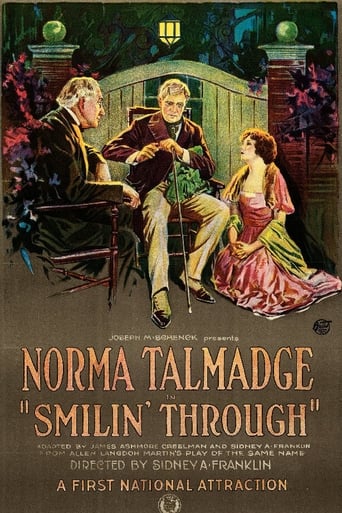
American child actress: film work belongs to the silent era, with her best-known appearance coming in Smilin' Through (1922). She was part of the generation of child performers who helped shape early Hollywood's emotional vocabulary, often appearing in sentimental dramas that relied on youthful innocence and pathos. Battista's screen career is documented primarily in the early 1920s, and her surviving filmography suggests a brief but memorable presence rather than a long transition into adult stardom. Like many child actors of the period, she is remembered more through film historians' references and cast listings than through extensive contemporary publicity. Her credited work in Smilin' Through places her within one of the era's most popular prestige productions, a film associated with prominent silent-era screen storytelling. Beyond this, reliable public information about her later life and career is limited, and she should not be confused with later performers of similar name or with adult actresses from subsequent decades. She remains a small but recognizable figure in silent cinema history, representative of the many young performers who contributed to the emotional texture of early feature filmmaking.
The Craft
On Screen
As a silent-era child actor, Miriam Battista's style would have relied on expressive facial acting, clear emotional reactions, and physical readability rather than spoken dialogue. Child performers in this period were often directed toward naturalistic sentiment or heightened innocence, and her role in a prestige melodrama suggests she was used to reinforce emotional stakes rather than dominate the narrative. Because surviving documentation on her performance manner is limited, any detailed assessment must be cautious; however, her credited placement in a notable production indicates she was trusted to contribute effectively to the film's emotional atmosphere.
Milestones
- Appeared in the silent drama Smilin' Through (1922), one of her best-documented screen credits
- Worked as a child performer during the silent era, when juvenile roles were central to melodramatic storytelling
- Represents the many early Hollywood child actors whose contributions are preserved mainly through surviving credits and film records
Best Known For
Iconic Roles
Must-See Films
Why They Matter
Impact on Culture
Miriam Battista's cultural impact is best understood in the context of silent-era child acting, where young performers helped anchor the emotional appeal of family dramas and melodramas. Even with a small documented filmography, actors like Battista were part of the star system's broader strategy of using innocence, vulnerability, and youthful sincerity to draw audiences into highly sentimental stories. Her presence in Smilin' Through links her to a widely remembered early Hollywood production, giving her a small but real place in the history of silent film performance. While she was not a major star whose name endured in popular culture, she contributes to the historical record of how studios cast and showcased children in prestige productions.
Lasting Legacy
Battista's legacy lies in her status as a surviving credit from the silent era, a period in which many child performers appeared briefly and then disappeared from the public record. For film historians, figures like her are important because they reveal the depth of casting networks that supported major productions and the many non-star performers who helped define the texture of early cinema. Her documented association with Smilin' Through ensures that her name remains attached to one of the era's better-known titles. In a broader sense, she stands as part of the overlooked population of early film children whose work survives chiefly in cast lists, archival materials, and film databases. That preservation is itself a legacy, since it allows modern viewers and researchers to recover the human scale of silent filmmaking.
Who They Inspired
Miriam Battista's influence was likely indirect rather than broadly publicized. As a child actor in the silent period, she would have contributed to performance traditions that emphasized expressive clarity and emotional legibility, traits that shaped the work of later screen children and dramatic supporting players. Her participation in a recognized melodrama reflects the way young performers reinforced audience identification and intensified sentimental storytelling, a pattern that remained important in Hollywood for decades. Although no specific protégés or direct disciples are documented, her work belongs to a formative era that influenced how child performances were staged and received in American film.
Off Screen
Publicly available information about Miriam Battista's personal life is extremely limited. The surviving record does not reliably document her family background, marriages, or later life in enough detail to state those facts confidently. This is common for child performers from the silent era, many of whom were noted in studio records and trade publications but left relatively thin biographical paper trails. Without verifiable sources, it is best to treat most personal details as unknown rather than risk conflating her with other performers.
Education
No reliable information about her education is readily documented in surviving mainstream film references.
Did You Know?
- She is documented primarily for her silent-era screen work rather than for a long adult acting career.
- Her best-known credit is Smilin' Through (1922), a significant prestige production of the period.
- She is an example of a child actor whose surviving record is sparse compared with major stars of the silent era.
- Because silent-era documentation can be incomplete, many details of her life are not easily verified in standard film references.
- Her career illustrates how many early Hollywood performers were part of a single-film or short-run screen presence rather than long-term stardom.
- She should not be confused with similarly named performers from later periods.
Frequently Asked Questions
Who was Miriam Battista?
American silent-era child actress best known for her credited appearance in Smilin' Through (1922). She represents the many young performers who appeared in early Hollywood dramas and whose careers are preserved mostly through film records rather than extensive biographical documentation.
What films is Miriam Battista best known for?
Titles linked here include Smilin' Through (1922).
When was Miriam Battista born and when did she die?
Reliable birth and death dates are not readily available in standard accessible film references, so they should be treated as unknown unless verified by archival sources. This is not unusual for lesser-documented child performers from the silent era.
What awards did Miriam Battista win?
No awards or nominations are reliably documented for Miriam Battista. Her historical importance comes from her contribution to silent film rather than from formal awards recognition.
What was Miriam Battista's acting style?
As a silent-era child performer, her acting would have depended on expressive facial emotion, physical clarity, and the ability to communicate innocence or pathos without dialogue. Surviving evidence is limited, but her casting suggests she was suitable for emotionally charged melodramatic storytelling.
What is Miriam Battista's legacy in film history?
Her legacy is modest but meaningful: she is part of the historical record of child actors who helped shape silent-era storytelling. By remaining attached to a recognized film like Smilin' Through, she continues to represent the many supporting performers whose work supported early Hollywood's emotional appeal.