
Fritz Kampers
Actor
- Born
- July 14, 1891, Munich, Germany
- Died
- September 1, 1950
- Active
- 1913-1950
- Birth name
- Friedrich Kampers
Films 3
About Fritz Kampers
Fritz Kampers was a prolific German actor whose career spanned the silent era through the early post-war years, appearing in over 260 films. Born Friedrich Kampers in Munich, he was the son of a hotelier and initially pursued a commercial apprenticeship before taking acting lessons from Richard Stury. His film career began in 1917 after he was discovered by director Franz Seitz while performing at the Munich Volkstheater. During the silent era, he was frequently cast as a villain or a 'scoundrel,' but he successfully transitioned to sound films by evolving into a beloved character actor known for playing robust, often Bavarian, common-man types. In 1939, he was honored with the title of 'Staatsschauspieler' (State Actor) by the German government, reflecting his status as one of the nation's most recognizable screen personalities. Despite his involvement in several propaganda films during the Third Reich, he remained active after 1945, continuing to work until his untimely death in 1950.
More about Fritz Kampers
On screen
Kampers was celebrated for his 'primordial robustness' and dry, deliberate delivery. He often played characters with a rough exterior but an underlying wit and unexpected depth. His gestures were notably sparse and economical, allowing his natural Bavarian charm and 'pithy' dialogue to define his screen presence.
Impact on culture
Kampers was a ubiquitous figure in German cinema, representing the 'everyman' for decades of filmgoers. His ability to embody both the grim reality of a soldier in 'Westfront 1918' and the lighthearted comedy of the 1930s musicals made him a versatile cultural icon. He was a key figure in the transition of German cinema from the expressionistic silent era to the more naturalistic and populist sound era.
Lasting legacy
Fritz Kampers is remembered as one of the most hardworking and prolific actors in the history of German film. His massive filmography serves as a comprehensive record of German cinematic trends from the late Imperial era through the Weimar Republic and the Third Reich into the early post-war period. He remains a study in the survival and adaptation of a professional actor through multiple radical political shifts.
Who they inspired
His 'dry' acting style and use of regional dialect influenced later generations of German character actors who sought to balance comedy with grounded, realistic personas.
Off screen
Fritz Kampers was the son of a hotel owner and spent much of his childhood in Garmisch-Partenkirchen. He served as a cavalryman on the Eastern Front during World War I, where he was wounded before joining front-line theater troupes in Warsaw and Łódź. He is buried in the Evangelical Cemetery in Neubeckum.
Education
Attended boarding school in Weilheim, Upper Bavaria; completed a commercial apprenticeship in a Munich textile shop; studied acting under Richard Stury.
Career milestones
- Appeared in approximately every 17th film produced in Germany between 1918 and 1950
- Successfully transitioned from silent film villainy to sound film character comedy
- Appointed 'Staatsschauspieler' (State Actor) in 1939
- Starring role in the internationally acclaimed war film 'Westfront 1918' (1930)
- Directed several films in the early 1930s, including 'Konjunkturritter' (1934)
- Included in the 'Gottbegnadeten-Liste' (God-gifted list) of essential artists in 1944
Iconic roles
- The Soldier in 'Westfront 1918' (1930)
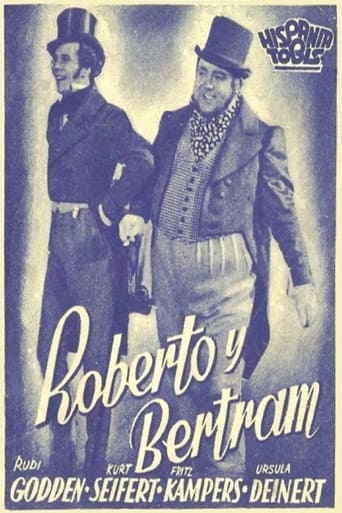
- Strambach, the prison administrator in 'Robert and Bertram' (1939)
- The Smith Unterhuber in 'Kohlhiesel's Daughters' (1943)
- Sepp Sedlmeyer in 'Morgen ist alles besser' (1948)
Must-see films
- Westfront 1918 (1930)
- The Three from the Filling Station (1930)
- Comradeship (1931)
- The Rebel (1932)
- Robert and Bertram (1939)
- Schwarzwaldmädel (1950)
Awards
- Staatsschauspieler (State Actor) title awarded in 1939
Special recognition
- Named to the 'Gottbegnadeten-Liste' in 1944 as one of Germany's most important actors
Worked often with
- Franz Seitz (Director)
- G.W. Pabst (Director)
- Hans H. Zerlett (Director)
- Rudi Godden (Actor)
- Kurt Seifert (Actor)
Studios
- UFA
- Tobis Film
- Terra Film
Did you know?
- He appeared in more than 260 films, meaning he was in roughly every 17th German film made during his active years.
- He was a popular cabaret artist and part of Trude Hesterberg's 'Die Wilde Bühne' in the 1920s.
- Before becoming a character actor, he was primarily known as a 'Schurkendarsteller' (villain actor) in the early 1920s.
- He directed his first film as early as 1917, titled 'Der Volkstyrann'.
- Despite his high standing in the 1930s, he was reportedly rejected for certain propaganda roles by 1942, though he continued to work in entertainment films.
In their own words
Kampers was known for his 'short, dry sentences' rather than long monologues, often delivered with a signature Bavarian shrug or a knowing look.
Questions and answers
Who was Fritz Kampers?
Fritz Kampers was a highly prolific German film actor and occasional director who appeared in over 260 movies between 1913 and 1950. He was best known for his transition from silent film villains to beloved, dry-witted character roles in the sound era.
What films is Fritz Kampers best known for?
He is most famous for his roles in G.W. Pabst's 'Westfront 1918' (1930) and 'Comradeship' (1931), as well as the popular musical 'The Three from the Filling Station' (1930) and the 1939 comedy 'Robert and Bertram'.
When was Fritz Kampers born and when did he die?
He was born on July 14, 1891, in Munich, Germany, and passed away on September 1, 1950, in Garmisch-Partenkirchen at the age of 59.
What awards did Fritz Kampers win?
While he did not win modern international awards like the Oscar, he was honored with the prestigious title of 'Staatsschauspieler' (State Actor) in 1939, the highest honor for an actor in Germany at the time.
What was Fritz Kampers' acting style?
He was known for a 'dry' and economical acting style, using short sentences and sparse gestures to portray robust, down-to-earth characters, often with a distinct Bavarian flavor.
Did Fritz Kampers direct any movies?
Yes, he directed several films, including silent works like 'Der Volkstyrann' (1920) and sound-era comedies such as 'Konjunkturritter' (1934).