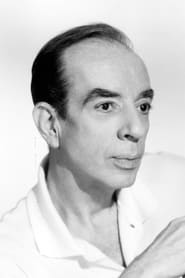
Vincente Minnelli
Director
Born: February 28, 1903 in Chicago, Illinois, USA Died: July 25, 1986 Active: 1943-1976 Birth Name: Lester Anthony Minnelli
Films
1 film
About Vincente Minnelli
Vincente Minnelli was one of Hollywood's most celebrated directors, renowned for his sophisticated visual style and masterful direction of musicals and melodramas during Hollywood's Golden Age. Born into a theatrical family, he began his career as a set and costume designer for Broadway productions before transitioning to film at MGM. His directorial debut came with 'Cabin in the Sky' (1943), immediately establishing his reputation for visual artistry and emotional depth. Minnelli's career flourished at MGM where he directed some of cinema's most films, including 'Meet Me in St. Louis' (1944), which introduced him to his future wife Judy Garland. He won the Academy Award for Best Director for 'Gigi' (1958) and received multiple other nominations throughout his career. His films were characterized by their meticulous attention to detail, innovative use of color, and seamless integration of music and narrative. Despite declining health in his later years, Minnelli continued directing into the 1970s, leaving an indelible mark on American cinema as a true visual poet of the silver screen.
The Craft
Behind the Camera
Vincente Minnelli was renowned for his meticulous attention to visual detail, sophisticated use of color, and innovative camera techniques. His directing style emphasized elaborate production design, seamless integration of music and narrative, and the creation of dream sequences that became his signature. He was particularly adept at using color to convey emotional states and psychological depth, often employing rich, saturated palettes that enhanced the melodramatic elements of his films. Minnelli's approach combined theatrical sensibility with cinematic innovation, creating visually stunning sequences that elevated musical numbers beyond mere entertainment to become integral parts of the storytelling. His films often featured complex tracking shots, carefully choreographed movements, and a painterly composition that reflected his background in visual arts.
Milestones
- Directed 'Meet Me in St. Louis' (1944) starring Judy Garland
- Won Academy Award for Best Director for 'Gigi' (1958)
- Directed the groundbreaking ballet sequence in 'An American in Paris' (1951)
- Married Judy Garland (1945-1951) and fathered Liza Minnelli
- Directed five films that received Academy Award nominations for Best Picture
- Pioneered the use of color psychology in filmmaking
- Transitioned successfully from Broadway designer to Hollywood director
Best Known For
Must-See Films
Accolades
Won
- Academy Award for Best Director for 'Gigi' (1958)
- Golden Globe for Best Director for 'Gigi' (1958)
- New York Film Critics Circle Award for Best Director for 'The Bad and the Beautiful' (1952)
- Directors Guild of America Award for Outstanding Directorial Achievement for 'Gigi' (1958)
Nominated
- Academy Award nomination for Best Director for 'The Bad and the Beautiful' (1952)
- Academy Award nomination for Best Director for 'An American in Paris' (1951)
- Academy Award nomination for Best Director for 'Lust for Life' (1956)
- Academy Award nomination for Best Director for 'Some Came Running' (1958)
- Golden Globe nomination for Best Director for 'An American in Paris' (1951)
- Golden Globe nomination for Best Director for 'The Bad and the Beautiful' (1952)
- Directors Guild of America nomination for 'The Bad and the Beautiful' (1952)
- Directors Guild of America nomination for 'Some Came Running' (1958)
Special Recognition
- Hollywood Walk of Fame star (1960)
- AFI Life Achievement Award recipient (1974)
- George Eastman Award for contribution to cinematic art (1965)
- National Board of Review Award for Best Director for 'The Bad and the Beautiful' (1952)
- Venice Film Festival Golden Lion nomination for 'Some Came Running' (1958)
Working Relationships
Worked Often With
Studios
Why They Matter
Impact on Culture
Vincente Minnelli fundamentally shaped the American musical film genre, elevating it from simple entertainment to sophisticated art form with psychological depth and visual poetry. His innovative use of color and design influenced generations of filmmakers, establishing new standards for cinematic aesthetics during Hollywood's Golden Age. Minnelli's films captured and defined American cultural ideals of the 1940s and 1950s, from small-town nostalgia in 'Meet Me in St. Louis' to urban sophistication in 'An American in Paris'. His ability to blend European artistic sensibilities with American storytelling helped bridge cultural divides and introduced mainstream audiences to more sophisticated cinematic techniques. The dream sequences he pioneered became a staple of Hollywood filmmaking, influencing directors from Alfred Hitchcock to David Lynch. Minnelli's work also played a crucial role in establishing MGM as the premier studio for musical productions, contributing to the studio's golden era of dominance in the 1940s and 1950s.
Lasting Legacy
Vincente Minnelli's legacy endures as one of cinema's greatest visual stylists and a master of both musical and dramatic filmmaking. His influence can be seen in the work of contemporary directors who emphasize visual storytelling, from Martin Scorsese to Baz Luhrmann. The films he created continue to be studied in film schools for their innovative techniques and artistic achievements, with 'An American in Paris' and 'Gigi' remaining classics of the genre. Minnelli's approach to integrating music, color, and narrative set standards that continue to influence musical filmmaking today. His daughter Liza Minnelli has worked to preserve and promote his legacy, ensuring that new generations discover his contributions to cinema. Film scholars and critics increasingly recognize Minnelli as a true auteur whose personal vision and artistic sensibility elevated commercial filmmaking to high art, making him an essential figure in understanding the evolution of American cinema during its most creative period.
Who They Inspired
Vincente Minnelli's influence on filmmaking extends far beyond his own films, affecting how directors approach visual storytelling, musical sequences, and emotional expression through cinema. His innovative use of color psychology influenced directors like Douglas Sirk and later Pedro Almodóvar in their use of saturated palettes for emotional effect. The dream sequences he pioneered in films like 'The Bad and the Beautiful' and 'The Long, Long Trailer' influenced psychological thriller directors including Alfred Hitchcock and David Lynch. His seamless integration of musical numbers into narrative storytelling set the template later followed by directors like Bob Fosse and Rob Marshall. Contemporary filmmakers including Damien Chazelle ('La La Land') and Baz Luhrmann ('Moulin Rouge!') have acknowledged Minnelli's influence on their approach to musical cinema. His attention to production design and visual composition influenced directors like Wes Anderson and Guillermo del Toro, who share his meticulous approach to creating visually distinctive worlds. Minnelli's ability to balance commercial appeal with artistic innovation continues to inspire directors seeking to create films that are both entertaining and artistically significant.
Off Screen
Vincente Minnelli's personal life was as dramatic as his films, marked by his marriage to Judy Garland and his complex relationship with their daughter Liza Minnelli. He was married four times, with his union to Garland being the most famous and tumultuous, lasting from 1945 to 1951. Despite their divorce, Minnelli maintained a complicated but enduring relationship with Liza, who would follow in her parents' footsteps to become an entertainment icon. He was known for his sophisticated tastes, love of art and culture, and his dedication to perfectionism in both his professional and personal life. In his later years, Minnelli suffered from declining health, including Alzheimer's disease, but continued to be recognized for his contributions to cinema until his death in 1986 at age 83.
Education
Attended Lane Technical High School in Chicago; studied art at the Chicago Academy of Fine Arts; largely self-taught in filmmaking through his early work in theater and costume design
Family
- Judy Garland (1945-1951)
- Georgette Magnani (1954-1958)
- Denise Hale (1962-1971)
- Lee Anderson (1980-1986)
Did You Know?
- His birth name was Lester Anthony Minnelli, but he changed it to Vincente to sound more artistic
- He was the first director to win an Oscar for directing a musical ('Gigi')
- His father was a traveling musical conductor, exposing him to entertainment from an early age
- He designed costumes and sets for the Radio City Music Hall Rockettes before moving to Hollywood
- The famous ballet sequence in 'An American in Paris' cost nearly $500,000, an enormous sum at the time
- He was colorblind, yet became one of Hollywood's greatest masters of color cinematography
- Minnelli and Judy Garland's wedding was attended by over 10,000 fans outside the church
- He was a serious art collector and owned works by Picasso and Matisse
- His films received 37 Academy Award nominations during his career
- He was known for being extremely demanding on set, sometimes shooting 50 takes for a single scene
- The character of Professor Harold Hill in 'The Music Man' was partly based on his theatrical background
- He was nominated for the Best Director Oscar four times, winning once
- His daughter Liza Minnelli won an Oscar, making them one of the few parent-child Oscar-winning pairs
- He was a close friend of fashion designer Christian Dior, who influenced his costume choices
- MGM head Louis B. Mayer initially thought Minnelli was 'too artistic' for commercial films
In Their Own Words
I'm not a director who happens to be homosexual. I'm a homosexual who happens to be a director.
Color is my obsession. It's the most important element in my films.
Every film I make is a love letter to the art of cinema.
I don't make films to please the critics. I make them to please myself, and hope the audience agrees.
The difference between a good film and a great film is attention to detail.
Musicals aren't about people breaking into song. They're about emotions too big for words.
I learned everything I know about directing from watching actors and learning what makes them shine.
A film should be like a painting - every frame composed, every color meaningful.
I don't believe in realism in cinema. I believe in emotional truth.
The most important thing in filmmaking is creating a world that audiences want to live in, even if just for two hours.
Frequently Asked Questions
Who was Vincente Minnelli?
Vincente Minnelli was one of Hollywood's most celebrated directors during the Golden Age, renowned for his sophisticated visual style and masterful direction of musicals and melodramas. He won the Academy Award for Best Director for 'Gigi' and directed iconic films including 'An American in Paris,' 'Meet Me in St. Louis,' and 'The Bad and the Beautiful.' He was also married to Judy Garland and was the father of Liza Minnelli.
What films is Vincente Minnelli best known for?
Titles linked here include Meet Me in St. Louis (1944), The Clock (1945).
When was Vincente Minnelli born and when did he die?
Born February 28, 1903; died July 25, 1986.
What awards did Vincente Minnelli win?
Minnelli won the Academy Award for Best Director for 'Gigi' (1958), a Golden Globe for Best Director for the same film, and the Directors Guild of America Award for Outstanding Directorial Achievement for 'Gigi.' He also received four other Academy Award nominations for Best Director and numerous other honors including the AFI Life Achievement Award in 1974.
What was Vincente Minnelli's directing style?
Minnelli's directing style was characterized by meticulous attention to visual detail, sophisticated use of color, innovative camera techniques, and seamless integration of music and narrative. He was particularly known for his elaborate production design, dream sequences, and the use of color psychology to convey emotional depth. His approach combined theatrical sensibility with cinematic innovation, creating visually stunning films that elevated both musicals and dramas to high art.
Was Vincente Minnelli married to Judy Garland?
Yes, Vincente Minnelli was married to Judy Garland from 1945 to 1951. They met while working on 'Meet Me in St. Louis' and had one daughter together, Liza Minnelli, who would become an Academy Award-winning actress. Despite their divorce, their marriage remains one of Hollywood's most famous unions.
How did Vincente Minnelli influence cinema?
Minnelli fundamentally shaped the American musical film genre, elevating it to sophisticated art form with psychological depth. His innovative use of color, dream sequences, and visual storytelling influenced generations of filmmakers from Alfred Hitchcock to contemporary directors like Baz Luhrmann. He established new standards for cinematic aesthetics and proved that commercial films could also be artistically significant.
What was Vincente Minnelli's relationship with Liza Minnelli?
Vincente Minnelli was the father of Liza Minnelli, born in 1946 during his marriage to Judy Garland. Their relationship was complex but enduring, with Liza following in her parents' footsteps to become an entertainment icon. Despite the challenges of their relationship, particularly during Liza's teenage years, they maintained a connection throughout Minnelli's life, and Liza has worked to preserve his cinematic legacy.