
Father's Little Dividend
"Kay's news shakes the household"
Keys: Space play/pause · ←/→ 10s · F fullscreen · M mute · </> speed
About this film
Newly married Kay Dunstan announces that she and her husband are having a baby, leaving her father to come to grips with the fact that he will soon be a granddad. Exhibitors circulated the 1951 print in short programs.
Cast & crew
More Romance films
View all →



More about this film
About the production
Release dateApril 26, 1951
Budget$1,500,000
Box office$3,750,000 (North America)
ProductionMetro-Goldwyn-Mayer (MGM)
Filmed inMGM Studios, Culver City, California, USA
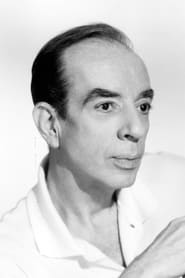
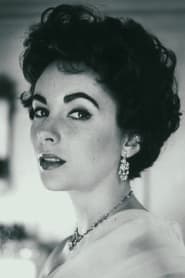
The film was shot quickly to capitalize on the success of 'Father of the Bride,' with production beginning just months after the first film's release. Vincente Minnelli directed both films, maintaining continuity in tone and style. The production faced challenges in recreating the exact set designs from the first film to ensure visual consistency. Elizabeth Taylor was pregnant during filming, which required careful camera positioning and costume design to conceal her condition.
Themes
Family dynamicsAging and generational changeAnxiety about parenthood and grandparenthoodThe cycle of lifeFather-daughter relationships
Themes & topics
Historical background
Father's Little Dividend reached screens around 1951, produced in its country of origin. Postwar distribution and sound standards shaped how it was marketed.
Why this film matters
Researchers cite Father's Little Dividend when tracing screen culture of its decade.
Making of
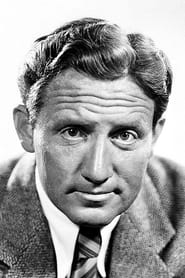
Director Vincente Minnelli approached the sequel with the philosophy that it should stand alone while maintaining the charm of the original. The script went through multiple revisions, with input from all principal actors to ensure character consistency. Spencer Tracy was initially hesitant to reprise his role but was convinced by the quality of the script and the opportunity to work again with Minnelli. The famous scene where Stanley practices changing diapers on a doll was largely improvised by Tracy, showcasing his comedic genius. The production team faced the unique challenge of making a film about pregnancy without using explicit language, relying on clever euphemisms and visual gags that were acceptable for 1950s audiences.
What critics said
Reviewers in 1951 weighed Father's Little Dividend on clarity, pacing, and audience response rather than prestige status. No single canonical review dominates later reference works for the title.
Did you know?
- This was one of the first major Hollywood sequels, a rarity in the golden age of cinema
- Spencer Tracy earned $250,000 for his role, a substantial sum for the time
- Elizabeth Taylor was actually pregnant with her first child during filming
- The film was shot in just 28 days, an unusually short schedule for an MGM production
- Don Taylor replaced the original actor from 'Father of the Bride' (Jeffrey Lynn) as Buckley Dunstan
- The baby carriage used in the film was the same one used in the 1937 film 'Stella Dallas'
- MGM initially resisted making a sequel but changed their mind after 'Father of the Bride' grossed over $6 million
- The film's success led to a short-lived television series in 1961
- Spencer Tracy and Joan Bennett had previously starred together in 'Me and My Gal' (1932)
- The film's title was a play on the financial term 'dividend,' reflecting Stanley's money-focused anxieties
Awards & recognition
- Writers Guild of America Award for Best Written American Comedy (Nominated - Albert Hackett, Frances Goodrich)
Visual style
The film's cinematography, handled by John Alton, employed the warm, high-key lighting typical of MGM comedies of the era. Alton used soft focus techniques to enhance the romantic elements while maintaining clarity for the comedic sequences. The camera work emphasized the domestic spaces, creating an intimate, comfortable atmosphere that reflected the film's family themes. Notable techniques included the use of deep focus in group scenes to capture multiple character reactions simultaneously, and carefully composed shots that highlighted the physical comedy elements. The visual style maintained continuity with 'Father of the Bride' while subtly evolving to reflect the film's more mature themes.
Innovations
While not groundbreaking in technical terms, the film demonstrated MGM's mastery of the studio system's efficiency and quality control. The production team successfully maintained visual and narrative continuity with the first film, a significant achievement given the quick turnaround time. The film's use of practical effects for the pregnancy and birth sequences was notably convincing for the period. The sound mixing effectively balanced dialogue, music, and effects to ensure every comedic line landed properly. The costume department achieved the difficult task of concealing Elizabeth Taylor's real pregnancy while maintaining the character's evolving look throughout the film.
Music
The musical score was composed by Adolph Deutsch, who created a light, whimsical soundtrack that perfectly complemented the film's comedic tone. The main theme was a variation of the melody from 'Father of the Bride,' providing musical continuity between the films. Deutsch incorporated playful motifs for Stanley's anxiety episodes and tender themes for the family moments. The soundtrack also featured popular songs of the era that were integrated naturally into the narrative. The music was recorded with the MGM studio orchestra, utilizing the rich sound typical of the studio's productions.
Famous quotes
I'm not getting old. I'm just getting more experienced at being young.
A grandfather is just a father with a second chance.
You know, there's nothing so expensive as a bargain.
I've been a father for twenty-five years. Now I'm going to be a grandfather. It's like being promoted to a job you never applied for.
Money isn't everything, but it keeps the children in touch.
Memorable scenes
- Stanley's disastrous attempt to practice changing a diaper on a doll, resulting in a comical struggle with safety pins
- The moment Stanley learns he's going to be a grandfather, his face going through multiple stages of shock and panic
- The hospital waiting room sequence where Stanley's anxiety reaches its peak, pacing and worrying while waiting for the birth
- The touching final scene where Stanley holds his grandchild for the first time, his earlier fears melting away into pure joy
- The dinner scene where the pregnancy is announced, with Stanley's comical overreaction to the news
What audiences thought
Audiences embraced the film enthusiastically, making it one of the top-grossing pictures of 1951. Moviegoers particularly appreciated seeing their favorite characters return in a new, relatable situation. The film's themes of family, aging, and the cycle of life resonated strongly with post-war American audiences who were experiencing similar life transitions. The movie's success led to increased demand for family-oriented comedies and helped establish the 'family sequel' as a viable commercial genre. Many viewers reported that they found Spencer Tracy's portrayal of an anxious grandfather both hilarious and touching.
Film connections
Influenced by
- Father of the Bride (1950) - direct predecessor
- The Life of Emile Zola (1937) - influenced Minnelli's dramatic comedy style
- Meet Me in St. Louis (1944) - influenced the warm family atmosphere
This film influenced
- Father of the Bride (1991) - remake that incorporated elements from both films
- Father of the Bride Part II (1995) - remake of this sequel
- Cheaper by the Dozen series - similar family comedy themes
Film restoration
The film is well-preserved in the MGM/United Artists library and has been digitally restored. The original negatives are maintained in the Warner Bros. Archives. The film has been released on DVD and Blu-ray as part of the Warner Archive Collection, with transfers made from restored elements. No significant deterioration has been reported, and the film remains fully intact with all scenes preserved.
Where to watch
- Warner Archive DVD/Blu-ray
- Amazon Prime Video (for purchase/rent)
- Apple TV/iTunes
- Google Play Movies
- Vudu
- Classic movie streaming services like The Criterion Channel (occasionally)
- Turner Classic Movies (TCM) - periodic broadcasts