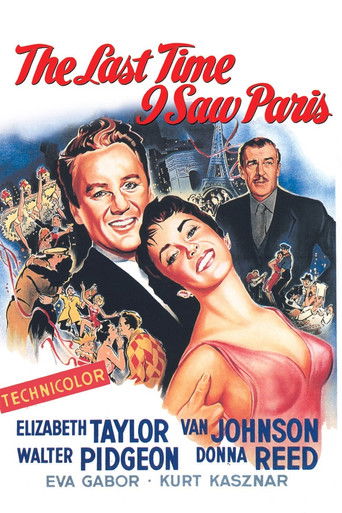
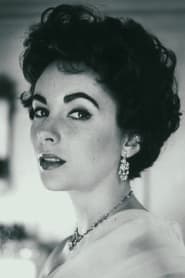
Elizabeth Taylor
Actor
Born: February 27, 1932 in London, England Died: March 23, 2011 Active: 1942-2001 Birth Name: Elizabeth Rosemond Taylor
Films
3 films
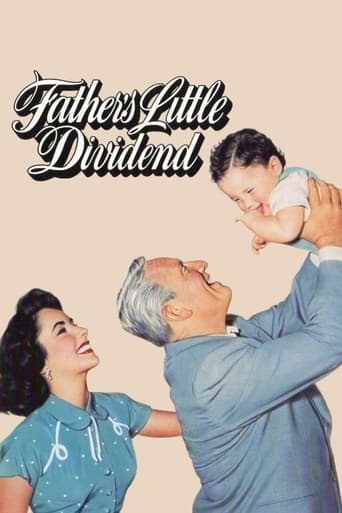
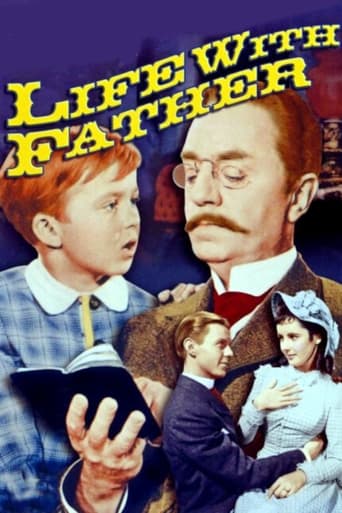
About Elizabeth Taylor
Elizabeth Taylor was one of Hollywood's most and celebrated actresses, beginning her career as a child star at MGM in the early 1940s. Discovered at age nine, she quickly transitioned from child roles to adult stardom, captivating audiences with her striking violet eyes and exceptional beauty. Her breakthrough came with 'National Velvet' (1944), but it was her performances in the 1950s and 1960s that cemented her status as a screen legend, including roles in 'A Place in the Sun,' 'Cat on a Hot Tin Roof,' and 'Cleopatra.' Taylor won two Academy Awards for Best Actress for 'BUtterfield 8' (1960) and 'Who's Afraid of Virginia Woolf?' (1966), showcasing her remarkable range beyond her glamorous image. Beyond acting, she became a AIDS activist and successful businesswoman with her fragrance line. Her tumultuous personal life, including eight marriages to seven men, generated as much public fascination as her film career. Taylor's legacy encompasses not only her cinematic achievements but also her humanitarian work and status as a cultural icon who transcended the entertainment industry.
The Craft
On Screen
Taylor was known for her intense emotional range and ability to convey deep vulnerability beneath her glamorous exterior. She employed a naturalistic acting style that evolved from the more theatrical approach of her early years to method-influenced performances in her mature work. Her technique involved complete immersion in her characters, often drawing from personal experiences to create authentic emotional depth. Taylor excelled at portraying complex women struggling with desire, frustration, and societal constraints, bringing both strength and fragility to her roles. Her violet eyes and expressive face became her trademarks, allowing her to communicate volumes with minimal dialogue.
Milestones
- Child star breakthrough in 'National Velvet' (1944)
- Transition to adult roles in 'A Place in the Sun' (1951)
- Academy Award for 'BUtterfield 8' (1960)
- Historic $1 million contract for 'Cleopatra' (1963)
- Second Academy Award for 'Who's Afraid of Virginia Woolf?' (1966)
- AIDS activism from 1985 onwards
- Successful fragrance business launch in 1987
Best Known For
Iconic Roles
Must-See Films
Accolades
Won
- Academy Award for Best Actress - 'BUtterfield 8' (1960)
- Academy Award for Best Actress - 'Who's Afraid of Virginia Woolf?' (1966)
- BAFTA Award for Best British Actress - 'Who's Afraid of Virginia Woolf?' (1967)
- Golden Globe for Best Actress - 'Who's Afraid of Virginia Woolf?' (1967)
- Golden Globe for World Film Favorite - Female (1960, 1965, 1966)
- Screen Actors Guild Life Achievement Award (1997)
- Cecil B. DeMille Award (2000)
- Kennedy Center Honors (2002)
Nominated
- Academy Award nomination for Best Actress - 'Raintree County' (1957)
- Academy Award nomination for Best Actress - 'Cat on a Hot Tin Roof' (1958)
- Academy Award nomination for Best Actress - 'Suddenly, Last Summer' (1959)
- Academy Award nomination for Best Actress - 'Giant' (1956)
- Academy Award nomination for Best Supporting Actress - 'Rhapsody in Blue' (1945)
- Golden Globe nominations for multiple films throughout her career
- BAFTA nominations for 'The Sandpiper' (1965) and 'The V.I.P.s' (1963)
Special Recognition
- Dame Commander of the Order of the British Empire (2000)
- Hollywood Walk of Fame star (1960)
- AFI Life Achievement Award (1993)
- Presidential Citizens Medal (2001)
- Jean Hersholt Humanitarian Award (1993)
- Legion of Honour (France)
- National Medal of Arts (1993)
Working Relationships
Worked Often With
Studios
Why They Matter
Impact on Culture
Elizabeth Taylor transcended her role as an actress to become a global cultural phenomenon and one of the first true media celebrities. Her beauty set standards that influenced fashion and beauty standards for decades, with her violet eyes becoming legendary. Taylor's public life, including her scandals and romances, helped establish the template for modern celebrity culture and tabloid journalism. Her role in 'Cleopatra' not only broke records for her salary but also marked a turning point in Hollywood's relationship with international production and star power. Beyond entertainment, Taylor's AIDS activism in the 1980s was revolutionary, using her celebrity status to destigmatize the disease when many others remained silent. She co-founded the American Foundation for AIDS Research (amfAR) and the Elizabeth Taylor AIDS Foundation, raising hundreds of millions for the cause. Her business ventures, particularly her successful fragrance line, paved the way for celebrity branding in the beauty industry.
Lasting Legacy
Elizabeth Taylor's legacy encompasses her dual status as both a serious, award-winning actress and a cultural icon whose influence extended far beyond cinema. As an actress, she demonstrated remarkable range, from child star to complex adult roles, earning two Oscars and numerous nominations that attest to her craft. Her performances in films like 'Who's Afraid of Virginia Woolf?' and 'A Place in the Sun' remain benchmarks of screen acting. As a cultural figure, she represented the transition from the studio system's controlled star image to the more autonomous celebrity of the modern era. Her humanitarian work, particularly in AIDS advocacy, created a template for celebrity activism that continues today. Taylor's business acumen, especially in fragrance licensing, demonstrated how stars could leverage their fame beyond entertainment. Her life story, with its triumphs, tragedies, scandals, and comebacks, continues to fascinate and represents the ultimate Hollywood saga.
Who They Inspired
Taylor influenced generations of actors through her fearless approach to challenging roles and her willingness to appear vulnerable and unglamorous on screen when the part demanded it. Her method of drawing from personal experience to inform her performances inspired later actors to embrace emotional authenticity. Her successful transition from child star to adult actress provided a blueprint for other young performers facing similar challenges. Taylor's use of her celebrity platform for social causes, particularly AIDS awareness, pioneered the concept of celebrity activism that has become standard practice. Her business ventures, especially her fragrance empire, demonstrated how entertainers could build lasting commercial brands. Her public battles with personal issues, including addiction and health problems, helped destigmatize these subjects in public discourse. Taylor's ability to reinvent herself throughout her career - from child star to sex symbol to serious actress to humanitarian - showed the possibilities of career longevity in entertainment.
Off Screen
Elizabeth Taylor's personal life was as dramatic as any of her film roles, marked by eight marriages to seven men, highly publicized relationships, and numerous health challenges. Her marriages included hotel heir Conrad 'Nicky' Hilton, British actor Michael Wilding, producer Mike Todd (who died in a plane crash), singer Eddie Fisher, and actor Richard Burton (twice). She had four children: two sons (Michael and Christopher) with Wilding, a daughter (Liza) with Todd, and another daughter (Maria) who she adopted with Fisher. Taylor struggled with health issues throughout her life, including near-fatal bouts with pneumonia, a brain tumor, and chronic back problems. She became a born-again Christian in the 1980s and dedicated her later years to humanitarian work, particularly AIDS awareness and fundraising. Her friendship with Michael Jackson in her later years also garnered significant media attention.
Education
Taylor received little formal education due to her early entry into films, being tutored on studio sets. She attended Hawthorne School in Beverly Hills briefly but her education was primarily through private tutors arranged by MGM Studios.
Family
- Conrad 'Nicky' Hilton (1950-1951)
- Michael Wilding (1952-1957)
- Mike Todd (1957-1958, his death)
- Eddie Fisher (1959-1964)
- Richard Burton (1964-1974)
- John Warner (1976-1982)
- Richard Burton (1975-1976)
- Larry Fortensky (1991-1996)
Did You Know?
- She was born with a mutation that gave her distinctive violet eyes, a condition called distichiasis which gave her double rows of eyelashes
- She was the first actress to earn $1 million for a single film ('Cleopatra')
- Taylor appeared on the cover of Life magazine 14 times, more than any other actress
- She was a close friend of Michael Jackson and was godmother to two of his children
- She owned one of the world's most famous jewelry collections, including the 33-carat Krupp Diamond and 69-carat Taylor-Burton Diamond
- She was an accomplished equestrian from childhood, performing many of her own riding scenes in 'National Velvet'
- Taylor — British citizen by birth but became a naturalized American citizen in the 1950s
- She nearly died from pneumonia in 1961 and was given an emergency tracheotomy
- She was a lifelong animal lover and owned numerous pets throughout her life
- Taylor — grandmother by age 39
- She turned down the role of Mrs. Robinson in 'The Graduate' (1967)
- Her friendship with Rock Hudson led her to become a AIDS activist after his death
In Their Own Words
'I've been lucky all my life. Everything was handed to me. Looks, fame, wealth, honors, love. But I've had my share of heartbreak, too.'
'The problem with people who have no vices is that generally you can be pretty sure they're going to have some pretty annoying virtues.'
'I feel very adventurous. There are so many doors to be opened, and I'm not afraid to look behind them.'
'You find out who your real friends are when you're involved in a scandal.'
'Big girls need big diamonds.'
'I don't think President Kennedy is a great president, but he's a good president. And I'm very fond of him.'
'Some of my best leading men have been dogs and horses.'
'When people say 'She's a legend,' I think 'Oh, dear, they're talking about me in the past tense.'
Frequently Asked Questions
Who was Elizabeth Taylor?
Elizabeth Taylor was one of Hollywood's most iconic actresses, known for her extraordinary beauty, violet eyes, and remarkable talent. She began as a child star in the 1940s and became one of the last great stars of Hollywood's Golden Age, winning two Academy Awards and starring in classics like 'Cleopatra,' 'Cat on a Hot Tin Roof,' and 'Who's Afraid of Virginia Woolf?' Beyond acting, she was a AIDS activist and successful businesswoman.
What films is Elizabeth Taylor best known for?
Titles linked here include Who's Afraid of Virginia Woolf? (1966), Cleopatra (1963).
When was Elizabeth Taylor born and when did she die?
Born February 27, 1932; died March 23, 2011.
What awards did Elizabeth Taylor win?
Taylor won two Academy Awards for Best Actress for 'BUtterfield 8' (1960) and 'Who's Afraid of Virginia Woolf?' (1966). She also received numerous other honors including the BAFTA, Golden Globes, the Screen Actors Guild Life Achievement Award, the Cecil B. DeMille Award, and was made a Dame Commander of the Order of the British Empire in 2000 for her humanitarian work.
What was Elizabeth Taylor's acting style?
Taylor evolved from a natural child performer to a method-influenced actress known for intense emotional authenticity. She excelled at portraying complex women struggling with desire and societal constraints, using her striking features and expressive eyes to convey deep emotion. Her later performances demonstrated remarkable range and willingness to appear unglamorous when roles demanded it.
How many times was Elizabeth Taylor married?
Elizabeth Taylor was married eight times to seven different men. Her husbands included Conrad Hilton, Michael Wilding, Mike Todd (who died in a plane crash), Eddie Fisher, Richard Burton (twice), John Warner, and Larry Fortensky. Her tumultuous love life, especially her relationship with Richard Burton, generated as much public fascination as her film career.
What was Elizabeth Taylor's cultural impact beyond acting?
Beyond her film career, Taylor became a AIDS activist in the 1980s when the disease was highly stigmatized, co-founding amfAR and the Elizabeth Taylor AIDS Foundation. She also revolutionized celebrity branding with her successful fragrance line and became one of the first true media celebrities whose personal life generated as much interest as her professional work.