Albert L. Barrett
Actor
- Active
- 1920-1920
Films 1
About Albert L. Barrett
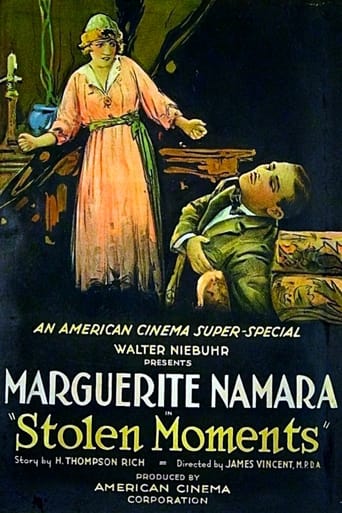
Albert L. Barrett is a documented but extremely obscure early screen performer whose name appears in silent-era film records, most notably for a credited appearance in the 1920 film Stolen Moments. Beyond that screen credit, surviving mainstream reference sources provide very little biographical detail, which suggests that he was likely a minor or short-lived participant in the film industry rather than a major star of the period. His known film activity falls entirely within 1920, and no widely verified evidence has surfaced to establish a broader acting career, later transition into sound films, or work behind the camera. Because of the scarcity of surviving information, it is difficult to reconstruct his personal background, training, or professional affiliations with confidence. His significance today lies chiefly in his presence in the historical record of early American cinema, where many performers had only a handful of documented appearances. Barrett represents the many quietly important but poorly documented artists whose contributions helped populate the silent screen, even when studio publicity and later archival survival did not preserve their biographies. In film-history terms, he is best understood as a figure whose credit survives, while the personal story behind that credit remains largely lost to time.
More about Albert L. Barrett
In film history
Albert L. Barrett's cultural impact is modest but historically meaningful because his surviving credit contributes to the broader map of silent-era film labor. In early cinema, thousands of actors worked in small roles, stock companies, or one-off appearances, and names like Barrett help historians reconstruct how films were actually staffed and produced. While he does not appear to have left a large public footprint, his documented presence in Stolen Moments (1920) preserves part of the industrial and artistic ecosystem of the period. His name is therefore valuable less as a celebrity identity and more as evidence of the breadth of participation in early Hollywood and the incomplete nature of surviving documentation.
Later reputation
Barrett's legacy is that of an archival trace from the silent era: a named performer whose career survives in the film record even though the details of his life do not. Such figures are important to film history because they remind researchers that the classic Hollywood system was built not only on stars and auteurs, but also on countless minor players whose work filled out the frame. The continued listing of his name in filmography databases ensures that he remains part of the historical narrative of early screen acting. His legacy is therefore one of documentation, memory, and the fragility of early cinema biography.
Influence
There is no verifiable evidence that Albert L. Barrett directly influenced later actors or filmmakers in a documented way. Any influence he had would have been indirect, as part of the collective body of performers who shaped silent-film acting norms through their participation in early productions. His presence in the historical record is most useful to modern scholars, archivists, and database compilers who work to preserve the names of otherwise forgotten screen workers. In that sense, his influence is scholarly rather than stylistic or public-facing.
Off screen
No reliably verified personal-life details are readily available in standard film reference sources. Information about marriages, family, residence, education, and later life has not been established with confidence in the surviving record. As with many minor silent-era performers, the historical trail is extremely thin, and any attempt to supply specifics would risk inaccuracy. He should therefore be treated as an archival figure rather than a fully documented public personality.
Credits
- Credited screen appearance in the silent film Stolen Moments (1920)
- Documented participation in early American cinema during the silent era
- Representative example of a lesser-known performer whose film credit survives in archival records
Roles
- Role in Stolen Moments (1920) - specific character name not reliably documented in surviving references
Films
- Stolen Moments (1920)
Notes
- Albert L. Barrett is known primarily from a single confirmed silent-film credit.
- His documented film activity appears to be confined to the year 1920.
- He is associated with Stolen Moments, a silent-era production from the early 1920s.
- No widely verified birth or death information is readily available in standard public references.
- He appears to have been a minor performer rather than a star with a broad surviving filmography.
- His name survives as part of the historical record despite very limited biographical documentation.
Questions
Who was Albert L. Barrett?
Albert L. Barrett was a silent-era screen actor whose surviving credit is most notably tied to Stolen Moments (1920). Very little verified biographical information has survived about his life, making him one of many obscure early film performers known mainly from archival film records.
What films is Albert L. Barrett best known for?
He is best known for Stolen Moments (1920), which is the principal surviving screen credit associated with his name. No broader, reliably documented filmography is readily available in standard reference sources.
When was Albert L. Barrett born and when did he die?
His birth and death dates are not currently verified in widely available reference sources. Similarly, his birthplace and other personal details remain unclear due to the scarcity of surviving documentation.
What awards did Albert L. Barrett win?
No awards or formal honors are known for Albert L. Barrett. Given the limited surviving record, there is also no evidence of major nomination history or later industry recognition.
What was Albert L. Barrett's acting style?
His acting style cannot be reliably described from the surviving record. Because only a limited screen credit is clearly documented, there is not enough verifiable material to assess his specific performance techniques or screen persona.
Why is Albert L. Barrett important to film history?
He is important as part of the documentary fabric of silent-era cinema, where many working performers are known only through film credits. His presence helps historians and researchers reconstruct the personnel and breadth of early film production, even when personal details have been lost.