Films
1 film
About Clairette de Savoye
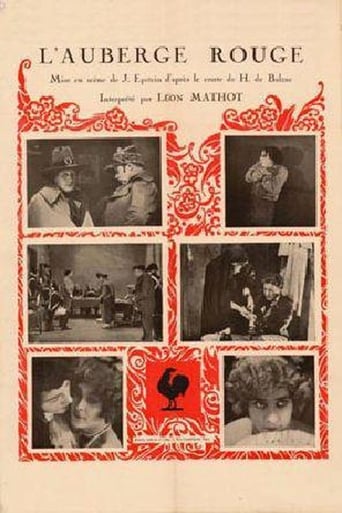
French actress who had a brief but notable career during the silent film era of the early 1920s. Her entire known filmography consists of a single appearance in the 1923 French film 'L'Auberge Rouge' (The Red Inn), directed by Robert Florey. This film, based on a story by Honoré de Balzac, was an early work in Florey's career and showcased de Savoye's talents during a transitional period in French cinema. Her appearance in 'The Red Inn' represents her sole documented contribution to film history, making her a somewhat mysterious figure from the silent era. The film itself is considered a significant early work in French cinema, though de Savoye's role within it was likely supporting given the limited documentation of her career. Despite the brevity of her film career, her participation in this notable production places her within the context of French cinema's artistic development in the 1920s. Her legacy remains that of a representative actress from the silent era, whose work, though limited, contributed to the early European filmmaking.
The Craft
Milestones
- Appeared in the 1923 French silent film 'L'Auberge Rouge' (The Red Inn)
Best Known For
Iconic Roles
Must-See Films
Working Relationships
Worked Often With
Why They Matter
Impact on Culture
Clairette de Savoye's cultural impact is primarily through her participation in 'L'Auberge Rouge' (1923), a film that represents an important phase in French silent cinema. The film itself, based on Balzac's work, contributed to the literary adaptation tradition in French film. While her individual impact may be limited due to her brief career, she represents the countless actors who formed the backbone of silent era productions, helping to bring stories to life during cinema's formative years. Her work, though not extensively documented, is part of the broader artistic movement that established French cinema as a major cultural force in the 1920s.
Lasting Legacy
Clairette de Savoye's legacy is that of a silent era actress whose work survives through a single, notable film appearance. She exemplifies the many performers from early cinema whose contributions, though not widely recognized, were integral to the art form's development. Her appearance in 'L'Auberge Rouge' ensures her place in film history, however small, as part of the cast of a significant French silent film. Her story highlights the ephemeral nature of fame for many early film actors and the importance of preserving even minor contributions to cinematic history.
Who They Inspired
Due to the extremely limited scope of her documented career, there is no available information about Clairette de Savoye's influence on other actors or filmmakers. Her influence is primarily archival, serving as a representation of the typical supporting actress in French silent cinema of the 1920s.
Off Screen
Very little is documented about the personal life of Clairette de Savoye, as her film career was extremely brief and occurred during the silent era when many supporting players' biographical details were not thoroughly recorded.
Did You Know?
- Her entire known filmography consists of just one film: 'L'Auberge Rouge' (1923)
- The film she appeared in was directed by Robert Florey, who would later become a prominent Hollywood director
- 'L'Auberge Rouge' was based on a story by the famous French writer Honoré de Balzac
- She was active during a peak period of French silent cinema production
- Her active years covered only one year according to available records
- The English title of her only known film is 'The Red Inn'
- She represents the many silent era actors whose careers were brief but contributed to important films
Frequently Asked Questions
Who was Clairette de Savoye?
French silent film actress active in the early 1920s. She is known for appearing in a single film, the 1923 French production 'L'Auberge Rouge' (The Red Inn). Her career was extremely brief, spanning only the year 1923 according to available records.
What films is Clairette de Savoye best known for?
Titles linked here include L'Auberge Rouge (The Red Inn) (1923).
When was Clairette de Savoye born and when did she die?
Unfortunately, the birth and death dates of Clairette de Savoye are not documented in available historical records. This is common for many supporting actors from the silent era whose biographical details were not thoroughly preserved. What is known is that she was active as an actress in 1923.
What awards did Clairette de Savoye win?
There are no records of Clairette de Savoye receiving any awards or nominations for her work. Given her extremely brief film career consisting of a single appearance, and the fact that major film award ceremonies were not yet established in 1923, she would not have been eligible for such recognition during her active period.
What was Clairette de Savoye's acting style?
Due to the limited documentation of her career and the fact that 'L'Auberge Rouge' is not widely accessible for study, there is no detailed information available about Clairette de Savoye's specific acting style. As a silent film actress, she would have employed the exaggerated physical expressions and gestures typical of the era to convey emotion and narrative.
Why is Clairette de Savoye's filmography so limited?
Clairette de Savoye's limited filmography of just one film may reflect the common practice in silent cinema where many actors had brief careers or worked primarily in theater. It's also possible she appeared in other lost films or played uncredited roles that were not documented. The incomplete record-keeping of the era means many actors' full contributions may never be known.