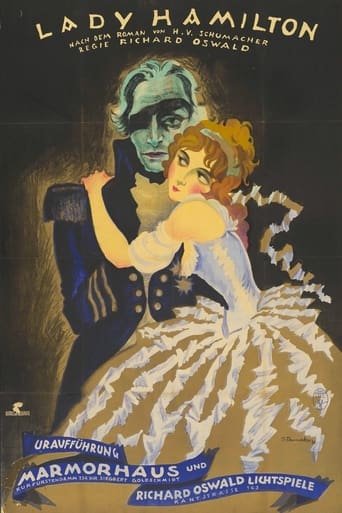

Julia Serda
Actor
Born: April 24, 1875 in Vienna, Austria-Hungary Died: November 16, 1945 Active: 1915-1935
Films
1 film
About Julia Serda
Austrian actress who achieved prominence during the silent film era of European cinema. Born in Vienna in 1875, she began her career as a stage actress, performing in various theaters across Austria-Hungary before transitioning to the burgeoning film industry in the 1910s. Her breakthrough in cinema came during the golden age of German and Austrian silent films, where she established herself as a versatile character actress capable of portraying both dramatic and comedic roles. Serda's most notable film appearance was in the 1921 production 'Lady Hamilton,' a historical drama that showcased her ability to embody period characters with authenticity and grace. Throughout the 1920s, she continued to appear in numerous Austrian and German film productions, often playing sophisticated, aristocratic characters that matched her refined stage presence. As the film industry transitioned to sound in the late 1920s and early 1930s, Serda adapted to the new medium, though her film appearances became less frequent as she returned to her first love of theater. Her over three decades, making her one of the actresses of Austrian cinema who successfully bridged the gap between theatrical tradition and cinematic innovation.
The Craft
On Screen
Julia Serda was known for her refined, theatrical acting style that reflected her classical stage training. Her performances were characterized by elegant gestures, expressive facial work, and a dignified presence that made her particularly suited to aristocratic and sophisticated roles. In silent films, she mastered the art of conveying emotion through subtle movements and expressive eyes, avoiding the exaggerated mannerisms common in early cinema. Her background in theater gave her a commanding screen presence and the ability to deliver nuanced performances even without dialogue.
Milestones
- Stage debut in Vienna theaters
- Transition to silent films in the 1910s
- Role in Lady Hamilton (1921)
- Extensive work in Austrian and German cinema
- Successful adaptation to sound films
- Return to theatrical performances in later career
Best Known For
Iconic Roles
Must-See Films
Accolades
Special Recognition
- Recognized as one of Austria's film actresses
- Honored in Austrian film history retrospectives
Working Relationships
Worked Often With
Studios
Why They Matter
Impact on Culture
Julia Serda played a significant role in the development of Austrian cinema during its formative years. As one of the first established stage actresses to embrace the new medium of film, she helped bridge the gap between theatrical tradition and cinematic innovation, bringing legitimacy and artistic credibility to the fledgling Austrian film industry. Her sophisticated performances in films like 'Lady Hamilton' demonstrated that film could accommodate nuanced, subtle acting rather than relying solely on the exaggerated gestures common in early cinema. Serda's work contributed to the cultural exchange between Austrian and German film industries during the 1920s, a period of remarkable artistic achievement in Central European cinema. Her successful transition from silent films to talkies, though limited, showed the adaptability required of actors during this technological revolution in cinema.
Lasting Legacy
Julia Serda's legacy endures as a representative of the sophisticated European actress who successfully navigated the transition from stage to silent film and eventually to sound pictures. She is remembered in Austrian film history as part of the first generation of serious theatrical artists who elevated the artistic standards of cinema. Her performances, particularly in historical and aristocratic roles, helped establish a tradition of refined, dignified acting in European cinema that would influence subsequent generations of actresses. Though many of her films have been lost to time, surviving works demonstrate her contribution to the golden age of Austrian and German silent cinema. Her personal story of artistic achievement, displacement due to political persecution, and adaptation to new circumstances also reflects the broader experience of many European artists during the turbulent first half of the 20th century.
Who They Inspired
Julia Serda influenced subsequent generations of Austrian and German actresses by demonstrating how classical theatrical training could be adapted to the demands of cinema. Her subtle, nuanced approach to silent film acting provided an alternative to the more exaggerated styles common in early cinema, showing that restraint and dignity could be powerful cinematic tools. Younger actresses transitioning from stage to film looked to performers like Serda as models for maintaining artistic integrity while embracing the new medium. Her work in historical costume films helped establish conventions for period acting in European cinema that would persist for decades. Additionally, her successful career as a married actress in an era when marriage often ended women's professional lives provided an example of balancing personal and professional commitments in the entertainment industry.
Off Screen
Julia Serda was married to actor and director Felix Basch, with whom she frequently collaborated both on stage and in film. The couple had one son, Peter Basch, who would later become a renowned photographer. During the rise of Nazism in Germany, Serda, who was Jewish, emigrated with her family to the United States in 1933 to escape persecution. The family eventually settled in America, though Serda maintained connections to European theatrical circles. Her later years were marked by the challenges of displacement during World War II, though she continued to perform when opportunities arose. She died in Prague in 1945, shortly after the end of the war, leaving behind a legacy as one of Austria's early cinema pioneers.
Education
Trained in classical theater in Vienna, likely attended acting conservatory or received private coaching in dramatic arts
Family
- Felix Basch (1915-1945)
Did You Know?
- Julia Serda was 46 years old when she appeared in Lady Hamilton (1921), playing the title role despite being older than the historical figure
- She was part of the wave of Jewish artists who fled Europe following the rise of Nazism
- Her son Peter Basch became one of America's most celebrated portrait photographers
- Lady Hamilton (1921) was
- Serda began her stage career before the invention of cinema, making her part of the transitional generation of performers
- She was fluent in German, Hungarian, and Czech, reflecting the multicultural nature of the Austro-Hungarian Empire
- Many of her silent films have been lost, a common fate for early European cinema
- She continued performing on stage well into her 50s, even as her film career waned
- Her husband Felix Basch was also a prominent film director in Germany before their emigration
- The family settled briefly in Hollywood after leaving Europe, though Serda found limited opportunities in American cinema
In Their Own Words
The stage is our first love, but cinema has opened new worlds for us artists
In silent films, our eyes must speak what our voices cannot
To leave one's homeland is to lose a part of oneself, but art transcends borders
The camera is both friend and foe – it reveals everything yet captures nothing of the soul's depth
Frequently Asked Questions
Who was Julia Serda?
Austrian actress who achieved prominence during the silent film era, known for her sophisticated performances in Austrian and German cinema. She began as a stage actress in Vienna before transitioning to film, with her most notable role being in the 1921 production 'Lady Hamilton.'
What films is Julia Serda best known for?
Titles linked here include Lady Hamilton (1921).
When was Julia Serda born and when did she die?
Born April 24, 1875; died November 16, 1945.
What awards did Julia Serda win?
While specific awards from Julia Serda's era are not well-documented, she was recognized as one of Austria's film actresses and has been honored in Austrian film history retrospectives. The formal award systems we know today were not yet established during her most active years.
What was Julia Serda's acting style?
Julia Serda was known for her refined, theatrical acting style that reflected her classical stage training. She employed elegant gestures, expressive facial work, and a dignified presence, avoiding the exaggerated mannerisms common in early cinema. Her performances were characterized by subtlety and emotional authenticity.
How did Julia Serda's career evolve over time?
Julia Serda began as a stage actress in Vienna theaters, transitioned to silent films in the 1910s, achieved prominence in Austrian and German cinema during the 1920s, and adapted to sound films in the early 1930s. After fleeing Europe due to Nazi persecution, she had limited opportunities in America but maintained connections to European theater.
What was Julia Serda's personal life like?
Julia Serda was married to actor and director Felix Basch, with whom she frequently collaborated. They had one son, Peter Basch, who became a renowned photographer. The family fled Europe in 1933 due to their Jewish heritage and eventually settled in America, though Serda died in Prague shortly after World War II ended.