


Lady Hamilton
"The married Lady Emma Hamilton has an ill fated romance with Admiral."
Keys: Space play/pause · ←/→ 10s · F fullscreen · M mute · </> speed
About this film
The married Lady Emma Hamilton has an ill fated romance with Admiral Horatio Nelson.
Cast & crew
More films like this

More Drama films
View all →







More from Richard Oswald
View all →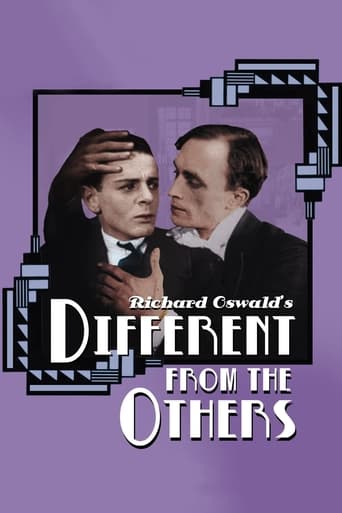



More about this film
About the production
Release dateSeptember 30, 1921
ProductionRichard Oswald Filmproduktion, Greenbaum-Film
Filmed inBerlin, Germany, Studio sets at Tempelhof Studios
The film was among the costliest German productions of 1921, featuring elaborate period costumes and detailed recreations of 18th-century naval battles. Director Richard Oswald was known for his ambitious historical epics and spared no expense in creating authentic sets and costumes. The production faced challenges in recreating naval battle sequences on a limited budget, using miniatures and clever camera work to simulate large-scale maritime combat.
Themes
Forbidden loveSocial climbingThe price of ambitionClass strugglePatriotism vs. personal happiness
Themes & topics
Historical background
The 1921 release of Lady Hamilton belongs to its era's exhibition habits rather than today's franchise model.
Why this film matters
Surviving prints of Lady Hamilton document how 1921-era filmmakers solved story problems with limited means.
Making of
The production of 'Lady Hamilton' was a massive undertaking for the German film industry of 1921. Director Richard Oswald, known for his elaborate historical productions, insisted on absolute authenticity in every detail. The cast underwent extensive preparation, with Liane Haid studying period dance and manners for months before filming began. The naval battle sequences presented particular challenges, as the production team had to create convincing maritime warfare without the benefit of modern special effects. They constructed large water tanks at the Tempelhof Studios and used a combination of full-sized vessels and detailed miniatures. The film's costume department worked tirelessly to recreate the elaborate fashions of the late 18th century, with many costumes being authentic period pieces sourced from private collections. The production was also notable for its relatively progressive portrayal of a woman's sexuality and agency, which was unusual for the time period.
What critics said
Modern retrospectives screen Lady Hamilton to illustrate 1921 pacing and camera norms.
Did you know?
- This was one of the first major international productions to tell the story of Emma Hamilton and Horatio Nelson on film
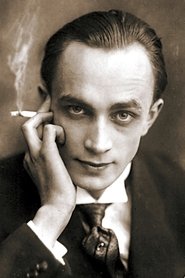
- Conrad Veidt, who plays a supporting role, would later become famous for his role as Major Strasser in 'Casablanca' (1942)
- The film was considered quite scandalous for its time due to its frank portrayal of adultery
- Director Richard Oswald was one of the few openly gay directors working in German cinema during this period
- The film's naval battle sequences were accomplished using detailed miniature models and innovative special effects techniques
- Liane Haid was one of Austria's biggest film stars of the silent era and this was one of her most prestigious international roles
- The film was banned in several countries, including Britain, due to its controversial subject matter
- Original intertitles were written by noted playwright Carl Mayer, who later co-wrote 'The Last Laugh' (1924)
- The production used over 2,000 historically accurate costumes, many of which were authentic 18th-century garments
- The film's success led to several other European productions about famous historical romances
Awards & recognition
- No major awards documented for this film - award systems were not yet standardized in 1921
Visual style
The cinematography by Carl Hoffmann was notable for its innovative use of lighting and camera movement. Hoffmann employed dramatic lighting techniques to enhance the romantic and tragic elements of the story, using strong contrasts between light and shadow to create emotional intensity. The film featured several technically complex shots, including the naval battle sequences which required innovative camera work to simulate the chaos of maritime warfare. Hoffmann also made effective use of location shooting and studio sets to create a convincing historical atmosphere. The cinematography was particularly praised for its ability to capture the opulence of 18th-century European society while also conveying the intimacy of the central romance.
Innovations
The film was notable for its innovative special effects, particularly in the naval battle sequences. The production team developed new techniques for creating realistic water effects and ship movements using miniature models. The film also featured impressive matte paintings and composite shots to create the illusion of large-scale historical settings. The makeup and costume departments achieved remarkable authenticity in recreating 18th-century appearances, with particular attention to historical accuracy in military uniforms and court dress. The film's editing was also sophisticated for its time, using cross-cutting techniques to build tension during battle sequences and parallel action scenes.
Music
As a silent film, 'Lady Hamilton' would have been accompanied by live musical performance during its original theatrical run. The score was likely compiled from classical pieces popular in the early 1920s, possibly including works by composers like Mozart and Beethoven to evoke the 18th-century setting. Large theaters would have employed full orchestras, while smaller venues might have used a pianist or small ensemble. The music would have been carefully synchronized with the on-screen action, with different themes for the romantic scenes, battle sequences, and tragic moments. No original score or cue sheets from the film's initial release are known to survive, which was common for films of this period.
Famous quotes
My heart belongs to England, but my soul belongs to you" - Emma Hamilton
In war, as in love, there are no rules" - Horatio Nelson
Society may judge us, but history will remember our love" - Emma Hamilton
Memorable scenes
- The dramatic naval battle sequence using innovative miniature effects and composite photography, The lavish court ball where Emma and Nelson first meet, The emotional farewell scene between the lovers before Nelson's final voyage, Emma's descent into poverty in the film's tragic conclusion
What audiences thought
The film was a commercial success in Germany and several other European countries, particularly in Austria where Liane Haid was already a major star. Audiences were drawn to the film's spectacle and its scandalous romance storyline. However, the film faced censorship issues in several markets, with some scenes being cut or the entire film being banned in more conservative countries. Despite these challenges, the film's popularity helped cement the historical romance as a commercially viable genre in European cinema. Contemporary audience reports suggest that viewers were particularly moved by the film's tragic ending and praised Haid's emotional performance in the final scenes.
Film connections
Influenced by
- Earlier historical epics by D.W. Griffith
- Italian historical films of the 1910s
- German theatrical traditions
- Romantic literature of the 19th century
This film influenced
- Later adaptations of the Hamilton-Nelson story
- German historical epics of the 1920s
- International historical romance productions
Film restoration
The film is believed to be partially lost or exists only in incomplete form. Some reels survive in European film archives, but no complete version of the original 1921 cut is known to exist. Fragments and clips have been preserved at the Bundesarchiv-Filmarchiv in Berlin and other European archives. Some restoration work has been undertaken on surviving elements, but the film remains incomplete.
Where to watch
- Due to its incomplete preservation status, the film is not widely available for viewing. Some surviving fragments may occasionally be shown at specialized film archives or silent film festivals. No official DVD or streaming releases are currently available.