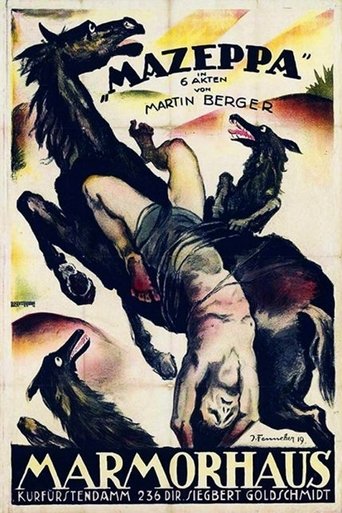
Mi. Samoliows
Actor
- Active
- 1919-1919
Films 1
About Mi. Samoliows
Mi. Samoliows is an obscure silent-era screen performer credited in the 1919 Ukrainian historical film "Mazeppa, Folk Hero of the Ukraine." Based on currently accessible classic-cinema reference material, very little biographical information has survived about his life beyond this screen credit, and no reliable evidence has surfaced for his birth date, birthplace, family background, or later career. The surviving record places him within the turbulent final years of the silent era, when regional film production in Eastern Europe was frequently disrupted by revolution, war, and shifting national borders. His appearance in a historically themed production suggests he was part of the small circle of actors working in early Ukrainian or adjacent film culture during a formative period for regional cinema. Because the available documentation is so limited, he is best understood today as a documented but little-recorded figure from early Ukrainian screen history rather than as a broadly chronicled star. Any fuller reconstruction of his career would require archival research in period trade papers, local film registries, or surviving production records from 1919.
More about Mi. Samoliows
In film history
Mi. Samoliows's cultural impact is difficult to measure because the surviving record is minimal and his documented career is limited to a single known appearance. Even so, his credit in a 1919 Ukrainian historical film places him within the foundational period of national and regional cinema in Eastern Europe, when filmmakers were using the screen to dramatize local history, identity, and folklore. In that sense, he is part of the wider group of early performers whose work helped establish cinematic narratives about Ukrainian heritage during a politically unstable era. For researchers and historians, even a sparse credit like his is valuable because it helps map the personnel of a largely undocumented silent-film landscape.
Later reputation
Mi. Samoliows's legacy is primarily archival rather than celebrity-based: he survives as a named contributor to an early silent film that reflects the ambitions of Ukrainian historical cinema. Because so little is known about him, his importance lies in the fact that his credit preserves evidence of the actors who participated in film production during a period when many records were lost or never systematically kept. He represents the many silent-era performers whose names remain attached to surviving titles even when their broader lives have disappeared from the historical record. For classic-cinema scholars, figures like Samoliows are reminders that film history extends well beyond the small number of well-documented stars and directors.
Influence
No direct influence on later actors or directors can be verified from the available record. His significance is indirect, insofar as his participation in an early Ukrainian historical film contributes to the lineage of regional cinema and to the preservation of national screen culture. The surviving evidence is insufficient to identify protégés, creative descendants, or performance traditions associated specifically with him.
Off screen
No reliable public information is currently available regarding Mi. Samoliows's personal life, including marriage, children, education, or later occupation. The historical record that survives in accessible film reference sources is limited almost entirely to a single film credit. As a result, any claims about his private life would be speculative and are not included here.
Credits
- Screen credit in the 1919 silent historical film "Mazeppa, Folk Hero of the Ukraine"
- Association with one of the earliest surviving documented examples of Ukrainian-themed cinema
- Participation in a production connected to the politically and culturally charged post-imperial period in Eastern Europe
Roles
- Role in "Mazeppa, Folk Hero of the Ukraine" (1919)
Films
Notes
- His surviving film credit is tied to a 1919 silent historical production, placing him squarely in the late silent era.
- He is associated with early Ukrainian cinema, a field whose documentation is often fragmentary due to war and political upheaval.
- The unusual abbreviated form of his credited name, "Mi. Samoliows," may reflect contemporary transliteration or incomplete archival record-keeping.
- No verified birth or death details are currently available in accessible mainstream film-reference sources.
- He appears to have been active for only one documented year, suggesting either a very brief screen career or very limited surviving records.
- He is an example of the many early film performers whose names survive even when their broader biographies do not.
Questions
Who was Mi. Samoliows?
Mi. Samoliows was a very obscure silent-era actor known from a credit in the 1919 film "Mazeppa, Folk Hero of the Ukraine." Beyond that screen appearance, little reliable biographical information has survived in accessible film history sources.
What films is Mi. Samoliows best known for?
He is best known for "Mazeppa, Folk Hero of the Ukraine" (1919), which is the only documented title currently associated with him. No other verified screen credits are presently confirmed in accessible reference material.
When was Mi. Samoliows born and when did he die?
His birth date and death date are currently unknown. Available classic-cinema records do not provide verified information about his birthplace, lifespan, or later life.
What awards did Mi. Samoliows win?
No awards or nominations are currently documented for Mi. Samoliows. This is not unusual for obscure silent-era performers, many of whom worked before modern awards systems were established or widely publicized.
What was Mi. Samoliows's acting style?
His specific acting style cannot be verified from the surviving record. Since he is only known from a single silent-film credit, there is not enough documented evidence to describe his technique with confidence.
Why is Mi. Samoliows significant to film history?
He is significant as one of the named performers connected to an early Ukrainian historical film from 1919. Even though his personal biography is mostly lost, his credit helps document the people involved in the earliest phase of regional cinema.