Wilfred Young
Actor
- Active
- 1915-1915
Films 1
About Wilfred Young
Wilfred Young was a silent-era actor whose surviving film record is extremely limited, and the available evidence places him in early motion pictures around 1915. He is credited in the 1915 film The Lone Game, but beyond that single surviving screen credit, reliable biographical documentation is scarce. Like many minor performers from the silent period, he appears to have worked in an industry where supporting and bit-player credits were often incomplete, inconsistently recorded, or entirely omitted from studio publicity. Because of that, his career cannot be reconstructed in the same level of detail as more prominent contemporaries, and no authoritative source has preserved a substantial life story. What can be said with confidence is that he was part of the earliest phase of American feature filmmaking, when actors moved quickly between small companies, short subjects, and one-reel or multi-reel dramas. His name survives primarily through filmographic reference rather than celebrity, which is itself typical of many performers who helped build the silent-era screen but did not become widely famous. In film history terms, Wilfred Young represents the many working actors whose contributions were real but whose personal histories were not extensively documented.
More about Wilfred Young
In film history
Wilfred Young's cultural impact is limited by the scarcity of surviving documentation, but his career still has historical value as part of the earliest generation of screen performers. Actors like Young helped populate the silent cinema ecosystem, appearing in productions that built audience habits and established narrative conventions that later became standard in feature filmmaking. Even when the individual names of such performers faded, their collective work supported the development of acting for the camera, ensemble storytelling, and the rise of the film industry as a mass medium. In that sense, his significance lies less in celebrity than in participation in the foundational years of movie history. His surviving credit is a reminder that the silent era was sustained by hundreds of briefly documented professionals whose work is now partially obscured by the passage of time.
Later reputation
Wilfred Young's legacy is archival rather than star-based: he survives in historical memory because a film credit exists, not because a large body of work or publicity campaign preserved his image. For scholars and database researchers, such names are important because they help complete the cast lists of early films and provide a fuller picture of the personnel involved in silent-era production. His presence in The Lone Game links him to the broader story of 1910s American cinema, when the industry was still establishing systems of billing, credit attribution, and star promotion. Although no celebrated body of work can presently be assigned to him, his record contributes to the reconstruction of film history and the identification of performers otherwise lost to time. In that way, his legacy is representative of many early screen actors whose existence is known through filmography rather than biography.
Influence
There is no verifiable evidence that Wilfred Young directly influenced major later performers or filmmakers. Any influence he may have had would have been indirect, as part of the working body of silent-era players who collectively shaped early screen acting norms. His value to film history lies primarily in documentation and preservation rather than clearly traceable artistic influence. If more archival material emerges, his role could be reassessed within the network of early film performers active in 1915.
Off screen
No reliable biographical record has been located for Wilfred Young regarding marriages, family background, residence, or other personal details. As with many silent-era performers who did not achieve major stardom, his private life appears not to have been preserved in the surviving trade press or standard film reference works. There is no verified information available here on spouses, children, or broader family connections.
Credits
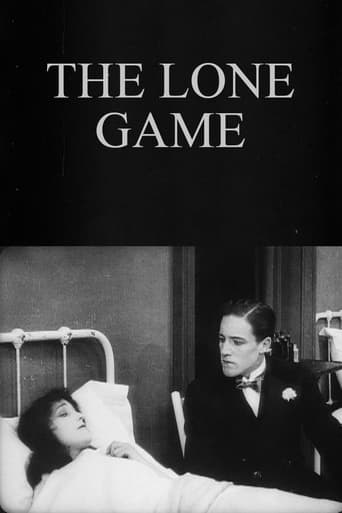
- Appeared in the 1915 silent film The Lone Game
- Worked during the formative years of American feature-length cinema
- Represents one of the many lesser-documented performers whose credits survive in early film reference sources
Roles
- Role in The Lone Game (1915)
Films
- The Lone Game (1915)
Notes
- Wilfred Young is currently known from only a very small surviving film record.
- His documented screen activity, as presently available, is limited to 1915.
- He is credited in The Lone Game, a silent film from the feature era's early development.
- No reliable birth or death information is readily available in standard references.
- He appears to be one of many silent-era actors whose careers were poorly documented in contemporary sources.
- His case illustrates how many early film performers survived in history only through scattered cast credits.
Questions
Who was Wilfred Young?
Wilfred Young was a silent-era film actor whose surviving documented screen work is very limited. He is primarily known from his credit in the 1915 film The Lone Game, and little else about his life or career has been reliably preserved.
What films is Wilfred Young best known for?
He is best known for The Lone Game (1915), which is the principal surviving credit associated with his name. No broader or more complete filmography is currently verified in the available record.
When was Wilfred Young born and when did he die?
At present, reliable sources do not provide verified birth or death dates for Wilfred Young. His life details appear to be lost or undocumented in the surviving historical record.
What awards did Wilfred Young win?
No awards or formal nominations are known for Wilfred Young. As a lesser-documented silent-era performer, he does not appear to have received recorded industry honors in the available sources.
What was Wilfred Young's acting style?
There is no surviving critical description of his acting style. Because his known credits are so limited, his screen technique can only be inferred broadly as part of silent-era performance practices.
What is Wilfred Young's legacy in film history?
His legacy is primarily historical and archival. He stands as one of the many early film actors whose names survive in cast records and help researchers reconstruct the development of silent cinema.