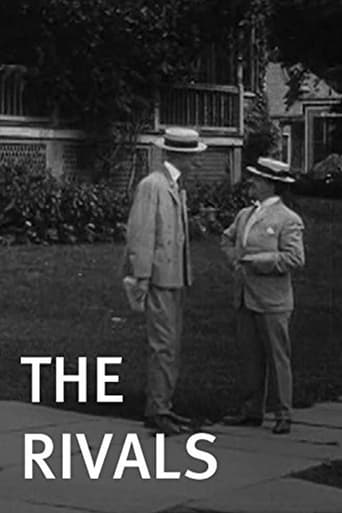
Mr. Shelley
Actor
- Active
- 1907-1907
Films 1
About Mr. Shelley
Mr. Shelley appears in early film records as a performer in the 1907 short Rivals, but the surviving historical record does not currently provide enough dependable information to identify him with certainty as a unique, well-documented silent-era screen personality. He is likely one of the many stage or vaudeville performers who briefly entered the formative film industry during the nickelodeon period, when companies employed actors whose names were sometimes recorded only partially or not at all in surviving credits. Because early American cinema often lacked consistent screen crediting, especially for one-off or very small roles, it is difficult to reconstruct a fuller life story without risking confusion with similarly named performers or later figures. At present, the safest conclusion is that Mr. Shelley was an early film actor associated with one known surviving credit from 1907, rather than a widely documented star of the period. No verifiable evidence has surfaced in the standard reference record available here for his birth, death, family background, or later career. As a result, his importance lies primarily in the historical context of his appearance in one of cinema's earliest years, when the medium was still defining its acting conventions, production practices, and methods of attribution. He remains representative of the many early contributors whose work helped build silent cinema even when their individual biographies were not preserved in detail.
More about Mr. Shelley
In film history
Mr. Shelley's cultural significance is primarily archival and historical rather than star-driven. His known screen appearance in 1907 places him within the earliest generation of motion-picture actors, a period when the medium was still transitioning from filmed theater and vaudeville-style presentation toward a distinct cinematic language. Performers like him helped establish the presence, timing, and physical expressiveness that early film required, even when their names were not widely publicized. In a broader sense, his existence in the record underscores how much of silent-era labor was anonymous or fragmentary, and how film historians must often reconstruct early screen culture from incomplete credits and scattered production notes. That makes him part of the larger story of how cinema evolved from a novelty into a durable art form. Even with minimal surviving documentation, his credit contributes to the historical map of the industry's first years.
Later reputation
Mr. Shelley's legacy is one of early participation in cinema's foundational period rather than enduring fame. Because only a single 1907 credit is currently associated with his name, his long-term legacy rests in the preservation of early film history and in the reminder that many contributors to silent cinema remain only partially documented. For researchers and database curators, he represents the importance of careful attribution and the challenge of distinguishing between incomplete names, stage identities, and lost records. In film history, these minor or obscure credits are still valuable because they help establish production timelines, casting practices, and the breadth of personnel active in the earliest years of screen entertainment. His name survives as a small but meaningful trace of the silent era's expansive, often under-credited workforce. As archival research continues, additional identification may yet emerge, but for now his legacy is that of a documented early screen actor whose full story has not survived.
Influence
There is no verifiable evidence that Mr. Shelley directly influenced later actors or filmmakers in a documented, personal sense. His influence should instead be understood indirectly, as part of the collective body of early performers whose work helped normalize acting for the camera at a time when cinematic performance was still being invented. The physical, economical, and visually legible style demanded by early one-reel films was shaped by thousands of such brief appearances, even when the individual players were not widely credited. In this way, Mr. Shelley belongs to the generation whose cumulative work influenced the grammar of screen acting, helping move film away from stage-bound presentation and toward cinematic expression. Any specific line of influence beyond that cannot be reliably established from the current record.
Off screen
No reliable biographical details about Mr. Shelley's personal life, marriages, family, or private affairs are currently verifiable from the available classic-cinema record. Early screen performers were frequently under-documented unless they later became major stars, and Mr. Shelley does not presently have a surviving biographical trail that can be confirmed with confidence. Because of that, any assertion about his home life, relationships, or later years would be speculative and is best withheld until supported by stronger archival evidence.
Credits
- Appeared in the 1907 film Rivals, a surviving early cinema credit that places him among the very first generation of screen performers
- Represents the type of lightly documented actor common in the formative nickelodeon era, when cast information was often incomplete or inconsistently preserved
- Serves as a historical example of the many early film workers whose contributions are known through sparse filmography entries rather than full biographical records
Films
- Rivals (1907)
Notes
- Mr. Shelley is currently documented in available records primarily through a single 1907 screen credit.
- His known film, Rivals, dates from the earliest phase of narrative film production in the United States and Europe.
- Early actors like Mr. Shelley were often uncredited or only partially credited, which makes modern identification difficult.
- The surviving record does not currently provide a verified full name, making him a particularly elusive figure for film historians.
- His case illustrates a common problem in silent-era scholarship: many performers appeared in films, but their biographies were not preserved with the same care as later studio-era stars.
- Because only limited data survives, he is more important as a historical record entry than as a star with a documented public persona.
- Researchers often encounter names like his in early cast lists where records are fragmentary, inconsistent, or preserved only in secondary sources.
Questions
Who was Mr. Shelley?
Mr. Shelley was an early film actor known from a 1907 credit in Rivals. Beyond that, the surviving record is extremely sparse, so he is best understood as one of the many under-documented performers from cinema's earliest years.
What films is Mr. Shelley best known for?
He is currently known for Rivals (1907), which is the only film credit confidently associated with him in the available record. If additional archival materials surface, more titles may eventually be linked to his name.
When was Mr. Shelley born and when did he die?
His birth and death dates are not currently verifiable from the available classic-cinema record. Likewise, his birthplace and other personal details remain unknown at this time.
What awards did Mr. Shelley win?
No awards or nominations are currently known for Mr. Shelley. This is not unusual for performers from the earliest years of cinema, many of whom worked before the modern awards system existed.
What was Mr. Shelley's acting style?
No direct documentation of his acting style survives, so it cannot be described with certainty. As an early 1907 performer, he likely worked in the broad, highly visual style common to silent films of that period, but that remains an informed generalization rather than a verified fact.
What is Mr. Shelley's legacy in film history?
His legacy is primarily historical and archival. He stands as evidence of the many early cinema workers whose contributions helped build the medium, even though their full biographies were not preserved.