Films
1 film
About Adam Charles Hayman
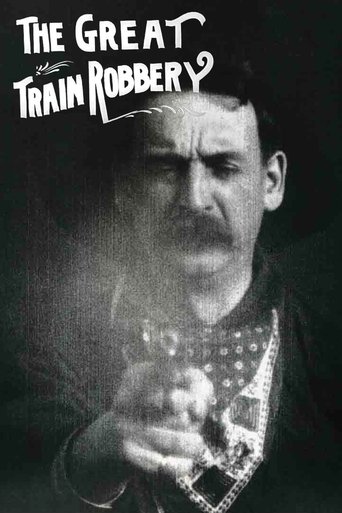
Adam Charles Hayman appears once in this catalog: The Great Train Robbery (1903). His sole documented film credit is in Edwin S. Porter's 1903 Western 'The Great Train Robbery,' which is widely considered early narrative films. Like many actors of this era, Hayman was likely a stage performer or local talent who was recruited for the new medium of motion pictures, which was still in its experimental phase. The film industry in 1903 was nascent, with most actors working for the Edison Manufacturing Company or Biograph Studio for a few dollars per day. Hayman's brief appearance in this landmark film places him among the very first generation of film actors, though his career appears to have been limited to this single production. The lack of additional film credits suggests he may have returned to other theatrical pursuits or left the entertainment industry entirely after this early foray into cinema.
The Craft
Milestones
- Appeared in 'The Great Train Robbery' (1903),
Best Known For
Iconic Roles
Must-See Films
Working Relationships
Worked Often With
Studios
Why They Matter
Impact on Culture
Adam Charles Hayman's contribution to cinema history, though minimal in scope, is significant due to his participation in 'The Great Train Robbery,' a film that revolutionized narrative storytelling in motion pictures. The film's innovative techniques, including cross-cutting, location shooting, and a dynamic chase sequence, influenced countless future filmmakers. As one of the credited actors in this landmark production, Hayman was part of a pivotal moment in cinema history when films evolved from simple actualities to complex narratives. His appearance places him among the pioneers who helped establish the foundation of American cinema.
Lasting Legacy
Adam Charles Hayman's legacy is tied directly to his participation in one of cinema's most important early works. While he did not have a lengthy film career, his inclusion in 'The Great Train Robbery' ensures his place in film history books as one of the earliest credited film actors. The film itself continues to be studied by film scholars and historians as a crucial turning point in the development of narrative cinema. Hayman represents the many anonymous or little-known performers from cinema's infancy who contributed to the art form's evolution despite not achieving lasting fame.
Who They Inspired
Due to his extremely limited filmography consisting of only one appearance in 1903, Adam Charles Hayman's direct influence on subsequent actors or filmmakers is not documented. However, his participation in a film that influenced generations of filmmakers indirectly connects him to the broader development of cinema as an art form.
Off Screen
Very little is known about Adam Charles Hayman's personal life, which is typical for actors from the very early silent era when detailed biographical records were not maintained for most film performers.
Did You Know?
- Appeared in what is widely considered the first American narrative film with a plot
- His entire known film career consists of a single film from 1903
- Worked for the Edison Manufacturing Company, Thomas Edison's film studio
- Participated in a film that was only 12 minutes long but revolutionary for its time
- The film he appeared in was one of the first to use cross-cutting techniques
- His role was during the era when film actors were not yet considered celebrities
- The film was shot on location in New Jersey, not in a studio
- Early films like this often used local talent rather than professional actors
- The film was a huge commercial success, unusual for the time
- His appearance predates the establishment of Hollywood as the film capital
Frequently Asked Questions
Who was Adam Charles Hayman?
Screen credits include 1903's 'The Great Train Robbery,'. His career appears to have been limited to this single film, making him one of the actors from the very dawn of motion pictures.
What films is Adam Charles Hayman best known for?
Titles linked here include The Great Train Robbery (1903).
When was Adam Charles Hayman born and when did he die?
Unfortunately, specific birth and death dates for Adam Charles Hayman are not documented, which is common for actors from the very early silent era when detailed biographical records were not maintained for most film performers.
What awards did Adam Charles Hayman win?
Adam Charles Hayman did not receive any formal awards or recognition during his lifetime, as the film industry and its award systems were not established in 1903. The Academy Awards would not be created until 1929, decades after his brief film appearance.
What was Adam Charles Hayman's acting style?
Given the limited documentation of his work and the primitive state of film acting in 1903, specific details about Adam Charles Hayman's acting style are not known. Early film acting was typically heavily influenced by stage performance techniques, with exaggerated gestures and expressions to compensate for the lack of synchronized sound.
Why is Adam Charles Hayman significant in film history?
Adam Charles Hayman is significant primarily because of his participation in 'The Great Train Robbery,' a film that revolutionized narrative cinema. Though he had a minimal career, his inclusion in this landmark film places him among the very first generation of film actors during cinema's formative years.