Films
1 film
About Charles Kayser
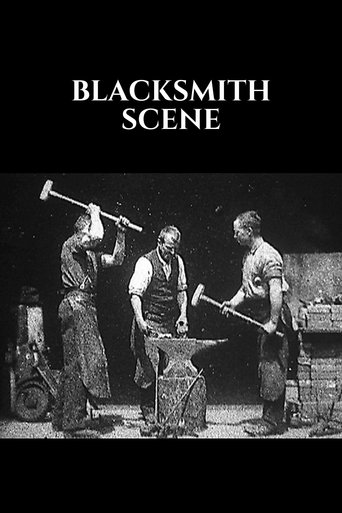
Charles Kayser was one of the very first film actors in cinema history, appearing during the experimental phase of motion picture development in the early 1890s. His most notable appearance was in the Edison Manufacturing Company's 'Blacksmithing Scene' (1893), one of the earliest examples of narrative filmmaking. Kayser worked alongside fellow actor John Ott in this short film that depicted two blacksmiths at work, demonstrating the new technology's ability to capture realistic movement and human activity. The film was directed by William Kennedy Laurie Dickson, Thomas Edison's primary assistant in developing motion picture technology. Kayser's participation in these early experiments placed him at the very dawn of cinema, making him a pioneer among film performers. His career was extremely brief, spanning only the year 1893, as the film industry was still in its infancy and professional acting in motion pictures had not yet emerged as a viable career path. Like many early film performers, Kayser was likely recruited from among Edison's employees or local residents rather than being a professional actor.
The Craft
Milestones
- Appeared in 'Blacksmithing Scene' (1893), one of the earliest narrative films
- Worked with Edison Manufacturing Company during the birth of cinema
- Participated in early motion picture experiments at Edison's Black Maria studio
Best Known For
Iconic Roles
Must-See Films
Working Relationships
Worked Often With
Studios
Why They Matter
Impact on Culture
Charles Kayser holds a unique place in cinema history as one of the very first people to appear in a motion picture. His participation in 'Blacksmithing Scene' (1893) represents a crucial moment in the development of narrative cinema, demonstrating that moving pictures could depict realistic human activities and tell simple stories. This early film, along with others from Edison's studio, helped establish the fundamental language of cinema and proved that motion pictures could engage audiences with depictions of familiar activities. Kayser's work, though brief, contributed to the foundation upon which the entire film industry would be built.
Lasting Legacy
Charles Kayser's legacy is that of a true pioneer who stood at the very beginning of cinema history. While his name is not widely known outside of film scholarship circles, his contribution to the development of motion pictures is historically significant. He represents the transition from photography to cinema and the first steps toward what would become the most influential art form of the 20th century. His appearance in one of the earliest narrative films makes him part of the foundation of cinematic storytelling.
Who They Inspired
As one of the first film actors, Charles Kayser's influence is more historical than artistic. His participation in early Edison films helped demonstrate the potential of motion pictures as a medium for capturing human activity and telling stories. While he did not develop acting techniques or influence other performers directly, his work contributed to the establishment of film as a viable medium for entertainment and art, paving the way for the generations of actors who would follow.
Off Screen
Very little is known about Charles Kayser's personal life, as he was not a public figure in the modern sense but rather a participant in early film experiments. Like many early film subjects, he was likely an Edison employee or local resident recruited for these films rather than a professional performer.
Did You Know?
- Appeared in 'Blacksmithing Scene' (1893), one of the first Kinetoscope films ever produced
- Worked at Edison's Black Maria studio, the world's first film production facility
- His film was shot in the Edison laboratory complex in West Orange, New Jersey
- The 'Blacksmithing Scene' was only about 30 seconds long, typical of early films
- Along with co-star John Ott, he was likely paid very little for his appearance in the film
- His film was designed to be viewed individually on Edison's Kinetoscope device
- He was among the first performers to demonstrate that motion pictures could depict realistic work activities
- His appearance predated the era of film stars and professional movie acting
- The film he appeared in was one of the first to show multiple characters interacting on screen
- His work helped establish the basic concept of narrative in motion pictures
Frequently Asked Questions
Who was Charles Kayser?
Charles Kayser was one of the first film actors in cinema history, appearing in Edison's 'Blacksmithing Scene' (1893). He was a pioneer performer during the experimental phase of motion pictures, working at the birth of cinema when film was still a new technology being developed by Thomas Edison's laboratory.
What films is Charles Kayser best known for?
Titles linked here include Blacksmithing Scene (1893).
When was Charles Kayser born and when did he die?
Unfortunately, specific birth and death dates for Charles Kayser are not available in historical records. Like many early film participants, he was not a public figure in the traditional sense, and personal biographical details were not preserved during cinema's experimental phase in the early 1890s.
What awards did Charles Kayser win?
Charles Kayser did not receive any formal awards or recognition during his lifetime. The film industry and its award systems had not yet been established in 1893, and he was participating in experimental technology demonstrations rather than what we would consider professional filmmaking today.
What was Charles Kayser's acting style?
Charles Kayser's acting style in 'Blacksmithing Scene' was likely naturalistic and realistic rather than theatrical. Early films aimed to capture authentic human activities, and as a blacksmith, he would have been performing actual work rather than adopting dramatic acting techniques that would later become common in silent cinema.
What was Charles Kayser's contribution to cinema history?
Charles Kayser's contribution to cinema history is that of a true pioneer who helped establish the foundation of narrative filmmaking. His appearance in one of the first films ever made demonstrated that motion pictures could depict human activities and tell simple stories, paving the way for the entire film industry that would follow.