
Blacksmithing Scene
"Sparks, sweat, and a shared bottle"
Keys: Space play/pause · ←/→ 10s · F fullscreen · M mute · </> speed
About this film
Three men hammer on an anvil and pass a bottle of beer around. Notable for being the first film in which a scene is being acted out.
Cast & crew
More Drama films
View all →






More from William K.L. Dickson
View all →

More about this film
About the production
Release dateMay 1893
BudgetNot recorded - experimental Edison film with no commercial budget
Box officeNot applicable - produced for Kinetoscope exhibition, not theatrical release
ProductionEdison Manufacturing Company
Filmed inEdison's Black Maria Studio, West Orange, New Jersey
Filmed in Edison's revolutionary Black Maria studio, the world's first purpose-built film production facility. The studio was designed with a retractable roof to utilize natural sunlight, as electric lighting was insufficient for early film exposure. The film was shot on 35mm film using Edison's Kinetograph camera, which could only capture about 30 seconds of footage at a time. The blacksmith set was constructed specifically for this production, making it one of the earliest examples of a built film set rather than simply documenting existing reality.
Themes
Work and laborWorking-class camaraderieIndustrial age craftsmanshipSocial interaction in the workplaceThe dignity of manual labor
Themes & topics
Historical background
Blacksmithing Scene reached screens around 1893, produced in its country of origin. Programs then mixed actualities, dances, and staged scenes in single-reel slots.
Why this film matters
Researchers cite Blacksmithing Scene when tracing screen culture of its decade. Catalog notes sometimes claim priority in national or technical history. Its brevity makes it useful for teaching how early narratives were staged.
Making of
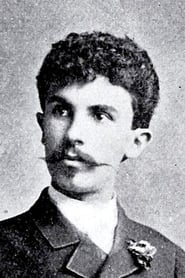
The production of 'Blacksmithing Scene' took place under the direction of William K.L. Dickson, Edison's primary assistant in developing motion picture technology. Dickson, who had been working on the Kinetograph camera and Kinetoscope viewing system since the late 1880s, was essentially the world's first film director. The Black Maria studio where it was filmed was a cramped, uncomfortable space with a tar-paper roof that could be opened to let in sunlight. The studio was mounted on a circular track so it could be rotated to follow the sun throughout the day, ensuring consistent lighting. The three performers - Kayser, Ott, and an unidentified third blacksmith - were likely given minimal direction, as the concept of film acting was entirely new. They probably performed the scene multiple times to ensure Dickson captured usable footage, as early film stock was extremely sensitive and many exposures failed. The entire production would have been a technical challenge, requiring careful coordination between the performers' movements and the hand-cranked camera's operation.
What critics said
Reviewers in 1893 weighed Blacksmithing Scene on clarity, pacing, and audience response rather than prestige status. No single canonical review dominates later reference works for the title.
Did you know?
- This is widely considered the first film in which actors deliberately perform a scene, marking the birth of narrative cinema rather than mere documentary recording.
- The film was shot at Edison's Black Maria studio, which was nicknamed 'The Doghouse' due to its resemblance to a police paddy wagon and its tendency to get extremely hot in the sun.
- Charles Kayser and John Ott were regular Edison employees who appeared in numerous early films, essentially becoming the world's first film actors.
- The bottle of beer shared in the film was likely real, as Edison's early films aimed for authenticity in their depiction of everyday activities.
- The film was exhibited on Edison's Kinetoscope, a peep-hole viewing device that allowed only one person at a time to watch the motion picture.
- The synchronized hammering of the three blacksmiths demonstrates early understanding of visual rhythm and choreography in film.
- At 30 seconds, this was considered a substantial length for an early film, as most Edison experiments were even shorter.
- The film was part of Edison's attempt to create commercially viable entertainment for his Kinetoscope parlors.
- Blacksmithing was chosen as a subject because it provided rhythmic, visually interesting movement that photographed well with early equipment.
- This film predates the Lumière brothers' first public screening by nearly three years, making it one of the very earliest motion pictures ever made.
Visual style
The cinematography of 'Blacksmithing Scene' reflects the extreme technical limitations of early motion picture equipment. The film was shot with a single, stationary camera positioned to capture the entire blacksmith scene in one wide shot, as camera movement was not yet possible. The lighting came entirely from natural sunlight entering through the Black Maria's retractable roof, creating harsh, high-contrast illumination that was necessary for the extremely slow film stock of the era. The frame composition is rudimentary but effective, with the three blacksmiths positioned to create visual balance and ensure all action remains visible within the fixed frame. The camera's shutter speed would have been very slow by modern standards, resulting in somewhat blurred motion during the rapid hammering sequences. Despite these technical constraints, the film demonstrates an early understanding of visual storytelling through careful positioning of performers and props within the frame.
Innovations
This film represents several important technical milestones in early cinema. It was one of the first successful demonstrations of the Kinetograph camera's ability to capture coordinated human movement over an extended period. The film showcases early mastery of exposure techniques, as the lighting remains consistent throughout the sequence despite the challenges of natural illumination. The synchronization of the three performers' hammering demonstrates an early understanding of visual rhythm and timing in motion pictures. The film also proved that narrative content could be successfully captured on film, moving beyond mere technical demonstrations. At 30 seconds, it was relatively long for its time, pushing the limits of how much footage could be captured on a single strip of early film stock. The successful choreography of multiple performers within the frame established important principles of blocking and staging that would become fundamental to film direction.
Music
The original film was completely silent, as synchronized sound technology would not be developed for another three decades. When exhibited in Kinetoscope parlors, viewers would watch the film through the peep-hole device without any audio accompaniment. The sounds of hammering and conversation would have been imagined by viewers based on the visual information. Modern screenings of the film are sometimes accompanied by period-appropriate music or sound effects, but these are not part of the original work. The lack of soundtrack was typical of Edison's early films, which focused purely on visual innovation. The silence actually adds to the historical authenticity, allowing modern viewers to experience the film as its original audience did, relying entirely on visual information to understand the narrative.
Memorable scenes
- The coordinated hammering sequence where all three blacksmiths strike the anvil in perfect rhythm, demonstrating early understanding of visual choreography and timing in motion pictures
What audiences thought
For audiences in 1893, 'Blacksmithing Scene' would have been a startling and magical experience. Most viewers had never seen moving photographs before, and the sight of three men hammering in perfect coordination, then pausing to share a drink, would have seemed miraculous. The film was exhibited in Kinetoscope parlors where customers paid 25 cents to view several short films through individual viewing machines. Audience reactions were reportedly enthusiastic, with many viewers returning multiple times to see the films again. The relatable subject matter of working men taking a break would have resonated with the largely urban, working-class audience who frequented these early entertainment venues. The novelty of seeing familiar activities captured on film created a sense of wonder that modern audiences can hardly imagine, making this simple scene a profound experience for its first viewers.
Film connections
Influenced by
- Edison's earlier experimental films including 'Monkeyshines No. 1' (1890)
- Eadweard Muybridge's motion studies
- Étienne-Jules Marey's chronophotography
This film influenced
- Edison's subsequent narrative films including 'The Kiss' (1896)
- Georges Méliès' staged fantasy films
- The Lumière brothers' actuality films with staged elements
- Early narrative cinema throughout the 1890s
Film restoration
The film is preserved in the Library of Congress collection as part of the Paper Print collection. Early Edison films were submitted for copyright protection as paper prints, which have allowed many of these fragile early works to survive. The original 35mm nitrate film is likely lost to decomposition, but high-quality digital copies exist for scholarly and public viewing. The film has been restored and digitized by several archives including the Library of Congress and the Museum of Modern Art.
Where to watch
- Library of Congress National Screening Room
- Museum of Modern Art film collection
- Various public domain film websites
- Educational film archives
- YouTube through authorized channels