Films
1 film
About John Ott
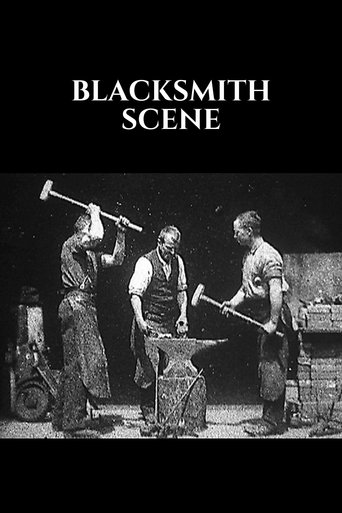
John Ott was one of the earliest film actors in cinema history, known for his appearance in the 1893 short film 'Blacksmithing Scene.' This film, directed by William K.L. Dickson for the Edison Manufacturing Company, is considered one of the first examples of narrative cinema and one of the earliest films to feature more than one person on screen simultaneously. Ott worked alongside another actor in what appears to be a staged blacksmith scene, showing the daily work of blacksmiths in a straightforward, documentary-style approach. His participation in this film places him among the very first performers to ever appear in motion pictures, predating the more famous early cinema stars by several years. The film itself was part of Edison's experimental work with the Kinetoscope, an early motion picture exhibition device. Unfortunately, like many early film performers, Ott's career appears to have been limited to this single appearance, as no other film credits have been documented. His contribution, however brief, represents a significant moment in the birth of narrative cinema and the evolution of film acting.
The Craft
On Screen
Naturalistic and documentary-style performance typical of early Edison films, where actors performed everyday activities without theatrical exaggeration, reflecting the realist approach of early cinema that aimed to capture authentic scenes of daily life and work.
Milestones
- Appeared in 'Blacksmithing Scene' (1893), one of the earliest narrative films ever made
- Participated in Edison Manufacturing Company's early film experiments
- Worked with filmmaker William K.L. Dickson
- Appeared in one of the first films to feature multiple actors on screen
- Contributed to the development of narrative cinema during its infancy
Best Known For
Iconic Roles
Must-See Films
Working Relationships
Worked Often With
Studios
Why They Matter
Impact on Culture
John Ott's appearance in 'Blacksmithing Scene' represents a crucial moment in cinema history, as he participated in one of the earliest attempts to create narrative motion pictures. This film helped establish the concept that moving images could tell stories or depict scenes from everyday life, not merely document single actions. The work of Ott and his fellow early performers laid the groundwork for the entire film industry that would follow, demonstrating that people would watch other people on screen performing familiar activities. His contribution, while seemingly minor, is part of the foundation upon which the art of film acting was built.
Lasting Legacy
John Ott's legacy is that of a pioneer who appeared at the very dawn of cinema. While his name is largely unknown to the general public, film historians recognize him as one of the first individuals to ever perform in a motion picture. His work in 'Blacksmithing Scene' is studied in film schools and referenced in cinema history books as an example of early narrative filmmaking. The film itself is preserved in the Library of Congress and recognized for its historical significance, ensuring that Ott's contribution to cinema history will be remembered.
Who They Inspired
As one of the earliest film performers, John Ott influenced the development of film acting simply by participating in these groundbreaking experiments. The naturalistic approach he and his co-performer took in depicting their work influenced the early documentary style of filmmaking. While he did not directly mentor later actors, the work of early performers like Ott helped establish the basic vocabulary of screen performance that would evolve and become more sophisticated over the following decades.
Off Screen
Very little is known about John Ott's personal life, as was common for many early film performers who were not yet treated as celebrities. His involvement in cinema appears to have been limited to his work with the Edison Manufacturing Company, likely as a local worker hired to demonstrate his actual trade for the camera rather than as a professional actor.
Did You Know?
- Appeared in what is considered one of the first narrative films in cinema history
- The film he appeared in was shot at the Edison Black Maria studio, the world's first movie production facility
- His film was one of the first to be shown on Thomas Edison's Kinetoscope
- The blacksmithing scene was likely not staged but showed actual blacksmiths at work
- His film runs for approximately 30 seconds, typical of early Edison productions
- He was one of the first people to ever be filmed with more than one other person in the frame
- The film he appeared in was added to the National Film Registry in 2021 for its cultural significance
- Like many early film performers, he was likely paid a small fee and received no screen credit
- His work predates the establishment of Hollywood as the center of American film production by over two decades
- The Edison film he appeared in was one of the first to show a sequence of actions rather than a single event
Frequently Asked Questions
Who was John Ott?
John Ott was one of the earliest film actors in history, known for his appearance in the 1893 Edison film 'Blacksmithing Scene.' He worked as a performer during the very beginning of cinema, participating in experimental films made by Thomas Edison's company.
What films is John Ott best known for?
Titles linked here include Blacksmithing Scene (1893).
When was John Ott born and when did he die?
The birth and death dates of John Ott are unknown, as was common for many early film performers who were not treated as celebrities during cinema's infancy.
What awards did John Ott win?
John Ott did not receive any awards during his lifetime, as he worked during the very earliest days of cinema before awards for film achievement were established.
What was John Ott's acting style?
John Ott's acting style was naturalistic and documentary-like, typical of early Edison films. He and his co-performer simply demonstrated their actual work as blacksmiths without theatrical exaggeration.
Why is John Ott significant in film history?
John Ott is significant because he was one of the very first people to ever appear in a motion picture, participating in films that helped establish cinema as a medium for narrative and documentary expression.
Did John Ott have a career in films beyond 1893?
No known film appearances by John Ott exist beyond his 1893 work in 'Blacksmithing Scene.' Like many early film participants, his involvement appears to have been limited to this single groundbreaking production.
Who did John Ott work with in his film career?
John Ott worked with filmmaker William K.L. Dickson at the Edison Manufacturing Company, appearing alongside another unidentified actor in the blacksmithing scene.