Films
1 film
About Hiroshi Mikura
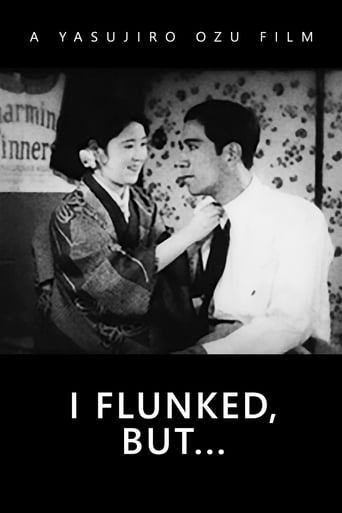
Hiroshi Mikura worked on one surviving credit: I Flunked, But (1930). (Rakudai wa shitakeredo). He is primarily remembered for his association with the director Yasujirō Ozu, appearing in the 1930 comedy 'I Flunked, But.' (Rakudai wa shitakeredo). During this era, Mikura was part of the Shochiku Kamata studio system, which was known for developing the 'shomin-geki' genre—films focusing on the lives of ordinary people. His career was brief and concentrated within the early 1930s, a time when Japanese studios were experimenting with Western-influenced student comedies and social satires. In 'I Flunked, But.', Mikura played one of the four roommates alongside Tatsuo Saitō, portraying the carefree and often humorous struggles of university students during the Great Depression. Despite his limited filmography, his participation in Ozu's early work places him within the foundational history of Japanese cinematic realism. Like many actors of the silent era who did not successfully transition to the sound era or chose to leave the industry, Mikura's life outside of his 1930 appearances remains largely undocumented in Western film archives.
The Craft
On Screen
Mikura utilized a naturalistic and rhythmic acting style typical of the Shochiku Kamata 'Kamata-style' of the late 1920s and early 1930s. His performance in Ozu's work required a balance of physical slapstick and subtle facial expressions to convey the irony of the film's themes. He excelled at the ensemble-based acting required for 'buddy' comedies, where timing with fellow actors was more critical than individual melodrama.
Milestones
- Cast by Yasujirō Ozu in the 1930 silent comedy 'I Flunked, But.'
- Member of the Shochiku Kamata Studio during its creative peak in the early 1930s
- Collaborated with notable silent film stars like Tatsuo Saitō and Kaoru Futaba
- Participated in the 'Student Comedy' genre that defined early 1930s Japanese cinema
Best Known For
Iconic Roles
Must-See Films
Accolades
Special Recognition
- Recognized in historical retrospectives of Yasujirō Ozu's early silent filmography
Working Relationships
Worked Often With
Studios
Why They Matter
Impact on Culture
Hiroshi Mikura's contribution lies in his role within the 'Nansensu' (Nonsense) film movement of Japan, which used humor to mask the underlying social anxieties of the 1930s. By appearing in Ozu's student comedies, he helped establish the archetype of the 'cheerful loser'—a character who finds joy and camaraderie despite academic or economic failure. This archetype became a staple of Japanese storytelling and influenced the portrayal of youth in later decades.
Lasting Legacy
While not a household name today, Mikura's legacy is preserved through the preservation efforts of the Criterion Collection and film historians focusing on Yasujirō Ozu. He represents the 'lost generation' of silent film actors whose work provides a window into the fashion, manners, and social atmosphere of pre-war Japan. His presence in 'I Flunked, But.' ensures he remains a subject of study for those researching the evolution of the world's greatest directors.
Who They Inspired
His ensemble work influenced the group dynamics seen in later Japanese 'salaryman' comedies and student-centric dramas.
Off Screen
Very little is known about Mikura's personal life due to the age of the records and his short-lived career in the spotlight. He worked during a period where studio contracts were often short and many actors moved between theater and film or left the industry entirely as the 'talkie' revolution changed the requirements for screen performers.
Education
null
Did You Know?
- He appeared in one of Ozu's few surviving complete silent films; many others from that era were lost to fire or war.
- The film 'I Flunked, But.' was inspired by Harold Lloyd's American comedies, and Mikura's performance reflects that Western influence.
- He worked at the Kamata Studio, which was famous for its 'Kamata Color'—a metaphorical term for the studio's optimistic and modern atmosphere.
- His screen time in 'I Flunked, But.' involves significant scenes of synchronized movement with his co-stars, a hallmark of Ozu's early rhythmic editing.
- Despite his brief career, he is listed in the definitive 'Complete Index to World Film' due to the historical importance of his 1930 work.
In Their Own Words
The film 'I Flunked, But.' is a silent film, so Mikura's performance is conveyed through intertitles and physical expression rather than spoken dialogue.
Frequently Asked Questions
Who was Hiroshi Mikura?
Japanese film with credits in this catalog. He is best known for his role in Yasujirō Ozu's comedy 'I Flunked, But.' (1930).
What films is Hiroshi Mikura best known for?
Titles linked here include I Flunked, But. (Rakudai wa shitakeredo) (1930).
When was Hiroshi Mikura active in the film industry?
Born null; died null.
What was Hiroshi Mikura's acting style?
He practiced a naturalistic, ensemble-based style of acting that blended physical comedy with the subtle social realism favored by director Yasujirō Ozu.
What is Hiroshi Mikura's legacy in cinema?
His legacy is tied to the early career of Yasujirō Ozu; he helped define the 'student comedy' genre that explored the lives of ordinary Japanese youth during the 1930s.