I Flunked, But...
"This bittersweet comedy tells the tale of a group of college roommates…"
Keys: Space play/pause · ←/→ 10s · F fullscreen · M mute · </> speed
About this film
This bittersweet comedy tells the tale of a group of college roommates attempting to cheat their way through their exams. As the title goes, things don't work out for our roguish main character, but his classmates soon find themselves in a similarly sorry state...
Cast & crew
More films like this
More Comedy films
View all →







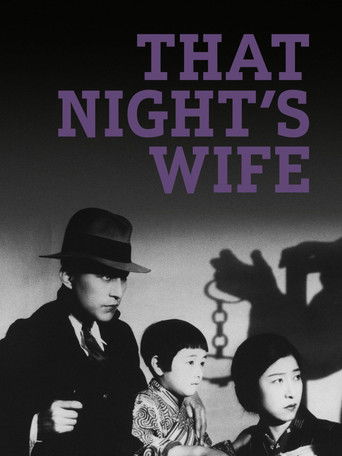
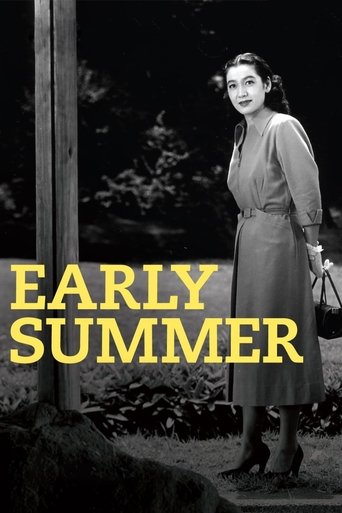
More from Yasujirō Ozu
View all →
More about this film
About the production
Release dateApril 11, 1930
Box officeUnknown
ProductionShochiku Kamata Studio
Filmed inKamata, Tokyo, Japan
The film was remarkably shot in just one week during late March and early April 1930. It was the 15th film directed by Ozu and was part of a series of 'student comedies' he produced for Shochiku. Ozu drew from his own personal history for the film, as he himself had failed entrance exams for Kobe University and a teacher training college. The production utilized the Shochiku 'no star' policy of the time, focusing on ensemble casts and situational humor rather than big-name leads.
Themes
The irony of success and failureEconomic depression and unemploymentMale camaraderie and student lifeWesternization of Japanese cultureThe futility of academic pressure
Themes & topics
college studentscheating on examsGreat Depressionunemploymentroommateslaundry mistakecheerleading1930s Japan
Historical background
Released in 1930 during the early sound era, I Flunked, But. reached audiences when exhibitors were still defining programming conventions. The narrative hook—This bittersweet comedy tells the tale of a group of college roommates…—reflects what contemporary producers thought would draw viewers.
Why this film matters
I Flunked, But. remains discussed by archivists tracing how screen stories of its period represented work, desire, conflict, and social order. Its central situation—This bittersweet comedy tells the tale of a group of college roommates…—still prompts questions about genre conventions and audience expectations.
Making of
During the production of 'I Flunked, But.', Ozu was deeply influenced by the 'nonsense' (nansensu) genre of Japanese comedy, which blended slapstick with social satire. He worked closely with screenwriter Akira Fushimi to create a narrative that mirrored the anxieties of contemporary Japanese youth. Ozu was known for demonstrating every gesture to his actors rather than discussing their characters' internal motivations, a technique he borrowed from Ernst Lubitsch. The film's rapid production schedule was typical for Shochiku's Kamata studio, which functioned like a high-speed factory for short features. Interestingly, Ozu's favorite actor Chishū Ryū was initially nervous about his first major role, but Ozu's precise, gesture-based direction helped him find the understated style that would define his career.
What critics said
Trade and newspaper notices for I Flunked, But. generally emphasized casting, spectacle, and program fit rather than extended aesthetic argument. Retrospective screenings and archival notes continue to shape how viewers evaluate I Flunked, But. today.
Did you know?
- This film marked the first significant role for Chishū Ryū, who would go on to become Ozu's most frequent collaborator and the face of his later masterpieces.
- A poster for the 1929 American film 'Charming Sinners' is prominently displayed on Takahashi's bedroom wall, reflecting Ozu's obsession with Hollywood cinema.
- The film is considered a 'flip side' or companion piece to Ozu's 1929 film 'I Graduated, But.', which dealt with the same theme of unemployment from the opposite perspective.
- The child actor Tomio Aoki, who plays the landlady's son, was so popular that he took the name of his character from a previous Ozu film, 'Tokkan Kozō', as his professional stage name.
- Ozu used the anglicized pseudonym 'James Maki' for some of his writing credits during this period to appeal to urban, Westernized audiences.
- The 'nonsense' dance performed by the students is a direct homage to Harold Lloyd's jig in the 1925 film 'The Freshman'.
- Despite the comedic tone, the film was produced during the height of the Great Depression, which heavily influenced its social commentary on the futility of education during an economic crisis.
- The film was shot without a continuity sheet, as Ozu famously kept all camera angles and compositions entirely in his head.
Awards & recognition
- Kinema Junpo Best Ten - Ranked as one of the top films of the year (1930)
Visual style
The film features the early development of Ozu's signature visual style, including low-angle shots and a focus on 'connective tissue'—lingering on objects and spaces between scenes. Cinematographer Hideo Shigehara utilized a mobile camera more frequently than in Ozu's later static works, including tracking shots that follow the students through the campus. The use of American movie posters as background elements serves both as art direction and as a thematic layer, signaling the characters' cultural aspirations.
Innovations
The film is noted for its 'Lubitschian' symmetry, where visual gags and plot points are mirrored throughout the narrative. Ozu's use of 'graphic matches'—where the composition of one shot matches the next—is already evident here. The film also demonstrates Ozu's early experimentation with breaking the 180-degree rule, a technique he would later refine into a cornerstone of his unique cinematic grammar.
Music
As a silent film, it was originally accompanied by live 'benshi' (narrator) performances and a live theater orchestra. Modern restorations often feature new scores by silent film composers like Donald Sosin, typically utilizing jaunty, Western-style piano or small ensemble arrangements to match the film's lighthearted, collegiate atmosphere.
Famous quotes
I flunked, but. (The title itself serves as the film's central ironic mantra)
Graduation is just the beginning of unemployment. (Thematic sentiment conveyed through intertitles)
Memorable scenes
- The 'crib note' scene where the students meticulously write answers on Takahashi's shirt, only for the landlady to walk in and take it away.
- The final sequence where the flunked students perform a synchronized cheerleader dance, celebrating their failure while the 'successful' graduates look on in misery.
- The scenes in the bakery where the students compete for the attention of the waitress, showcasing Ozu's talent for ensemble comedy.
What audiences thought
The film was a commercial success for Shochiku, resonating strongly with university students and young urban workers who saw their own struggles reflected on screen. The relatable characters and the humorous take on a dire economic situation made it a popular 'nonsense' comedy that provided both escapism and a sense of shared identity for the 'lost generation' of 1930s Japan.
Film connections
Influenced by
- The Freshman (1925) by Fred C. Newmeyer and Sam Taylor
- The films of Harold Lloyd
- The sophisticated comedies of Ernst Lubitsch
- Charlie Chaplin's slapstick shorts
This film influenced
- I Was Born, But. (1932)
- Where Now Are the Dreams of Youth? (1932)
- Good Morning (1959) - thematic echoes of childhood/student rebellion
Film restoration
The film is preserved and exists in a nearly complete form, which is rare for Ozu's silent era work. It has been restored by the Shochiku MediaWorx and is included in various prestigious collections, such as the Criterion Collection's 'Eclipse' series and the BFI's Ozu collection.
Where to watch
- The Criterion Channel
- BFI Player
- Eclipse Series 10: Silent Ozu — Three Family Comedies (DVD/Blu-ray)
- HBO Max (via Turner Classic Movies/Criterion hub)