Films
1 film
About Kenji Satome
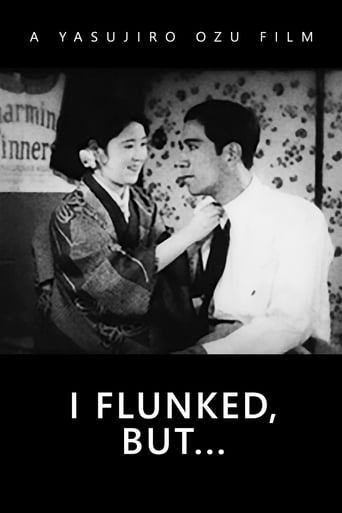
Japanese actor active during the early 1930s, primarily associated with the Shochiku Kamata studio during a transformative era of Japanese silent cinema. He is best remembered for his role as a student in Yasujirō Ozu's 1930 comedy 'I Flunked, But..' (Rakudai wa shitakeredo), where he played the character Suzuki. During this period, Satome was part of a vibrant ensemble of young actors who specialized in the 'nonsense' (nansensu) and college comedy genres that were popular in Japan before the full transition to talkies. His career coincided with the rise of the 'shomin-geki' genre, which focused on the lives of ordinary people and the working class. Although his filmography is relatively brief, his participation in Ozu's early works places him within the foundational circle of actors who helped define the director's early rhythmic and comedic style. Satome's work often involved physical comedy and ensemble-based performances that reflected the carefree yet economically precarious life of Japanese youth during the Great Depression.
The Craft
On Screen
Satome's acting style was rooted in the 'nansensu-eiga' tradition, which emphasized physical comedy, slapstick, and expressive facial gestures. In his roles as a student, he utilized a lighthearted and rhythmic approach to performance, often engaging in synchronized movements or 'dances' with other cast members, a hallmark of early Ozu comedies influenced by Harold Lloyd. His performance required a balance between the exaggerated humor of silent film and the burgeoning realism that would later define Japanese cinema.
Milestones
- Cast as Suzuki in Yasujirō Ozu's 'I Flunked, But.' (1930)
- Collaborated with legendary director Yasujirō Ozu during his formative silent comedy period
- Worked alongside iconic Japanese actors such as Tatsuo Saitō and Kinuyo Tanaka
- Part of the Shochiku Kamata studio's roster of comedic talent in the early 1930s
- Contributed to the 'Nansensu' (nonsense) film movement in pre-war Japanese cinema
Best Known For
Iconic Roles
Must-See Films
Accolades
Special Recognition
- Featured in the BFI and Criterion Collection releases of Ozu's 'The Student Comedies'
Working Relationships
Worked Often With
Studios
Why They Matter
Impact on Culture
Kenji Satome contributed to the cultural phenomenon of 'student films' in 1930s Japan, which provided a satirical look at the education system and the harsh reality of the job market during the Depression. These films were instrumental in introducing Western-style comedy and fashion to Japanese audiences, blending American slapstick influences with local social commentary. His presence in these films helped solidify the archetype of the 'cheerful slacker' in Japanese pop culture.
Lasting Legacy
Satome's legacy is preserved through his inclusion in the early filmography of Yasujirō Ozu, one of the world's most revered filmmakers. As a member of the 'passing students' or the core group of friends in Ozu's college comedies, he represents a specific era of Japanese film history that was nearly lost to time. His work is studied by film historians interested in the evolution of Ozu's visual language and the development of the Shochiku 'house style'.
Who They Inspired
While not a leading star, Satome influenced the ensemble dynamic of early Japanese comedies, showing how supporting players could enhance the rhythmic timing of a scene through collective movement and reaction.
Off Screen
Detailed records of Satome's personal life remain scarce due to the age of the records and the loss of many studio documents from the pre-war era. Like many supporting actors of the Shochiku Kamata era, he was likely a contract player who moved between various short-form projects and features during the studio's high-output period.
Education
Likely trained within the Shochiku Kamata studio system, which operated its own acting schools and apprenticeships for young talent in the 1920s and 30s.
Did You Know?
- Satome played the character Suzuki, one of the 'passing students' who successfully graduates while the protagonist Takahashi (Tatsuo Saitō) fails.
- He appeared in 'I Flunked, But.', which was filmed in just one week between March and April 1930.
- The film he is best known for was heavily influenced by Harold Lloyd's 'The Freshman' (1925).
- He worked at the Shochiku Kamata studio, which was the center of modern, Western-influenced 'Gendaigeki' (contemporary life) films in Japan.
- His screen time in Ozu's work often involved performing the 'student dance,' a recurring comedic motif in Ozu's early films.
Frequently Asked Questions
Who was Kenji Satome?
Japanese actor active in the early 1930s, best known for his supporting roles in the silent comedies of legendary on YTB.my. He was a contract player at the Shochiku Kamata studio during the height of the 'nonsense' film era.
What films is Kenji Satome best known for?
Titles linked here include I Flunked, But. (Rakudai wa shitakeredo) (1930).
When was Kenji Satome active in the film industry?
Satome was active during the early 1930s, specifically noted for his work in 1930. This was a pivotal time in Japanese cinema as it transitioned from silent films to 'talkies' and moved toward more realistic social dramas.
What was Kenji Satome's acting style?
His style was characterized by the physical and rhythmic comedy typical of early Shochiku silent films. He often performed as part of an ensemble, using synchronized gestures and slapstick humor influenced by American silent stars like Harold Lloyd.
What is Kenji Satome's legacy in cinema?
Satome's legacy lies in his contribution to the early career of Yasujirō Ozu. By appearing in Ozu's formative 'student comedies,' he helped establish the comedic timing and character archetypes that would eventually evolve into the director's world-renowned 'shomin-geki' style.