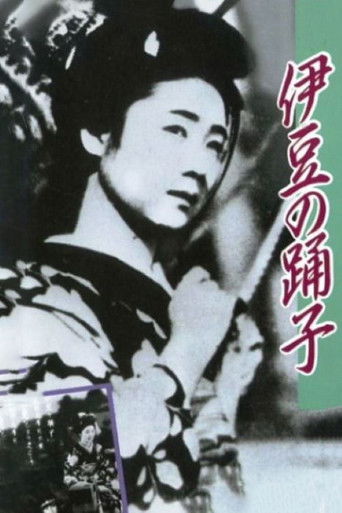
Films
1 film
About Shizue Hyōdō
The 1933 film The Dancing Girl of Izu is the only title linked here for Shizue Hyōdō. Making her mark in the 1933 film adaptation of Yasunari Kawabata's renowned novella 'The Dancing Girl of Izu.' Her career, though brief, coincided with a pivotal moment in Japanese film history as the industry transitioned from silent films to talkies. Hyōdō's portrayal in this literary adaptation represented the emerging naturalistic acting style that was gaining prominence in Japanese cinema during the early 1930s. The film itself was directed by Heinosuke Gosho, one of the prominent directors of the era who helped establish the shomin-geki (genre films about ordinary people) style. Despite her limited filmography, Hyōdō's contribution to this significant work places her within the context of Japan's golden age of cinema. Her single known film appearance suggests she may have been discovered specifically for this role or perhaps pursued acting only briefly during this transformative period in Japanese cultural history.
The Craft
On Screen
Representative of the naturalistic acting style emerging in early 1930s Japanese cinema, emphasizing emotional authenticity and subtle expression characteristic of the shomin-geki genre
Milestones
- Starred in 'The Dancing Girl of Izu' (1933), a significant adaptation of Yasunari Kawabata's literary work
- Participated in early Japanese sound cinema during its formative years
Best Known For
Iconic Roles
Must-See Films
Working Relationships
Worked Often With
Studios
Why They Matter
Impact on Culture
Shizue Hyōdō's contribution to cinema, while limited to a single film, is significant due to her participation in one of the important literary adaptations of early Japanese sound cinema. 'The Dancing Girl of Izu' was part of a movement in the 1930s that brought serious literary works to the screen, elevating the cultural status of Japanese cinema. Her performance helped establish the naturalistic acting style that would become characteristic of Japanese cinema's golden age, influencing subsequent generations of actors.
Lasting Legacy
Though her filmography consists of only one known work, Shizue Hyōdō remains part of the historical record of Japanese cinema's transition to sound and its embrace of literary adaptations. Her performance in 'The Dancing Girl of Izu' contributes to the film's enduring status as a classic of early Japanese cinema, and she represents the many talented actors of the era whose contributions, while perhaps brief, helped shape the foundation of modern Japanese film.
Who They Inspired
As an early practitioner of naturalistic acting in Japanese cinema, Hyōdō's work in 'The Dancing Girl of Izu' exemplified the subtle, emotionally authentic approach that would influence subsequent generations of Japanese actors. The film itself, and by extension her performance, became part of the cinematic vocabulary that directors and actors would reference in later decades.
Off Screen
Very limited information is available about Shizue Hyōdō's personal life, which is not uncommon for actors from this era of Japanese cinema, especially those with brief careers. Her single known film appearance suggests she may have been a young actress who either retired from acting early or pursued other career paths after her brief foray into cinema.
Did You Know?
- 'The Dancing Girl of Izu' has been adapted multiple times for film and television, with Hyōdō's 1933 version being one of the earliest cinematic adaptations
- The original story by Yasunari Kawabata was published in 1926 and is considered one of his most famous works
- The 1933 film was directed by Heinosuke Gosho, a pioneer of Japanese sound cinema
- The film represents an early example of the shomin-geki genre, focusing on ordinary people's lives
- Kawabata later won the Nobel Prize in Literature in 1968, bringing renewed attention to adaptations of his works
- The story 'The Dancing Girl of Izu' is semi-autobiographical, based on Kawabata's own experiences
- Early Japanese sound films like this one were crucial in establishing cinematic techniques unique to Japanese culture
Frequently Asked Questions
Who was Shizue Hyōdō?
Japanese actress active in the early 1930s, best known for her starring role in the 1933 film 'The Dancing Girl of Izu.' Her career appears to have been brief, with this literary adaptation being her only known film appearance.
What films is Shizue Hyōdō best known for?
Titles linked here include The Dancing Girl of Izu (1933).
When was Shizue Hyōdō born and when did she die?
Specific birth and death dates for Shizue Hyōdō are not documented in available historical records, which is not uncommon for actors from this era of Japanese cinema, especially those with brief careers.
What awards did Shizue Hyōdō win?
There are no recorded awards or nominations for Shizue Hyōdō, which reflects both the limited scope of her filmography and the different nature of film recognition during the early 1930s Japanese cinema industry.
What was Shizue Hyōdō's acting style?
Hyōdō's acting style in 'The Dancing Girl of Izu' exemplified the naturalistic approach emerging in early 1930s Japanese cinema, characterized by subtle emotional expression and authenticity that was becoming central to the shomin-geki genre.