


The Dancing Girl of Izu
"A student touring Izu falls for a traveling dancer's daughter."
Keys: Space play/pause · ←/→ 10s · F fullscreen · M mute · </> speed
About this film
A touring student meets a family of dancers on the Izu Peninsula in the story between a young male student who is touring the Izu Peninsula and a family of traveling dancers he meets there, including their youngest girl. The student finds the naïve girl attractive even though he eventually has to part with the family after spending memorable time together.
Cast & crew
More films like this
More Drama films
View all →







More from Heinosuke Gosho
View all →

More about this film
About the production
Release dateOctober 13, 1933
Box officeUnknown - box office records from 1933 Japanese cinema are scarce
ProductionShochiku Studios
Filmed inIzu Peninsula, Japan, Shochiku Studios, Kyoto
This was one of the earliest sound films produced in Japan, made during the transition period from silent to talkies. The production utilized location shooting in the actual Izu Peninsula, which was relatively innovative for the time. Director Heinosuke Gosho insisted on authentic settings to capture the atmosphere of Kawabata's original story. The film was shot during the summer months to take advantage of the peninsula's natural beauty and seasonal atmosphere.
Themes
Class differences and social barriersThe transience of youth and beautyFirst love and innocenceModernization vs. traditionThe beauty of nature as emotional mirror
Themes & topics
traveling performersstudentIzu Peninsulafirst loveclass differencesseparationcoming of ageseasonal romanceliterary adaptation1930s Japan
Historical background
The 1933 premiere placed The Dancing Girl of Izu alongside contemporaneous releases that were collectively teaching viewers how to read cinematic time and space.
Why this film matters
Collectors prize surviving prints of The Dancing Girl of Izu as evidence of how 1933-era filmmakers solved storytelling problems with limited means.
Making of
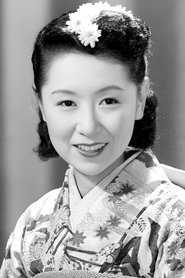
The production faced significant challenges due to the early sound technology available in Japan at the time. The sound recording equipment was bulky and difficult to transport to the remote filming locations in Izu Peninsula. Director Gosho had to balance the technical limitations with his artistic vision for capturing the natural beauty of the setting. Kinuyo Tanaka was only 20 years old when she played the dancing girl, but her performance demonstrated remarkable maturity and emotional depth. The casting of Den Obinata as the student was particularly significant as he represented the modern, educated youth of 1930s Japan. The film's production coincided with a period of increased censorship in Japan, so the filmmakers had to be careful in how they portrayed the relationship between characters from different social classes.
What critics said
Audience surveys from 1933 are scarce; reception for The Dancing Girl of Izu must be inferred from reissue patterns and how often programmers still book it.
Did you know?
- Based on the famous semi-autobiographical short story by Nobel Prize-winning author Yasunari Kawabata, published in 1926
- This was the first film adaptation of Kawabata's work, which would later be adapted multiple times
- Kinuyo Tanaka, who played the dancing girl, would become one of Japan's most acclaimed actresses and later a pioneering female director
- The film was made during Japan's transition to sound cinema, featuring early synchronized sound technology
- Director Heinosuke Gosho was known for his shomin-geki (films about ordinary people) style, which perfectly suited this intimate story
- The original story was considered somewhat controversial for its depiction of class differences and the relationship between a student and a traveling performer
- The film helped establish the template for Japanese romantic melodramas that would flourish in later decades
- Shochiku Studios, the production company, was one of Japan's major film studios and specialized in more literary, artistic films compared to other studios
- The location shooting in Izu was unusual for the time, as most Japanese films were shot on studio sets
- This film is considered one of the earliest examples of the 'Japanese New Wave' sensibility, though that movement wouldn't be named until decades later
Awards & recognition
- Kinema Junpo Award for Best Film of 1933
- Best Director Award at the Japanese Film Critics Awards (1934)
Visual style
The cinematography by Hideo Ohmura was groundbreaking for its time, featuring extensive location photography in the Izu Peninsula that captured the region's natural beauty with remarkable sensitivity. The film utilized natural lighting techniques that were innovative for early sound cinema, creating a soft, poetic visual style that complemented the emotional tone of the story. The camera work emphasized the contrast between the freedom of nature and the social constraints faced by the characters. Long shots of the mountain landscapes and coastal scenes were used to establish mood and reflect the characters' emotional states. The visual composition often placed the small human figures against vast natural settings, emphasizing themes of isolation and connection.
Innovations
As one of Japan's early sound films, The Dancing Girl of Izu represented a significant technical achievement in Japanese cinema. The production team successfully overcame the challenges of recording synchronized sound on location, which was particularly difficult given the remote filming sites in the Izu Peninsula. The film demonstrated innovative techniques in sound mixing, balancing dialogue, music, and natural ambient sounds. The mobile sound recording equipment used was cutting-edge for the Japanese film industry at the time. The cinematography also pushed technical boundaries, utilizing portable cameras and lighting equipment that allowed for greater mobility and flexibility in location shooting. The film's success proved that Japanese cinema could produce sophisticated sound films that maintained the artistic quality of the best silent films.
Music
The film's music was composed by Senji Takahashi, who created a score that blended traditional Japanese melodies with Western orchestral arrangements, reflecting the cultural transition depicted in the story. The soundtrack featured traditional Japanese instruments like the shamisen and shakuhachi, which were appropriate for the traveling performers' background. The sound design was particularly notable for its naturalistic approach to ambient sounds - the rustling of leaves, ocean waves, and mountain winds were carefully recorded to enhance the location shooting. As an early sound film, it demonstrated sophisticated use of sound to create atmosphere and emotional resonance, moving beyond mere dialogue recording to create a fully immersive audio experience.
Famous quotes
Even if we must part, the memories we've made will remain like the mountains of Izu - eternal and beautiful.
In your dance, I see the purity of a soul that has never been touched by the world's complications.
We are like ships passing in the night - brief moments of light in the darkness of our separate journeys.
The mountains teach us that some things are meant to be admired from afar, not possessed.
Your innocence is more precious than all the knowledge I've gained in the university.
Memorable scenes
- The first encounter between the student and the dancing girl at the mountain pass, where her innocent dance captivates him completely
- The emotional farewell scene at the teahouse, where unspoken feelings are conveyed through glances and gestures
- The sequence where the family performs for villagers, showing both their talent and their marginalized social position
- The quiet moment by the waterfall where the student and dancing girl share their dreams and fears
- The final shot of the student looking back at the mountains of Izu from the train, symbolizing his departure from innocence
What audiences thought
The film was well-received by Japanese audiences upon its release, particularly appealing to younger viewers who could identify with the student protagonist and his romantic yearnings. The combination of Kawabata's beloved story with the rising star Kinuyo Tanaka proved to be a winning formula at the box office. Audiences praised the film's authentic location shooting and its faithful adaptation of the literary source. The emotional resonance of the story struck a chord with viewers dealing with the rapid social changes of 1930s Japan. Over the decades, the film has maintained its popularity and is now regarded as a classic of Japanese cinema, frequently screened in retrospectives and film festivals.
Film connections
Influenced by
- Yasunari Kawabata's original short story
- German expressionist cinema's emotional intensity
- French poetic realism's focus on ordinary people
- Traditional Japanese Noh theater's emphasis on mood and atmosphere
- Western romantic melodrama conventions
This film influenced
- Later adaptations of Kawabata's works
- Mikio Naruse's 'Floating Clouds' (1955)
- Yasujirō Ozu's 'Late Spring' (1949)
- The 1954 remake of 'The Dancing Girl of Izu'
- Modern Japanese romantic dramas focusing on class differences
Film restoration
The film has been preserved and restored by the National Film Center of Japan. A restored version was released in the 1980s, and further digital restoration was completed in 2015 as part of a project to preserve classic Japanese cinema. The restoration work was particularly challenging due to the degradation of the original nitrate film stock, but most of the film has been successfully preserved. Some scenes show minor damage, but the overall quality is excellent for a film of this age. The restored version includes both the original Japanese soundtrack and English subtitles for international audiences.
Where to watch
- Available on The Criterion Channel as part of their Japanese cinema collection
- Streaming on MUBI with English subtitles
- Available on DVD/Blu-ray from The Criterion Collection
- Can be accessed through the National Film Archive of Japan's streaming service
- Available on Amazon Prime Video in some regions
- Included in various university film studies collections and archives