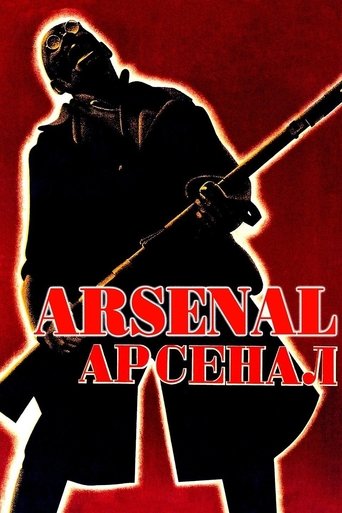
Films
1 film
About Dmytro Erdman
Dmytro Erdman is credited on a single production — Arsenal (1929). His sole known film credit was in Alexander Dovzhenko's masterpiece 'Arsenal' (1929), films of early Soviet cinema. As part of the ensemble cast, Erdman contributed to this powerful anti-war film that depicted the 1918 events in Kyiv when Bolshevik workers defended the city arsenal against German troops. Like many actors of this period, Erdman was likely discovered through theater connections or was part of the emerging Soviet film industry's talent pool. His brief appearance in 'Arsenal' coincided with the transition from silent films to sound cinema, making him part of the last generation of purely silent film actors in the Soviet Union. Unfortunately, like many supporting actors from early Soviet cinema, detailed records of his life and career are scarce, and 'Arsenal' appears to be his only surviving film work.
The Craft
Milestones
- Appeared in Alexander Dovzhenko's 'Arsenal' (1929)
- Participated in
Best Known For
Iconic Roles
Must-See Films
Working Relationships
Worked Often With
Studios
Why They Matter
Impact on Culture
Dmytro Erdman's contribution to cinema, while limited to a single known film, places him within the important context of early Soviet and Ukrainian cinema. 'Arsenal' is considered a masterpiece of world cinema and was part of the Soviet avant-garde movement that revolutionized film language in the 1920s. As a participant in this landmark film, Erdman contributed to a work that has been studied and admired by filmmakers and scholars worldwide for nearly a century. The film itself has been preserved as an important cultural artifact, representing both Ukrainian national identity and the broader Soviet artistic achievement of the silent era.
Lasting Legacy
Dmytro Erdman's legacy is tied directly to his participation in 'Arsenal,' a film that continues to be recognized as one of the greatest achievements in cinema history. While his individual contribution may have been small, he is part of the collective that created a work that transcends its time and place. The film has been included in numerous retrospectives of world cinema and is regularly screened in film studies programs globally, ensuring that Erdman's name, however briefly, remains connected to this cinematic masterpiece.
Who They Inspired
Given the limited scope of Erdman's known work, his direct influence on other actors or filmmakers cannot be traced. However, his participation in 'Arsenal' places him within the influential circle of early Soviet filmmakers who would go on to impact cinema worldwide. The film's innovative techniques and powerful storytelling influenced generations of filmmakers, and as a contributor to this work, Erdman was part of this broader cinematic revolution.
Off Screen
Very little is documented about Dmytro Erdman's personal life, which was typical for many supporting actors in early Soviet cinema. Like many actors of his generation, he may have come from a theater background or been recruited during the rapid expansion of the Soviet film industry in the 1920s.
Did You Know?
- 'Arsenal' was directed by Alexander Dovzhenko,
- The film depicts real historical events from 1918 when Bolshevik workers defended the Kyiv arsenal
- Dovzhenko's 'Arsenal' is considered part of his 'Ukrainian Trilogy' along with 'Zvenigora' and 'Earth'
- The film was praised for its poetic visual style and innovative montage techniques
- Many actors from early Soviet cinema, like Erdman, have limited documented biographical information
- The film was controversial in its time for its pacifist message despite being produced in a militaristic society
- 'Arsenal' has been preserved by international film archives as a masterpiece of world cinema
- The film's production coincided with the transition from silent to sound cinema in the Soviet Union
Frequently Asked Questions
Who was Dmytro Erdman?
Soviet with credits in this catalog. He was part of the emerging Ukrainian film industry during the silent era, though detailed records of his life and career are scarce.
What films is Dmytro Erdman best known for?
Titles linked here include Arsenal (1929).
When was Dmytro Erdman born and when did he die?
Unfortunately, specific birth and death dates for Dmytro Erdman are not documented in available historical records, which is common for many supporting actors from early Soviet cinema.
What awards did Dmytro Erdman win?
There are no documented awards or nominations for Dmytro Erdman, which was typical for many actors in supporting roles during the early Soviet film period when formal award systems were not yet established.
What was Dmytro Erdman's acting style?
Specific details about Dmytro Erdman's acting style are not documented, but actors in early Soviet cinema typically employed exaggerated gestures and expressions characteristic of silent film performance, often influenced by theatrical traditions.