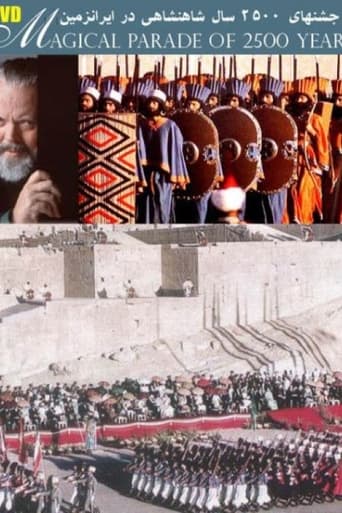
Farrokh Golestan
Director
- Active
- 1971-1971
Films directed 1
About Farrokh Golestan
Farrokh Golestan appears to have been a filmmaker associated with the 1971 Iranian feature Flame of Persia, but verifiable biographical information about him is extremely limited in widely accessible English-language film references. He is identified in available filmographic data as a director, and that single credited work suggests he may have been a specialist in a narrowly documented or regionally distributed production rather than a major internationally archived studio figure. Because the surviving public record is sparse, it is difficult to establish a fuller career arc, personal background, or training with confidence. He should not be confused with members of the well-known Golestan family of Iranian cultural figures, as available data does not clearly connect him to other better-documented artists of that surname. At present, the safest conclusion is that Farrokh Golestan is an obscure or underdocumented Iranian cinema personality whose name survives chiefly through the credit for Flame of Persia. Further research in Persian-language archival sources, film catalogs, or contemporary production records would likely be required to reconstruct his full biography. Until such sources are verified, detailed claims about his life, influences, or later career would be speculative.
More about Farrokh Golestan
Behind the camera
No reliable surviving description of Farrokh Golestan's directing style is currently available in mainstream English-language film references. Based on the extremely limited record, it is not possible to identify consistent visual motifs, recurring themes, or a signature formal approach with confidence. Any attempt to characterize his directing style beyond noting his credit on Flame of Persia would be speculative. If additional archival prints, reviews, or Persian-language sources are located, they may reveal whether he favored commercial melodrama, historical spectacle, or another mode of filmmaking.
In film history
Farrokh Golestan's cultural impact is difficult to measure because the surviving publicly accessible record is extremely limited. His significance today lies primarily in the fact that he is preserved in filmographic listings as a director attached to a 1971 production, which makes him part of the historical record of Iranian cinema even if his broader body of work is not readily available. For database purposes, he is an example of the many regional filmmakers whose contributions exist in credits and archives but have not yet been fully reconstructed in international scholarship. His name may be of particular interest to researchers of lost, obscure, or locally circulated Iranian films from the early 1970s. More definitive assessment of his influence on audiences or later filmmakers would require better archival confirmation.
Later reputation
Farrokh Golestan's legacy is currently one of archival presence rather than widely documented fame. He is remembered, insofar as the surviving record allows, as the credited director of Flame of Persia (1971), which keeps his name in historical film databases and helps preserve a trace of his contribution to cinema history. In the absence of richer documentation, his legacy is best understood as part of the broader, often incomplete record of national cinemas whose filmmakers have not yet been thoroughly chronicled in English-language sources. If additional records emerge, his importance may be re-evaluated, but for now his main historical value is as a documented, if elusive, participant in Iranian film culture.
Influence
No verifiable evidence is currently available to detail Farrokh Golestan's direct influence on other filmmakers, actors, or cinematic movements. Because his accessible filmography is minimal, it is not possible to identify a pattern of mentorship, stylistic imitation, or institutional influence with confidence. His name may still have documentary value for researchers tracing production networks or regional film histories in Iran. Any broader claims of influence would require corroboration from reviews, interviews, or retrospective scholarship.
Off screen
No dependable public biographical record about Farrokh Golestan's personal life, family background, marriages, or domestic life could be verified from the information currently available. Because he is only sparsely documented in accessible film references, any statements about his private life would risk confusion with other people of the same or similar name. At present, his personal history remains unknown in the mainstream public record. Researchers working from Iranian press archives or production files may be able to recover more details.
Credits
- Credited as director of Flame of Persia (1971)
- Documented as an active filmmaker in 1971 filmography records
- Represents an underdocumented contributor to Iranian cinema history
- Associated with a title that places him within early-1970s Persian-language screen production
Films
- Flame of Persia (1971)
Notes
- Farrokh Golestan is documented in available filmography data primarily through a single credited directing role.
- His known active period in accessible records is confined to 1971.
- He is associated with Flame of Persia, a title that suggests a Persian or Iranian cultural context.
- He should not be confused with better-known individuals sharing the Golestan surname in Iranian arts and culture.
- Mainstream English-language sources provide very little biographical detail about him.
- His obscurity makes him a useful example of how many regional film figures remain underdocumented outside local archives.
- Additional biographical information may exist in Persian-language newspapers, film journals, or production records.
Questions
Who was Farrokh Golestan?
Farrokh Golestan is a sparsely documented film director associated with the 1971 film Flame of Persia. Available records identify him as a filmmaker, but detailed biographical information is not readily available in mainstream English-language sources. He remains an obscure figure in film history unless further archival research is done.
What films is Farrokh Golestan best known for?
He is best known, based on available documentation, for directing Flame of Persia (1971). No other reliably verified film credits are currently available in the accessible record. If additional Persian-language sources are consulted, more titles may emerge.
When was Farrokh Golestan born and when did he die?
His birth and death dates are not currently verifiable from the accessible information. Likewise, his place of birth is not confirmed in the available record. At present, those details should be listed as unknown rather than inferred.
What awards did Farrokh Golestan win?
No awards or nominations could be reliably verified for Farrokh Golestan from the currently accessible sources. His public record is too limited to confirm recognition at major festivals or industry awards. If awards existed, they would likely need to be found in archival or regional sources.
What was Farrokh Golestan's directing style?
A dependable description of his directing style is not currently available. Because only limited filmographic information survives in widely accessible references, it is not possible to identify recurring formal traits, themes, or techniques with confidence. Any stylistic description would be speculative until more sources are found.
Why is Farrokh Golestan hard to research?
He is hard to research because widely available databases and English-language references provide very little biographical detail beyond a directing credit. This is common for some regional or lightly documented filmmakers whose work was not widely distributed internationally. Persian-language archives may contain more information than currently appears online.