Also available on: Wikimedia
Flame of Persia

Flame of Persia

1971 Iran

Plot

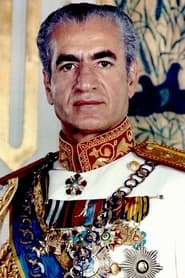
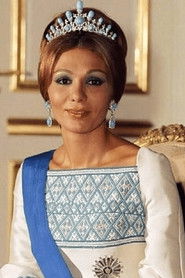
Flame of Persia is a documentary portrait of the extravagant 2,500-year celebration of the Persian Empire held in October 1971 at Persepolis and Pasargadae under the patronage of Shah Mohammad Reza Pahlavi. The film follows the spectacle of the event itself, presenting the ceremonial pageantry, elaborate staging, state hospitality, military displays, and the arrival of international dignitaries and heads of state from around the world. It functions less as a conventional narrative than as an official visual record of monarchy, antiquity, and modern state power, emphasizing the Shah’s attempt to link contemporary Iran with the grandeur of ancient imperial Persia. Orson Welles appears as narrator/presenter material associated with the film, lending the project an international prestige aura. As a documentary of a highly political event, it captures both the intended majesty of the celebration and, in retrospect, the historical contradictions and extravagance that surrounded it.

About the Production

Release Date 1971
Production National Iranian Radio and Television (NIRT)
Filmed In Persepolis, Fars Province, Iran, Pasargadae, Fars Province, Iran, Tehran, Iran

The film was made to document one of the most lavish state celebrations of the 20th century, the 2,500-year commemoration of the Persian Empire organized by the Pahlavi monarchy in 1971. It appears to have been produced as an official or semi-official commemorative documentary rather than as an independent cinema release, which strongly shapes its tone, imagery, and narrative priorities. Farrokh Golestan, an important Iranian filmmaker and producer, is associated with the project, and the participation of Orson Welles suggests an effort to give the film international stature and a ceremonial, authoritative voice. The production necessarily involved extensive logistical coordination for filming ceremonial events, heads of state, protocol-heavy ceremonies, and the monumental temporary architecture and pageantry built for the occasion.

Historical Background

The film was made in 1971, at a time when Iran was undergoing rapid modernization under the Pahlavi monarchy while also experiencing increasing political tension, inequality, and criticism of authoritarian rule. The 2,500-year celebration of the Persian Empire was conceived as a spectacular assertion of continuity between ancient Achaemenid Persia and the modern Iranian state, with the Shah presenting himself as heir to a millennia-old imperial tradition. Internationally, the event symbolized Iran’s ambition to position itself as a major regional power aligned with global elites; domestically, it was criticized for extravagance at a time when many Iranians faced social and economic pressures. The documentary therefore matters not only as a record of a famous event but also as evidence of the political aesthetics of late Pahlavi Iran and the monarchy’s attempts to legitimize itself through historical pageantry.

Why This Film Matters

Flame of Persia has significance as a cinematic artifact of Iranian state spectacle and as a visual record of one of the most famous ceremonial events in modern Middle Eastern history. It is part of the broader story of how cinema can be used to narrate nationhood, legitimacy, and historical destiny, especially in an authoritarian or semi-authoritarian context. For scholars of Iranian history and film, the documentary preserves imagery of a lavish celebration that has become emblematic of the contradictions of the Pahlavi era: modernization and pride on one hand, excess and political disconnect on the other. Its long-term value lies less in commercial popularity than in its documentary role as an audiovisual source for historians studying monarchy, propaganda, ceremony, and national identity.

Making Of

Flame of Persia was created in the context of a state-sponsored commemorative campaign designed to celebrate the continuity of Persian imperial history under Mohammad Reza Pahlavi. Filming such an event would have required extraordinary access to protocol areas, guest arrivals, ceremonial installations, and the ancient sites themselves, all while coordinating with security, diplomatic staff, and event organizers. The presence of Orson Welles suggests the producers sought a voice with global cultural authority, reinforcing the documentary’s tone of grandeur and historical importance. As with many official documentaries, the film likely favored ceremonial coherence and celebratory framing over critical distance, making it both a historical document and a piece of state image-making.

Visual Style

The cinematography would have needed to capture both monumental architecture and tightly choreographed ceremonial detail, likely emphasizing symmetry, wide compositions, processional movement, and the imposing desert and ancient-site setting of Persepolis. As a documentary of state pageantry, the visual style would be expected to privilege grand establishing shots, formal arrivals, stately interiors, and ritualized crowd movement over observational spontaneity. The imagery is historically important because it documents temporary installations, ceremonial settings, and elite gatherings that were created for only a brief moment. The film’s visual approach serves the ideology of magnificence and continuity central to the 1971 celebration.

Innovations

The film’s main technical achievement lies in its documentation of a large-scale, highly controlled state event staged across ancient sites and specially prepared ceremonial spaces. Capturing the scale of the festivities, diplomatic arrivals, and complex processionals would have required careful logistical planning and coverage. As a historical document, it preserves ephemeral settings, decorations, and ceremonial choreography that no longer exist. Its significance is therefore archival and representational rather than innovation-centered in the usual sense of special effects or editing breakthroughs.

Music

Specific soundtrack or scoring details are not widely documented in accessible references. Given the film’s commemorative nature, it likely uses a combination of narration, ceremonial music, and ambient sound from the event to support the prestige and historicity of the presentation. Orson Welles’s associated narration would have been a major part of the film’s sonic identity, lending gravity and international polish. If a composed score exists, it appears to be less frequently cited than the film’s visual and historical content.

Memorable Scenes

  • The ceremonial arrival of world leaders and dignitaries at the 2,500-year celebration, framed as an unprecedented display of international prestige.
  • Wide views of the elaborate event spaces around Persepolis, where ancient ruins and modern ceremonial design are combined to project imperial continuity.
  • Military and formal parade imagery that reinforces the state’s message of discipline, strength, and historical grandeur.
  • Moments of opulent banquets, protocol, and state hospitality that became symbols of the extravagance associated with the celebration.

Did You Know?

  • The film documents the famous 2,500-year celebration of the Persian Empire, a highly controversial and widely publicized event staged by the Pahlavi government in 1971.
  • The celebration took place at the ancient royal site of Persepolis, deliberately linking the modern Iranian state to Achaemenid imperial history.
  • Orson Welles is associated with the film, which is unusual and notable because of his global celebrity and his occasional involvement in documentary narration and prestige projects.
  • The project was tied to the Shah’s broader effort to project Iran as a modern, ancient, and internationally respected power on the world stage.
  • The film is historically important not only as a documentary record but also as a window into the political symbolism of the Pahlavi monarchy shortly before its collapse in 1979.
  • Because it commemorates an official state spectacle, the film is often read as a piece of political image-making as much as a documentary.
  • The event depicted in the film became infamous for its extraordinary cost and luxury, including imported food, elaborate guest accommodations, and heavily choreographed ceremonies.
  • The documentary preserves imagery of a now-vanished ceremonial event that has remained central in discussions of Iranian modern history and monarchy.
  • Farrokh Golestan was part of a significant generation of Iranian film culture, making the documentary valuable in the history of Iranian nonfiction cinema.
  • The film is also a notable example of how cinema was used to construct national identity and historical continuity through state-sponsored spectacle.

What Critics Said

Specific contemporary critical response is not widely documented in readily available sources, and the film appears to have circulated more as an official or commemorative production than as a standard commercial documentary. In retrospective discussion, it is typically viewed through a historical and political lens rather than judged primarily as a standalone cinematic artwork. Critics and historians tend to emphasize its propagandistic or ceremonial character, its role in immortalizing the 1971 festivities, and its importance as a document of Pahlavi-era image making. Its reputation today is therefore tied to historical interest, archival value, and the broader reassessment of the Shah’s cultural politics.

What Audiences Thought

Audience reception is difficult to measure in conventional box-office terms because the film was not primarily designed for mass theatrical entertainment in the usual commercial sense. Its likely core audience included official circles, participants in the 1971 celebrations, cultural institutions, and viewers interested in state documentaries or Iranian history. For modern audiences, the film is often encountered as archival material and can provoke fascination because of the scale, luxury, and historical symbolism of the event it records. Viewers today may respond to it with a mix of awe at the spectacle and critical awareness of the political context behind it.

Film Connections

Influenced By

  • State ceremonial films and official commemorative documentaries
  • Historical pageantry films
  • National prestige documentaries of the mid-20th century

This Film Influenced

  • Later documentaries about the 1971 Persepolis celebration
  • Archival and historical films about the Pahlavi era
  • Political documentaries examining royal spectacle in Iran

Film Restoration

The film appears to survive as an archival documentary and is not generally regarded as a lost film. However, detailed restoration information is not widely documented in accessible sources, and availability may be limited to archives, institutional holdings, or specialized copies.

Themes & Topics

Persian EmpirePersepolisShah Mohammad Reza PahlaviFarah Pahlavistate celebrationdocumentaryIranroyal pageantry2,500-year commemoration