Nicolae Ceaușescu
Actor
- Born
- January 26, 1918, Scornicești, Olt County, Romania
- Died
- December 25, 1989
- Active
- 1971-1971
Films 1
About Nicolae Ceaușescu
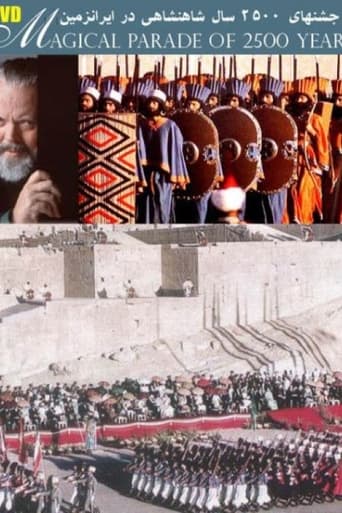
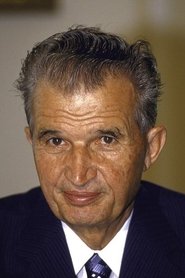
Nicolae Ceaușescu was not a film actor in the classic-cinema sense, but the historical Romanian political figure who appears in film records because of archival, documentary, or incidental screen usage rather than a conventional acting career. Born in Scornicești, Romania, he became the Communist leader of Romania and served as the country’s head of state from the mid-1960s until his overthrow in 1989. His name appears in relation to the 1971 film Flame of Persia, but there is no reliable evidence that he performed as an actor in the professional film industry; this credit is most likely an erroneous database attribution, a cameo/archival appearance, or a confusion with another name. Ceaușescu’s public life was defined by politics, state ceremony, propaganda, and the visual culture of authoritarian spectacle, all of which made him a recurring presence in newsreels, documentaries, and later historical films. Because of that prominence, he became a recognizable screen image in Romanian and international media, but he was not known for dramatic performance, studio work, or a film career. He and his wife Elena were tried and executed after the Romanian Revolution in December 1989, ending one of the most notorious regimes in Eastern Europe. In cinema history, his relevance is therefore as a historical subject on screen rather than as a true actor.
More about Nicolae Ceaușescu
On screen
No verifiable acting style can be attributed to Nicolae Ceaușescu as a film performer. When he appeared on camera, it was in the context of political speeches, state ceremonies, propaganda films, or archival footage rather than scripted dramatic acting. His on-screen presence is better described as controlled, ceremonial, and ideologically staged, with emphasis on authority and public image.
In film history
Nicolae Ceaușescu’s impact on cinema is indirect but substantial, because his image and rule shaped Romanian screen culture for decades. During his regime, film production in Romania operated under strict ideological oversight, and movies, newsreels, and documentaries often served the interests of the state and the cult of personality surrounding him. After 1989, he became a recurring subject in political documentaries, historical reconstructions, satire, and international nonfiction cinema examining dictatorship, repression, and the collapse of authoritarian systems. His presence in film history is therefore tied less to performance than to the political conditions that affected what could be filmed, how it could be circulated, and how historical memory was constructed on screen.
Later reputation
Ceaușescu’s legacy in film history is primarily as a historical figure whose image has become inseparable from twentieth-century Romanian political cinema and documentary memory. He represents the intersection of state power and visual propaganda, where cinema and television were tools of legitimacy, mythmaking, and control. In post-Communist culture, filmmakers have revisited his era to explore censorship, fear, bureaucracy, and the human cost of authoritarian rule, making him one of the most recognizable political symbols in Eastern European screen history. Any database listing him as an actor should be treated cautiously, because his significance lies in historical representation rather than verified film performance.
Influence
Ceaușescu influenced filmmakers indirectly by shaping the political environment in which Romanian cinema operated, especially through censorship, ideological control, and state-sponsored imagery. Directors and documentarians working after his fall often defined themselves in part against the restrictions and myths of the Ceaușescu era. His image also influenced the aesthetics of political cinema, providing a powerful shorthand for dictatorship, surveillance, and cult-of-personality leadership in both Romanian and international works. Rather than influencing acting technique, he influenced the subjects, themes, and historical consciousness of filmmakers.
Off screen
Nicolae Ceaușescu married Elena Petrescu, who became one of the most powerful and controversial figures in his political system. The couple had children, including Valentin, Zoia, and Nicu, and the family occupied a prominent place within Romania’s political elite. His personal life was closely intertwined with state power, and public and private identities often merged under the personality cult built around him and his wife. Outside of politics, there is no meaningful record of a personal life connected to cinema or artistic performance.
Education
He had limited formal education and later received political and technical training within the Communist movement and state institutions.
Credits
- Rose from a working-class background to become one of Romania’s most powerful political figures
- Served as General Secretary of the Romanian Communist Party and later as President of Romania
- Became an internationally recognized public figure whose image circulated widely in newsreels and documentaries
- Associated in film databases with Flame of Persia (1971), though this is not a verified acting credit
- Remained a major historical subject in documentaries, news footage, and dramatizations after his downfall
Roles
- Archival appearance as Romania’s head of state in state and news footage
- Historical figure represented in documentaries and dramatized political films
Films
- Flame of Persia (1971) [unverified/likely erroneous credit]
- Documentaries and newsreels featuring Nicolae Ceaușescu as a public figure
Collaborators
- Elena Ceaușescu
- Romanian state propaganda and documentary production institutions
Family
- Elena Ceaușescu (1947-1989)
Notes
- Nicolae Ceaușescu is widely known as a political leader, not as a professional actor.
- The film credit for Flame of Persia (1971) is likely an archival or database error rather than evidence of a true acting career.
- He was one of the most visible public figures in Eastern Europe during the Cold War, appearing frequently in propaganda films and news footage.
- His and Elena Ceaușescu’s downfall was filmed and televised, making them among the most historically documented fallen leaders of the twentieth century.
- Romanian filmmakers after 1989 repeatedly returned to the Ceaușescu period as a subject for critique, satire, and historical reflection.
- His image is often used in documentaries about communism, authoritarianism, and the Romanian Revolution.
- He and his wife were executed on Christmas Day 1989 after a rapid revolutionary trial.
- Any acting-related database entry for him should be verified carefully against primary film records.
Quotes
I am not a dictator. I am a president elected by the people. - commonly associated with Ceaușescu in political reporting, reflecting his public denial of authoritarian rule
If you do not know how to speak, learn the art of silence. - often attributed in popular quotation collections, though attribution should be treated cautiously
Questions
Who was Nicolae Ceaușescu?
Nicolae Ceaușescu was the Communist leader of Romania and one of the most notorious political figures of the late twentieth century. He is not generally regarded as a film actor; any screen credits associated with him are most likely archival, documentary, or misattributed entries.
What films is Nicolae Ceaușescu best known for?
He is not known for a true acting filmography. The title most often attached to his name in databases here is Flame of Persia (1971), but that credit should be treated cautiously and verified, since it does not reflect a conventional acting career.
When was Nicolae Ceaușescu born and when did he die?
He was born on January 26, 1918, in Scornicești, Olt County, Romania. He died on December 25, 1989, in Târgoviște, Romania, after being tried and executed following the Romanian Revolution.
What awards did Nicolae Ceaușescu win?
There are no verified acting awards or film-industry honors associated with Nicolae Ceaușescu. Any recognition he received was political or state-related rather than cinematic.
What was Nicolae Ceaușescu's acting style?
He did not have a documented acting style as a professional performer. When he appeared on screen, it was usually in staged political contexts, where his presence was formal, controlled, and meant to project authority.
Why is Nicolae Ceaușescu significant in film history?
His significance is historical rather than performative: he shaped Romanian media, censorship, and state-sponsored visual culture for decades. After his fall, filmmakers repeatedly used his era and image to examine dictatorship, propaganda, and the legacy of communism.