Shah Mohammad Reza Pahlavi of Iran
Actor
- Born
- October 26, 1919, Tehran, Iran
- Died
- July 27, 1980
- Active
- 1971-1971
Films 1
About Shah Mohammad Reza Pahlavi of Iran
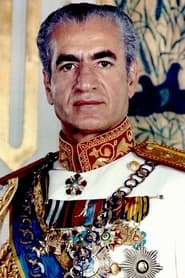
Shah Mohammad Reza Pahlavi of Iran was the last Shah of Iran and the central political figure of the Pahlavi monarchy, not a professional actor. His sole credited screen appearance in the filmography supplied here is in Flame of Persia (1971), a production associated with state image-making and ceremonial presentation rather than a conventional acting career. He is primarily known for his role as monarch, head of state, and symbol of Iran's modernization efforts during the mid-20th century. Because he was not a working film performer, there is no broader acting career arc in the classic-cinema sense, and his screen presence should be understood as a public, political, and historical appearance rather than an entertainment profession. He was born into the Iranian royal family and educated in Switzerland before returning to Iran for a life shaped by dynastic politics, wartime upheaval, and Western-aligned statecraft. After ascending the throne in 1941, he ruled for decades and became a globally recognized figure, especially during the era of oil politics, rapid modernization, and authoritarian consolidation. His rule ended with the Iranian Revolution of 1979, after which he lived in exile until his death in 1980.
More about Shah Mohammad Reza Pahlavi of Iran
On screen
Not applicable in the usual sense, as Shah Mohammad Reza Pahlavi was not a professional actor. His screen appearances, where documented, were ceremonial and non-dramatic, reflecting his public persona as a head of state rather than a performer trained in character acting, emotional technique, or stagecraft.
In film history
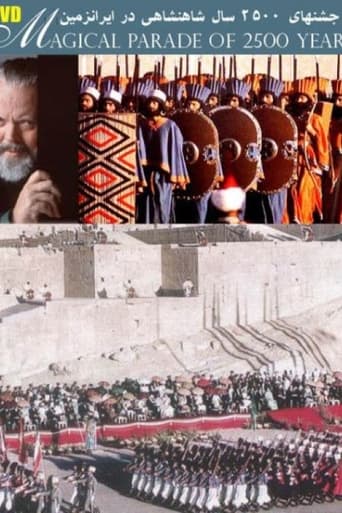
Mohammad Reza Pahlavi's cultural impact came primarily through politics, symbolism, and state-sponsored modernity rather than cinema. As Shah, he represented a highly visible image of Iran to both domestic and international audiences, and that image influenced how Iran was portrayed in newsreels, documentaries, diplomatic visual culture, and ceremonial media. His association with Flame of Persia (1971) belongs to this broader context of national image and historical pageantry, especially during the 2,500-year celebration period, when visual representation of monarchy and Persian identity was carefully curated. In film history terms, he is notable as a non-actor public figure whose appearance on screen reflects the intersection of state power and cinematic presentation.
Later reputation
His legacy in film history is limited and highly unusual, since he was not a cinema professional but a historical figure who appears in screen-related documentation. As the last Shah of Iran, he remains a globally recognized personality whose life story has generated numerous documentaries, historical films, and archival appearances. The single film credit associated with him in this context is best understood as part of the visual record of his reign rather than as evidence of an acting career. In the broader sweep of history, his legacy is inseparable from the fall of the Pahlavi monarchy, the 1979 revolution, and the dramatic political transformation of Iran.
Influence
His influence on actors or directors was indirect rather than artistic. He affected the kinds of state-sponsored imagery and historical pageantry that filmmakers and documentarians could create around Iran, monarchy, and national identity. His public persona, court style, and ceremonial presentations influenced visual representations of power in Persian and international media. In that sense, his on-screen legacy is political and iconographic rather than performative.
Off screen
Mohammad Reza Pahlavi was born into the Pahlavi royal family as the son of Reza Shah and Tadj ol-Molouk. His private life was shaped by highly public marriages and dynastic expectations, and he was married three times. He had children from these marriages, including Crown Prince Reza Pahlavi, who became the heir apparent in exile. His personal life was closely intertwined with state affairs, court protocol, and the pressures of maintaining a modernizing monarchy in a politically volatile nation.
Education
Educated in Iran and later at the Institut Le Rosey in Switzerland; also trained at the Iranian military academy after returning to Iran.
Credits
- Ascended as Shah of Iran in 1941 after the abdication of his father, Reza Shah Pahlavi
- Became an internationally prominent ruler during Iran's oil boom and modernization drive
- Appeared in Flame of Persia (1971), the only film credit provided in the supplied filmography
- Oversaw the highly publicized 2,500-year celebration of the Persian Empire in 1971
- Ruled Iran through a period of major political transformation, reform, and rising opposition
- His overthrow in the 1979 Iranian Revolution made him one of the most historically significant monarchs of the 20th century
Roles
- Shah of Iran
Films
- Flame of Persia (1971)
Honors
- Head of state of Iran as Shah
- Official recognition and ceremonial honors associated with the Iranian monarchy
Collaborators
- No established film collaborators; screen appearance was isolated and not part of a film career
Family
- Princess Fawzia of Egypt (1939-1948)
- Soraya Esfandiary-Bakhtiary (1951-1958)
- Farah Diba (1959-1980)
Notes
- He was the last Shah of Iran, ruling until the 1979 Iranian Revolution.
- His only listed film appearance here is Flame of Persia (1971), which aligns more with ceremonial documentation than acting work.
- He studied in Switzerland at the Institut Le Rosey, one of Europe's best-known boarding schools.
- He was married three times, and his most famous marriage was to Empress Farah Pahlavi.
- He was central to the 2,500-year celebration of the Persian Empire in 1971, one of the most elaborate state ceremonies of the 20th century.
- His reign is often associated with modernization projects, centralized authority, and growing political opposition.
- He died in exile in Cairo, Egypt, in 1980.
- His son Reza Pahlavi became the heir apparent in exile after the monarchy fell.
- He is far better documented as a political leader than as a screen personality.
Quotes
No verified film-specific quotations are reliably attributable to him in the context of this entry.
Questions
Who was Shah Mohammad Reza Pahlavi of Iran?
He was the last Shah of Iran and a major political figure of the 20th century, not a professional actor. In film databases, his name may appear because of an isolated screen credit or ceremonial appearance rather than a conventional acting career.
What films is Shah Mohammad Reza Pahlavi of Iran best known for?
He is associated here with Flame of Persia (1971), which appears to be his only listed screen credit. He is not known for a body of acting work, and his screen presence should be understood as historical or ceremonial.
When was Shah Mohammad Reza Pahlavi of Iran born and when did he die?
He was born on October 26, 1919, in Tehran, Iran, and died on July 27, 1980, in Cairo, Egypt. His death occurred in exile after the Iranian Revolution.
What awards did Shah Mohammad Reza Pahlavi of Iran win?
No film or acting awards are known for him. His recognition came from his political role as Shah of Iran and the state honors associated with monarchy.
What was Shah Mohammad Reza Pahlavi of Iran's acting style?
He was not a trained actor, so traditional acting style descriptions do not apply. Any screen appearance would have been ceremonial and formal, reflecting his role as head of state rather than a performer.
What is Shah Mohammad Reza Pahlavi of Iran's legacy?
His legacy is primarily political and historical: he was the last monarch of Iran and a central figure in the country's modern history. In cinema terms, he is notable more as a public figure who appeared on screen than as an entertainer.