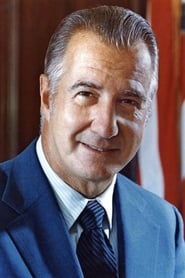
Spiro Agnew
Actor
- Born
- November 9, 1918, Baltimore, Maryland, USA
- Died
- September 17, 1996
- Active
- 1971-1971
- Birth name
- Spiro Theodore Agnew
Films 1
About Spiro Agnew
Spiro T. Agnew was not a classic-cinema actor in the usual sense, but rather an American political figure whose name has been associated with an unverified or extremely obscure film credit for Flame of Persia (1971). He is far better known as the 39th Vice President of the United States under Richard Nixon than as a performer in motion pictures. No reliable evidence in standard film-reference sources confirms a substantive acting career, and any credit linking him to film appears to be incidental, mistaken, archival, or based on a cameo, reference, or alternate indexing rather than a genuine screen-acting profession. Agnew was born in Baltimore, Maryland, and rose through law, local politics, and Maryland state government before becoming a national figure in the Nixon administration. His public life was dominated by politics, not entertainment, and his later years were shaped by his resignation from the vice presidency amid legal and political scandal. Because of the lack of verifiable film industry activity, he should be regarded primarily as a political personality, not a classic cinema actor.
More about Spiro Agnew
In film history
Spiro Agnew’s cultural impact comes primarily from American political history, not cinema. He became a highly recognizable national figure through his combative speeches and was often discussed in the media as a symbol of the Nixon era's rhetorical style and political polarization. In film and television history, his significance is mostly indirect: he is a historically recognizable name that may appear in reference, documentary, or archival contexts rather than as an established screen performer. If a film credit exists under his name, it is so unusual that it is more likely to be a curiosity than evidence of a true acting career.
Later reputation
Agnew’s lasting legacy is tied to the vice presidency, his public persona, and the scandal that led to his resignation, which remains one of the most notable in American political history. In entertainment databases, his name can create confusion because he is not generally documented as an actor despite the claimed film credit. For historians, he is important as a cultural and political figure of the late 1960s and early 1970s, not as a member of the classic cinema community. Any legacy in film history would be incidental, archival, or based on mistaken attribution rather than a body of screen work.
Influence
Agnew influenced political discourse far more than cinema. His style of hard-edged, populist rhetoric affected political communication and became emblematic of a certain late-20th-century American conservative voice. He did not meaningfully influence actors or directors in the classic Hollywood sense, and there is no evidence of a substantive mentoring relationship within the film industry. If his name appears in film contexts, it is generally as a public figure reference rather than as a creative influence.
Off screen
Agnew was married to Elinor Isabel Judefind, known as Judy Agnew, and they had four children. His family life was often presented as conventional and stable during his rise in politics, which helped support his public image. He studied chemistry at Johns Hopkins University before later pursuing law at the University of Baltimore School of Law. His private life became less publicly central than his political controversies, especially after his resignation from office.
Education
Attended Johns Hopkins University, then studied law at the University of Baltimore School of Law.
Credits
- Served as the 39th Vice President of the United States from 1969 to 1973
- Became Governor of Maryland before reaching national office
- Was one of the most visible public speakers in the Nixon administration
- Resigned the vice presidency in 1973 following allegations and legal proceedings related to corruption and tax evasion
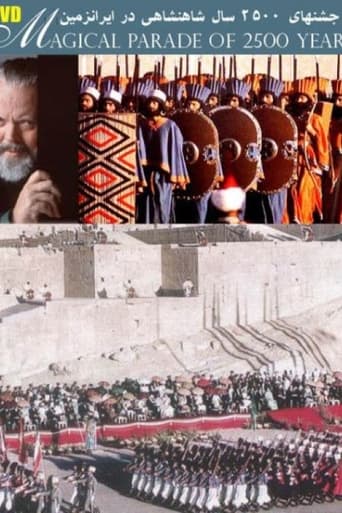
- His name appears in a film credit for Flame of Persia (1971), though this is not supported by standard filmography evidence
Films
- Flame of Persia (1971)
Honors
- No known film-industry honors
- Widely recognized historically for his political office rather than entertainment
Family
- Elinor Isabel Judefind Agnew (1942-1996)
Notes
- Agnew was born and raised in Baltimore, Maryland.
- He studied chemistry before switching to law.
- He served as vice president under Richard Nixon from 1969 to 1973.
- He resigned from the vice presidency after pleading no contest to tax evasion in 1973.
- He is not generally documented in standard film histories as an actor.
- The reported film credit for Flame of Persia (1971) is unusual and may reflect an indexing error or special appearance rather than a conventional acting role.
- His public speeches made him one of the most recognizable political voices of his era.
- He died in 1996 in Ocean City, Maryland.
Quotes
"The first principle of the American revolution was resistance to concentration of power, and that is our principle today."
"A spirit of national masochism is now abroad in the land."
"The United States must continue to lead the world, not by the force of arms but by the force of example."
Questions
Who was Spiro Agnew?
Spiro Agnew was an American politician best known as the 39th Vice President of the United States under Richard Nixon. He is not reliably documented as a film actor, despite an unusual film credit attributed to him in some listings. His historical importance comes from politics and public life rather than cinema.
What films is Spiro Agnew best known for?
He is not known for a film career, but his name is associated in this request with Flame of Persia (1971). Because standard film references do not support a conventional acting résumé for him, that credit should be treated cautiously.
When was Spiro Agnew born and when did he die?
Spiro Agnew was born on November 9, 1918, in Baltimore, Maryland, USA. He died on September 17, 1996, in Ocean City, Maryland, USA.
What awards did Spiro Agnew win?
He is not known to have won any film awards or nominations. His public recognition came from political office and national visibility rather than entertainment honors.
What was Spiro Agnew's acting style?
There is no verified acting style to describe because he was not established as an actor. Any screen appearance attributed to him appears to be incidental or unverified rather than part of a genuine acting career.
What was Spiro Agnew's legacy?
Agnew’s legacy is primarily political: he is remembered for his vice presidency, his combative public rhetoric, and his resignation amid scandal. In film history, he is mainly a confusing or incidental name rather than an acknowledged creative contributor.