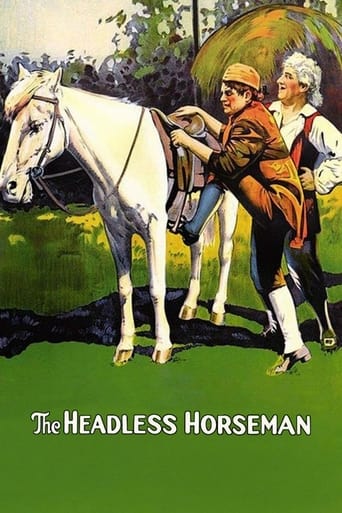
Edward D. Venturini
Director
- Active
- 1922-1922
Films directed 1
About Edward D. Venturini
Edward D. Venturini was an American director active in the silent film era, best remembered for directing the 1922 adaptation of The Headless Horseman. His known screen career is extremely brief and appears in the historical record primarily through this single credited directing assignment, which suggests that he may have worked in a limited or specialized capacity within the production world rather than maintaining a long, highly publicized directorial career. Because surviving documentation on Venturini is sparse, many details of his life, training, and broader filmography are not well established in standard reference sources. What is clear is that he was working during a formative period for American cinema, when filmmakers were adapting popular literary properties and experimenting with visual storytelling techniques that defined silent-era production. The Headless Horseman placed him in the company of the early 1920s studio system, when directors were often responsible for translating familiar material into concise, visually driven motion pictures for a mass audience. Beyond that film, there is little reliably documented evidence of a sustained directing career, major publicity, or later transition into the sound era. His historical significance lies less in celebrity than in his role as one of the many working directors whose contributions helped build the silent-era film industry, even when their names did not remain widely known.
More about Edward D. Venturini
Behind the camera
Because Edward D. Venturini's surviving filmography is so limited, his precise directorial style is difficult to characterize with confidence. Based on the period and on the nature of silent-era literary adaptations, his work would likely have relied on clear visual narration, economical scene construction, and an emphasis on atmosphere and action over dialogue-dependent characterization. The Headless Horseman was a genre project rooted in suspense, folklore, and dramatic imagery, so his approach was probably shaped by the conventions of early 1920s commercial filmmaking, which favored direct storytelling, strong pictorial moments, and efficient pacing. No reliable surviving commentary has been found to document a distinctive auteur signature or a repeatable body of stylistic trademarks.
In film history
Edward D. Venturini's cultural impact is modest but historically meaningful as part of the large, often under-credited workforce that sustained silent-era filmmaking. Directors like Venturini helped studios transform popular stories into cinema at a time when the medium was still defining its grammar and audience expectations. Even when the films themselves are less discussed today, such productions contributed to the growth of genre filmmaking and to the expanding popularity of literary adaptation in early Hollywood. His name endures chiefly among film historians, archivists, and database researchers who work to reconstruct the full personnel history of silent cinema. His legacy is therefore archival as much as artistic: he is a reminder that classic film history is not made only by the most famous auteurs, but also by directors whose surviving footprints are small yet significant. In that sense, Venturini stands for the many transitional-era filmmakers whose careers were brief, unevenly documented, or largely lost to time, but whose work helped shape the industrial and creative foundations of American motion pictures.
Later reputation
Venturini's lasting legacy lies in his presence within the historical record of silent cinema, particularly through The Headless Horseman (1922). For modern researchers, he represents the kind of elusive early-Hollywood figure whose identity is preserved mainly through credits, catalogs, and surviving exhibition references rather than through extensive biographical documentation. This makes him important to film preservation and historiography, because each verified credit helps map the personnel networks of the silent era more accurately. While he does not appear to have left behind a widely recognized directorial brand, his work remains part of the cultural fabric of early American film production. In film-history terms, his legacy is one of participation in a foundational moment rather than of fame. The existence of his credit reminds us that many silent-era directors were active for only a short time or in narrowly documented capacities, yet still contributed to the evolution of screen storytelling. Researchers and database compilers continue to value such names because they help complete the picture of how the early industry functioned.
Influence
There is no strong evidence that Edward D. Venturini directly influenced later, widely documented directors in a traceable way. His influence is better understood indirectly, through the broader silent-era practice of adapting popular narratives into visually legible screen form. As part of that ecosystem, he participated in the conventions that later filmmakers refined: concise narrative exposition, genre atmosphere, and the use of cinematic imagery to replace text-heavy storytelling. Any influence he exerted was likely localized to his immediate production context rather than broadly recognized in later film culture.
Off screen
Very little verified information survives about Edward D. Venturini's personal life. Standard classic-cinema reference material does not clearly document his family background, marriages, children, residence history, or later life. As a result, any detailed biographical claims about his private life would be speculative and are best left unasserted until corroborating archival evidence is found.
Credits
- Directed The Headless Horseman (1922), his best-known and apparently only securely documented screen credit
- Worked during the silent-film era, when literary adaptations were a major part of American studio production
- Contributed to early-1920s popular entertainment through a film based on a widely recognized story title
- Represents the many lesser-documented craftsmen of silent cinema whose work survives chiefly in film credits and trade records
Films
- The Headless Horseman (1922)
Notes
- Edward D. Venturini is primarily remembered today for a single surviving screen credit, which is unusual even among silent-era directors.
- His best-known work, The Headless Horseman, came from the early 1920s, when Hollywood was heavily invested in literary and folkloric adaptations.
- His career demonstrates how many silent-era filmmakers are known more from archival records than from extensive press coverage.
- Because his documented output is so limited, he is a useful example of the many behind-the-camera workers whose contributions are often overshadowed by stars.
- He appears to have worked during a period when film production was rapidly professionalizing and studio credits were not always consistently preserved.
- The scarcity of reliable biographical data on Venturini makes him a common subject for film database research and catalog verification.
- His name is preserved in association with a well-known story title, even though his personal life remains largely obscure.
- He is part of the historical record of American silent cinema despite having no widely known award history or celebrity profile.
Questions
Who was Edward D. Venturini?
Edward D. Venturini was an American silent-era film director best known for directing The Headless Horseman (1922). He is a relatively obscure historical figure whose surviving record is limited, but he remains part of early Hollywood's directing community.
What films is Edward D. Venturini best known for?
He is best known for The Headless Horseman (1922), which appears to be his principal documented directorial credit. No additional major films are securely established in the available record.
When was Edward D. Venturini born and when did he die?
His birth and death dates are not reliably documented in the standard reference information available for silent-era film personnel. Likewise, his birth place and death place are not clearly established from the surviving record.
What awards did Edward D. Venturini win?
No awards or major nominations are currently documented for Edward D. Venturini. Silent-era craftsmen such as Venturini were often not formally recognized in the modern awards sense, especially if their careers were brief or sparsely recorded.
What was Edward D. Venturini's directing style?
A precise directorial style cannot be firmly established because so little of his career is documented. Based on the period and his work on a silent literary adaptation, his direction would likely have emphasized visual storytelling, atmosphere, and clear narrative movement.
What is Edward D. Venturini's legacy in film history?
His legacy is primarily historical and archival: he is one of the many silent-era directors whose name survives through film credits and research catalogs. That makes him important to historians reconstructing the full personnel history of early American cinema.