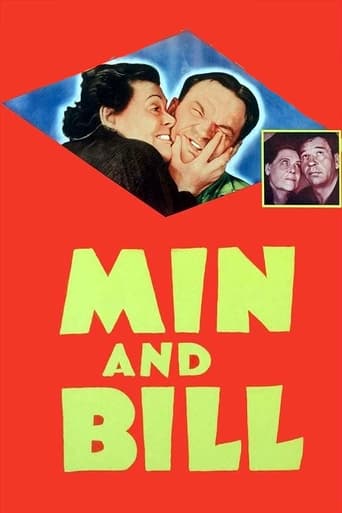
Gretta Gould
Actor
- Active
- 1930-1930
Films 1
About Gretta Gould
Gretta Gould appears in film history as a very obscure early sound-era screen performer, known from her credited appearance in Metro-Goldwyn-Mayer's 1930 production Min and Bill. Surviving standard reference sources provide very limited biographical detail on her life beyond this single film credit, which suggests that her screen career was brief and that she did not remain a prominent figure in Hollywood. Because of the scarcity of documentation, it is not currently possible to verify her birth date, birthplace, death date, or broader personal background with confidence. Her known film activity places her squarely in the transitional early talkie period, when many stage and supporting players found intermittent work in the expanding studio system. She is best understood as one of the many lesser-remembered performers whose careers are preserved in cast lists and studio records rather than in detailed publicity profiles. Her surviving legacy is tied primarily to Min and Bill and to the historical record of early 1930s American cinema. Further research in studio archives, trade papers, and census or vital records would be required to reconstruct a fuller biography.
More about Gretta Gould
In film history
Gretta Gould's cultural impact is limited by the scarcity of surviving documentation, but her presence in Min and Bill places her within one of MGM's notable early sound productions. Performers like Gould contributed to the texture and realism of studio-era films even when their names were not widely publicized, helping create the dense supporting-cast environment characteristic of classical Hollywood. Her inclusion in film records also illustrates how early studio filmmaking depended on a large pool of working actors whose careers were often brief, unheralded, and difficult to reconstruct today. As a result, her importance is historical rather than celebrity-based: she is part of the cinematic workforce that sustained the early sound era.
Later reputation
Gretta Gould's legacy lies primarily in archival film history. Although she is not known to have accumulated a large body of work, her credited appearance in Min and Bill ensures that her name remains attached to a significant transitional-era MGM picture. For historians and database users, figures like Gould are valuable because they represent the breadth of talent employed by the studio system beyond the marquee names. Her surviving record underscores both the richness and the incompleteness of early Hollywood documentation. In that sense, her legacy is as a traceable but little-documented participant in classic cinema's formative years.
Influence
There is no evidence that Gretta Gould had a widely documented influence on other actors or filmmakers, and no clear record of protégés or mentorship has survived. Her significance is indirect: she is part of the larger body of performers whose work supported the development of early sound cinema and the MGM production system. In film-historical terms, her value comes from preserving the cast ecology of the era rather than from a demonstrable stylistic or industry influence. Any assessment of influence would be speculative, given the lack of verified biographical and professional data.
Off screen
No reliable public biographical information has been located regarding Gretta Gould's personal life, including family background, marriages, children, or later-life activities. The available record is too sparse to responsibly identify such details without risking confusion with another individual of the same or a similar name. She remains one of the many early Hollywood performers whose off-screen life has not been well preserved in standard film reference works.
Credits
- Appeared in Metro-Goldwyn-Mayer's early sound-era drama Min and Bill (1930)
- Documented as part of the early talkies film record, though surviving information indicates a very limited screen career
- Represents one of the many supporting or minor players whose work is preserved chiefly through studio-era cast documentation
Roles
- Supporting role in Min and Bill (1930)
Films
- Min and Bill (1930)
Studios
- Metro-Goldwyn-Mayer
Notes
- Gretta Gould is known in surviving film records primarily for a single 1930 screen credit.
- Her documented film work falls in the first wave of American sound films, a period when many actors appeared briefly and then disappeared from the record.
- She is associated with Metro-Goldwyn-Mayer through Min and Bill (1930).
- Standard reference sources do not consistently provide basic life details such as birth and death dates for her.
- Her obscurity makes her a typical example of the many working actors whose careers are preserved only in cast lists and studio paperwork.
- Because the name is uncommon in classic film databases, she should not be confused with unrelated people of similar names from later periods or other professions.
Questions
Who was Gretta Gould?
Gretta Gould was a little-documented early Hollywood actor known from her appearance in Min and Bill (1930). Surviving records indicate that her screen career was brief and that very little biographical information about her has been preserved.
What films is Gretta Gould best known for?
She is best known for Min and Bill (1930), which is the primary surviving screen credit associated with her name. No additional confirmed filmography is readily established from standard reference information.
When was Gretta Gould born and when did she die?
At present, reliable public sources do not provide verified birth or death dates for Gretta Gould. Her documented historical presence is tied mainly to her 1930 film credit, and more research would be needed to identify her vital records.
What awards did Gretta Gould win?
No awards or nominations are currently documented for Gretta Gould in the available classic film record. Her career appears to have been too limited or too obscure for major industry recognition to be traceable.
What was Gretta Gould's acting style?
There is not enough surviving evidence to describe a distinct acting style with confidence. As a performer in an early sound-era MGM film, she likely worked within the naturalistic, dialogue-driven performance norms that were emerging in 1930 Hollywood.
What is Gretta Gould's legacy in film history?
Her legacy is chiefly archival, as a credited participant in an early MGM production from the transition to sound. She represents the many minor and supporting performers whose names survive even when detailed biographies do not.