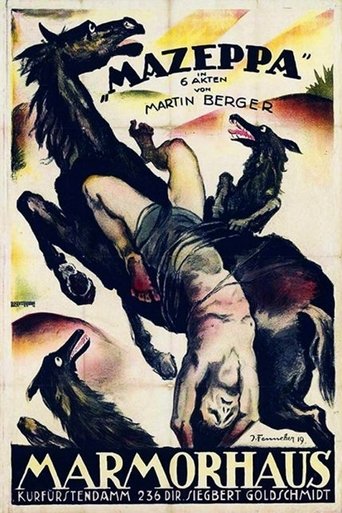
Rudolf Hofbauer
Actor
- Active
- 1919-1919
Films 1
About Rudolf Hofbauer
Rudolf Hofbauer appears to have been a very obscure performer from the silent-cinema era, best documented through his credited appearance in the 1919 film "Mazeppa, Folk Hero of the Ukraine." Available reference sources provide only minimal surviving data, and there is no widely established biographical record that securely identifies his birth, death, or broader career trajectory. He is most likely associated with the Central European silent film milieu of the late 1910s, a period in which many performers worked briefly and left behind scant archival traces. Because the historical record is limited, it is not possible to reconstruct a full life story with confidence without risking conflation with other people of similar name. What can be said with some confidence is that Hofbauer belongs to the large cohort of early screen actors whose careers are preserved primarily through cast listings and filmography references rather than extensive press coverage or memoir literature. His surviving screen credit connects him to a literary-historical subject drawn from the Mazeppa legend, indicating participation in prestige period filmmaking of the era. Beyond that single known film appearance, no securely verifiable detail about his later career, private life, or continued acting activity has been reliably established in standard film-reference sources.
More about Rudolf Hofbauer
In film history
Rudolf Hofbauer's cultural impact is difficult to measure because the extant record preserves him only as a credit in a single known silent film. Even so, his presence in "Mazeppa, Folk Hero of the Ukraine" places him within the international silent-cinema tradition that brought historical and folkloric subjects to the screen for mass audiences. Performers like Hofbauer contributed to the texture and authenticity of early cinema, especially in productions built around legend, costume, and regional history. Although he does not appear to have left behind a widely recognized star persona, his documentation is still valuable to film historians because it helps reconstruct the casting networks and personnel of 1910s European or transnational film production.
Later reputation
Hofbauer's legacy is essentially archival: he remains part of the historical record of silent cinema through his credited screen role. For researchers and database curators, such names are important because they fill gaps in the personnel lists of lost or little-known films and help preserve the completeness of early film history. His name also illustrates how many silent-era actors have survived in memory only as entries in production credits, newspaper indexes, or filmographic catalogs. In that sense, his legacy is representative of the many working performers whose contributions supported the development of feature filmmaking even when their personal biographies were never extensively documented.
Influence
There is no verifiable evidence that Rudolf Hofbauer had a documented influence on later actors or directors in the formal sense. His influence is best understood indirectly, as part of the wider body of silent-era performers whose work helped establish the conventions of historical acting, tableau staging, and screen presence before the sound era. If he performed in a costume or legend-based production, his work would have contributed to the visual language of early epic cinema, but no specific artistic lineage can presently be confirmed.
Off screen
No reliably verified information is available in standard reference sources regarding Rudolf Hofbauer's personal life, including family background, marriages, residence, or non-film occupations. Because the surviving record is so sparse, any attempt to describe his private life in detail would be speculative. He should therefore be treated as an obscure silent-era credit with currently undocumented personal history.
Credits
- Credited appearance in the silent film "Mazeppa, Folk Hero of the Ukraine" (1919)
- Participation in an early prestige historical/legendary screen production during the silent era
- Survival in film history primarily through cast documentation rather than extensive surviving biography
Roles
- Role in "Mazeppa, Folk Hero of the Ukraine" (1919)
Films
Notes
- His known screen history currently consists of a single identified 1919 credit.
- He is associated with a film about the Mazeppa legend, a popular historical and folkloric subject in European culture.
- Because so little survives about him, he is an example of a silent-era actor whose career is preserved mainly by filmography records.
- No reliable birth or death details are currently established in the available reference record.
- He should not be confused with similarly named individuals from other fields or later periods.
- The scarcity of information makes him of interest to archivists and historians working to reconstruct lesser-known silent-cinema personnel.
Questions
Who was Rudolf Hofbauer?
Rudolf Hofbauer was a very obscure silent-era actor known from surviving film documentation, specifically a credit in "Mazeppa, Folk Hero of the Ukraine" (1919). His broader biography is not well preserved in standard reference sources, so he is best understood as a historically documented but little-known screen performer.
What films is Rudolf Hofbauer best known for?
He is best known for "Mazeppa, Folk Hero of the Ukraine" (1919), which is the only securely identified film credit currently associated with him. No other verified film appearances are readily established from the available record.
When was Rudolf Hofbauer born and when did he die?
His birth and death dates are not currently verifiable from reliable surviving sources. The historical record available here does not securely document his birth place, death place, or lifespan.
What awards did Rudolf Hofbauer win?
No awards or nominations are currently documented for Rudolf Hofbauer in the surviving record. Given the scarcity of biographical information, it is not possible to confirm any honors or industry recognition.
What was Rudolf Hofbauer's acting style?
There is no surviving critical description of his acting style in the accessible record. Since he worked in the silent era, any performance would have relied on expressive physical gesture, facial expression, and visual storytelling typical of the period, but no specific stylistic assessment can be verified.
What is Rudolf Hofbauer's legacy in film history?
His legacy is primarily archival and historical: he is one of the many early film performers whose names survive through cast lists rather than extensive biography. That makes him important to film historians trying to reconstruct the personnel and production history of silent cinema.