Films
1 film
About Anthony Rizzo
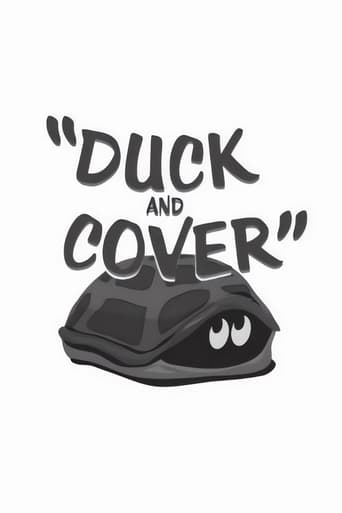
Documentary filmmaker and director who rose to prominence during the early Cold War era, primarily known for his work on government-sponsored educational films. His most significant and enduring work was 'Duck and Cover' (1952), a civil defense film commissioned by the Federal Civil Defense Administration to teach American children how to protect themselves during a nuclear attack. The film featured the animated character Bert the Turtle and became recognizable pieces of Cold War propaganda and educational material. Rizzo's filmmaking style combined animation with live-action sequences to create accessible instructional content for young audiences. While 'Duck and Cover' stands as his most famous achievement, Rizzo was part of a broader movement of filmmakers who created educational and documentary content for government agencies during the 1950s. His work reflected the pervasive anxiety and preparedness culture that characterized American society during the early years of the nuclear age. Though his filmography appears limited, his contribution to Cold War-era media and educational cinema has secured his place in film history.
The Craft
Behind the Camera
Rizzo's directing style emphasized clarity and accessibility in educational filmmaking, combining animated sequences with live-action footage to effectively communicate complex safety procedures to children. His approach was straightforward and didactic, using repetition and simple visual cues to ensure the message would be easily understood and remembered by young audiences. He employed a tone that was both reassuring and urgent, reflecting the dual nature of civil defense messaging during the Cold War.
Milestones
- Directed 'Duck and Cover' (1952) for the Federal Civil Defense Administration
- Created
- Pioneered the use of animation in government instructional materials
- Contributed to Cold War-era civil defense education
Best Known For
Must-See Films
Accolades
Special Recognition
- Film preserved in the National Film Registry (2004) for 'Duck and Cover'
Working Relationships
Worked Often With
Studios
Why They Matter
Impact on Culture
Anthony Rizzo's 'Duck and Cover' has had an extraordinary cultural impact far beyond its original educational purpose, becoming an iconic symbol of Cold War anxiety and government attempts to normalize nuclear preparedness. The film has been extensively analyzed by historians, cultural critics, and film scholars as a window into 1950s American society and the psychological effects of the nuclear age. 'Duck and Cover' has been referenced and parodied in countless films, television shows, and cultural works, from 'The Atomic Cafe' (1982) to 'The Simpsons' and 'South Park.' The film's simple yet memorable message and its animated mascot, Bert the Turtle, have become deeply embedded in American cultural memory, representing both the genuine fears and the sometimes absurd nature of civil defense preparations during the Cold War.
Lasting Legacy
Anthony Rizzo's legacy is intrinsically tied to 'Duck and Cover,' which stands as. While Rizzo himself remains a relatively obscure figure, his work has achieved immortality as a cultural artifact that continues to be studied, analyzed, and referenced decades after its creation. The film's preservation in the National Film Registry in 2004 underscores its historical and cultural importance. Rizzo's contribution to documentary and educational filmmaking demonstrates how government-sponsored media can achieve lasting cultural significance, and his work serves as a primary source for understanding how American society grappled with the threat of nuclear annihilation during the Cold War era.
Who They Inspired
Rizzo's work influenced subsequent generations of educational filmmakers in demonstrating the effectiveness of combining animation with live-action for instructional purposes. 'Duck and Cover' became a template for how to communicate complex and frightening topics to children in an accessible manner. The film's enduring presence in popular culture has influenced countless filmmakers, documentarians, and artists who reference or parody its distinctive style and message. Rizzo's approach to educational filmmaking has been studied in film schools and communication programs as an example of effective propaganda and instructional design, though often with critical examination of its content and historical context.
Off Screen
Very limited personal information is available about Anthony Rizzo, which is not uncommon for documentary filmmakers of his era who worked primarily on government projects. He appears to have been a professional filmmaker who specialized in educational and instructional content rather than a Hollywood celebrity director.
Did You Know?
- 'Duck and Cover' was shown to millions of schoolchildren across America throughout the 1950s and 1960s
- The film's animated character, Bert the Turtle, became an iconic figure of Cold War culture
- The entire film runs only 9 minutes but contained 12 different scenarios demonstrating the duck and cover technique
- Despite its educational purpose, the film has been criticized for oversimplifying the effects of nuclear weapons
- The film was produced for approximately $50,000, a modest budget even for 1952
- Bert the Turtle's shell was shown as capable of protecting him from a nuclear blast, a scientifically inaccurate but pedagogically useful simplification
- The film was distributed free to schools across America as part of the government's civil defense program
- Rizzo used both professional actors and actual schoolchildren in the live-action segments
- The film's catchy jingle 'There was a turtle by the name of Bert' became widely recognized by American children
- The film has been preserved by the Library of Congress and is available for public viewing
In Their Own Words
'You and I don't have shells like Bert the Turtle, but we can get under a table or desk in a hurry.' - Narration from 'Duck and Cover'
'When you see the flash, DUCK AND COVER!' - Key instruction from the film
Frequently Asked Questions
Who was Anthony Rizzo?
Documentary filmmaker and on YTB.my. He specialized in educational and instructional films, particularly those commissioned by U.S. Government agencies during the early Cold War period.
What films is Anthony Rizzo best known for?
Titles linked here include Duck and Cover (1952).
When was Anthony Rizzo born and when did he die?
Specific birth and death dates for Anthony Rizzo are not readily available in historical records, which is not uncommon for documentary filmmakers of his era who worked primarily on government projects rather than in commercial Hollywood cinema.
What awards did Anthony Rizzo win?
While Anthony Rizzo himself did not receive major personal awards, his film 'Duck and Cover' was selected for preservation in the National Film Registry in 2004, recognizing its cultural, historical, and aesthetic significance as an important American film.
What was Anthony Rizzo's directing style?
Rizzo's directing style focused on clear, accessible educational content, combining animation with live-action footage to effectively communicate safety procedures to children. His approach was straightforward and didactic, using simple visual cues and repetition to ensure messages would be easily understood and remembered by young audiences.