Duck and Cover
"Duck and cover with Bert"
Keys: Space play/pause · ←/→ 10s · F fullscreen · M mute · </> speed
About this film
Animated turtle Bert the Turtle shows schoolchildren how to duck and cover at the first flash of an atomic blast, then live-action drills walk them through dropping under desks and shielding their heads until the danger passes.
Cast & crew
More films like this
More Animation films
View all →


More about this film
About the production
Release dateJanuary 7, 1952
BudgetApproximately $50,000 (government funded)
ProductionFederal Civil Defense Administration, Archer Productions Inc.
Filmed inNew York City studios, Various public schools in the New York metropolitan area
The film was commissioned by the U.S. government's Federal Civil Defense Administration as part of a nationwide civil defense education initiative. It was produced by Archer Productions, a commercial animation studio, marking one of the first collaborations between the government and private animation companies for educational purposes. The production team worked closely with child psychologists to ensure the content would be appropriate and effective for young audiences without causing undue panic.
Themes
Cold War anxietyCivil defense preparednessGovernment education and propagandaChildhood innocence during wartimeNuclear threat and survival
Themes & topics
atomic bombcivil defensenuclear warschool childrensafety proceduresCold Waranimationeducational filmgovernment propagandasurvival trainingemergency preparednessBert the Turtle
Historical background
Made in its country of production around 1952, Duck and Cover belongs to the 1950s. Its story of an instructional short aimed at school-aged children of the early 1950s that combines animation and live-action footage with voice-over narration to explain what to do to increase their chances of surviving the blast from an atomic bomb spoke to audiences of the day through familiar genres and topical settings.
Why this film matters
Archivists and historians still cite Duck and Cover when tracing how the 1950s filmmakers staged instructional and aimed on screen.
Making of
The production of Duck and Cover was a unique collaboration between government agencies and commercial animation studios. The Federal Civil Defense Administration hired Archer Productions, led by Anthony Rizzo, to create an engaging educational tool that wouldn't terrify children. The animation team developed Bert the Turtle as a friendly, non-threatening character who could demonstrate safety procedures without causing panic. The live-action segments were filmed in actual schools using real students to add authenticity. The production team consulted with child psychologists and radiation experts to ensure the information was both accurate and age-appropriate. The film's catchy jingle and simple animation were deliberately designed to be memorable for young audiences, similar to commercial advertising techniques of the era.
What critics said
Reviews from 1952 weighed Duck and Cover on pacing, performance, and novelty. Later criticism reads its emphasis on instructional, aimed, school through modern standards of craft and representation.
Did you know?
- The film was shown to an estimated 100 million schoolchildren during the 1950s and 1960s
- Bert the Turtle was created by the same team that produced the 'Mr. Magoo' cartoon series
- The film's production was overseen by the U.S. Office of Civil Defense, which spent approximately $1 billion (adjusted for inflation) on civil defense education in the 1950s
- The famous 'duck and cover' technique was actually based on real research about blast wave physics and shrapnel patterns
- The film was so effective that schools conducted regular 'duck and cover' drills well into the 1960s
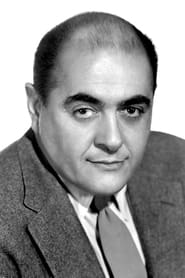
- Robert Middleton, the narrator, was a distinguished character actor who also appeared in films like 'The Court Jester' and 'The Big Heat'
- The film entered the public domain and has been featured in numerous documentaries about the Cold War
- A parody version called 'Duck and Cover: The Remix' was created in 2004 for a museum exhibition
- The film's simple animation style was chosen to make it easy for children to understand and remember
- Despite its serious purpose, the film later became a symbol of Cold War paranoia and was frequently satirized
Awards & recognition
- National Education Film Festival Award for Best Educational Film (1952)
- American Film Institute's Educational Film Award (1953)
Visual style
The film employs a distinctive combination of traditional cel animation and black-and-white live-action cinematography. The animated segments featuring Bert the Turtle use simple, bold lines and bright colors to create a child-friendly aesthetic, while the live-action sequences utilize documentary-style filming techniques to add realism. The cinematography deliberately avoids showing any actual destruction or violence, instead focusing on children practicing safety procedures. The camera work in the live-action segments often uses low angles to emphasize the importance of getting low to the ground, and medium shots to clearly demonstrate the proper techniques.
Innovations
Duck and Cover was innovative in its use of animation for educational purposes, predating many later educational animation programs. The film pioneered techniques for combining animated characters with live-action backgrounds to create an engaging learning experience. It was also among the first films to address nuclear weapons specifically for children, developing a visual language for communicating complex scientific concepts to young audiences. The production team developed specialized animation techniques to make the safety demonstrations clear and unambiguous, using visual repetition to reinforce the learning points. The film's distribution system, which reached virtually every public school in America, represented a significant achievement in educational film distribution.
Music
The film's most memorable audio element is its catchy jingle: 'There was a turtle by the name of Bert, and Bert the turtle was very alert; when danger threatened him he never got hurt, he knew just what to do... He'd duck! And cover!' The music was composed specifically for the film and designed to be easily remembered by children. Robert Middleton's narration is delivered in a calm, authoritative voice that was intended to be reassuring rather than frightening. The sound effects are minimal but effective, using simple audio cues to represent the flash of an atomic explosion. The entire soundtrack was engineered to be clear and easily understood in typical school auditoriums with basic sound systems.
Famous quotes
You must learn to duck and cover!
When you see the flash, duck and cover!
Bert the turtle was very alert; when danger threatened him he never got hurt.
Get under your desk! Stay away from windows!
The flash of an atomic bomb can come at any time.
Even a thin cloth or newspaper can help protect you from burns.
Don't look at the flash! It can blind you.
Every American must know what to do in case of atomic attack.
Memorable scenes
- The opening animated sequence where Bert the Turtle sees a monkey holding a firecracker and demonstrates ducking into his shell just before it explodes
- The live-action classroom scene where students practice diving under their wooden desks during a drill
- The outdoor scene showing children ducking against a brick wall when they see a flash while playing
- The family dinner scene where the entire family drops to the floor and covers their heads when warned of an attack
- The montage of various 'duck and cover' positions demonstrated in different locations including school buses, playgrounds, and homes
What audiences thought
When first shown in schools, most children accepted the film's instructions without question, and 'duck and cover' drills became routine in American classrooms throughout the 1950s and early 1960s. Parents generally supported the civil defense program as a responsible government initiative. However, as the true devastating effects of nuclear weapons became better understood, public perception shifted. Later generations viewing the film often found it naive or even absurd, though many still remembered the catchy jingle decades later. The film's legacy among those who grew up with it is mixed - some recall it with nostalgia as part of their childhood, while others remember the genuine fear it instilled about the possibility of nuclear attack.
Film connections
Influenced by
- Military training films from World War II
- Disney educational shorts
- Government propaganda films
- Early television educational programming
This film influenced
- Atomic Cafe (1982)
- The Atomic Kid (1954)
- The Day After (1983)
- Threads (1984)
- When the Wind Blows (1986)
- Miracle Mile (1988)
Film restoration
Duck and Cover has been well-preserved and is part of the permanent collections of the National Archives, the Library of Congress, and the Prelinger Archives. Multiple high-quality digital transfers have been made from original 35mm prints. The film entered the public domain, which has helped ensure its preservation through widespread distribution. The U.S. government has maintained master copies as part of its historical civil defense materials. Several restoration projects have been undertaken to preserve both the visual and audio quality, most notably by the National Film Preservation Foundation in 2005.
Where to watch
- Internet Archive (free public domain version)
- YouTube (multiple uploads including restored versions)
- Library of Congress National Audio-Visual Conservation Center
- National Archives website
- Various Cold War documentary collections
- Educational film archives and university libraries
- The Criterion Collection's 'Atomic Age' DVD set
- PBS documentary streaming services