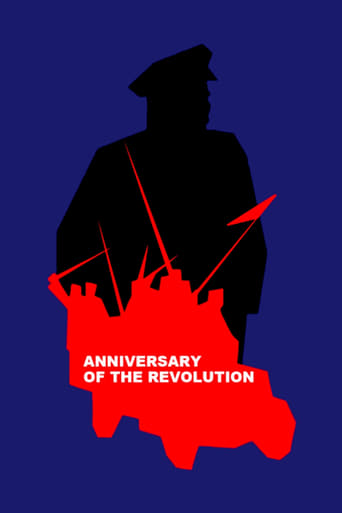
Alexander Kerensky
Actor
Born: May 4, 1881 in Ulyanovsk, Russian Empire Died: June 11, 1970 Active: 1918-1918 (film appearance) Birth Name: Alexander Fyodorovich Kerensky
Films
1 film
About Alexander Kerensky
Alexander Kerensky was born in 1881 in Ulyanovsk, Russia, and rose from a lawyer to become pivotal figures in Russian history. He entered politics as a member of the Trudoviks (moderate labor party) and was elected to the Russian Duma, where he gained recognition as an eloquent orator and progressive reformer. Following the February Revolution of 1917 that overthrew Tsar Nicholas II, Kerensky quickly ascended through the provisional government, serving as Minister of Justice, then Minister of War, and ultimately as Prime Minister and head of the Russian Republic. His tenure as leader was marked by immense challenges, including continuing World War I, economic collapse, and growing political polarization. Kerensky's government was ultimately overthrown by the Bolsheviks during the October Revolution of 1917, forcing him into exile. He spent the remainder of his life abroad, primarily in Paris and later the United States, where he taught, wrote extensively about Russian history, and remained an outspoken critic of the Soviet regime until his death in 1970.
The Craft
On Screen
Not applicable - appeared as himself in historical footage
Milestones
- Elected to the Russian Duma (1912)
- Appointed Minister of Justice after February Revolution (1917)
- Became Minister of War and Navy (1917)
- Appointed Prime Minister and head of the Russian Republic (July 1917)
- Overthrown by Bolsheviks in October Revolution (1917)
- Lived in exile and wrote memoirs (1917-1970)
Best Known For
Iconic Roles
Must-See Films
Accolades
Special Recognition
- Honorary doctorate from various universities
- Recognized as an important historical figure in Russian and world history
Why They Matter
Impact on Culture
Alexander Kerensky's appearance in 'Anniversary of the Revolution' (1918) represents a unique intersection of historical documentation and early cinema. As the deposed leader of Russia, his inclusion in revolutionary-era films served both propagandistic and historical purposes, providing contemporary audiences with visual evidence of the recently overthrown government. His filmed appearances have become invaluable historical documents, offering modern scholars and viewers a direct visual connection to. These early film appearances helped establish the practice of using actual political footage in historical documentaries, a technique that would become standard in historical filmmaking throughout the 20th century.
Lasting Legacy
Alexander Kerensky's legacy in cinema is primarily as a historical subject rather than a filmmaker or actor. His appearance in revolutionary-era films represents some of the earliest documentary footage of a major political leader in crisis. These films have become essential primary sources for historians studying the Russian Revolution, providing visual documentation that complements written accounts. Kerensky's cinematic legacy extends to his role in establishing the precedent for filming political leaders during moments of historical crisis, a practice that would become increasingly important throughout the 20th century. His image in these films has become, representing the brief democratic experiment that preceded Soviet rule in Russia.
Who They Inspired
Kerensky's influence on cinema is indirect but significant. His documented appearances helped establish the importance of preserving political events on film, influencing future documentary filmmakers and newsreel companies. The footage of him and other revolutionary leaders demonstrated the power of moving images as historical documents, contributing to the development of documentary filmmaking as a serious medium. His story has been retold in numerous historical films and documentaries, making him a recurring subject in cinematic treatments of the Russian Revolution, though always portrayed by other actors in these later productions.
Off Screen
Alexander Kerensky married twice during his lifetime. His first marriage was to Olga Lvovna Baranovskaya, with whom he had two sons. After their divorce, he married Lydia Tritton, an Australian journalist, in 1939. Following Lydia's death in 1946, Kerensky moved to the United States where he spent his final years teaching at Stanford University and other institutions. His sons, Oleg and Gleb, both became engineers, with Oleg gaining fame as a prominent structural engineer in Britain.
Education
Graduated from St. Petersburg University with a law degree (1904)
Family
- Olga Lvovna Baranovskaya (1906-1939)
- Lydia Tritton (1939-1946)
Did You Know?
- Alexander Kerensky was not a professional actor but appeared in films as himself due to his historical significance
- His appearance in 'Anniversary of the Revolution' (1918) was likely archival footage rather than a new performance
- Kerensky was one of the first major political leaders to be extensively filmed during a period of governmental crisis
- After being overthrown, he escaped Russia disguised as a sailor
- He lived to be 89 years old, outliving most of his revolutionary contemporaries
- Kerensky was initially buried in London but was reburied in Paris in 1974
- His son Oleg Kerensky designed the Sydney Opera House's roof structure
- He never returned to Russia after his exile, though he was offered the opportunity after Stalin's death
- Kerensky taught Russian history at Stanford University in his later years
- He was portrayed by actor Michael Redgrave in the 1974 film 'The Fall of the Eagles'
In Their Own Words
"The Russian people are suffering from a terrible disease - the disease of freedom." (1917)
"I would rather die than see Russia destroyed." (October 1917)
"History will judge whether I was right or wrong, but I acted according to my conscience." (from his memoirs)
"The revolution has eaten its own children, and now it comes for me." (October 1917, before fleeing)
"Democracy in Russia was not given a fair chance. We had only eight months." (later in exile)
Frequently Asked Questions
Who was Alexander Kerensky?
Russian lawyer and politician who served as the second Prime Minister of the Russian Provisional Government in 1917, between the February and October Revolutions. He was a key figure during.
What films is Alexander Kerensky best known for?
Titles linked here include Anniversary of the Revolution (1918).
When was Alexander Kerensky born and when did he die?
Born May 4, 1881; died June 11, 1970.
What awards did Alexander Kerensky win?
Alexander Kerensky did not receive any acting or film awards as he was not a professional actor. He was recognized with honorary doctorates from several universities for his historical significance and contributions to understanding Russian revolutionary history.
What was Alexander Kerensky's role in the Russian Revolution?
Kerensky served as Prime Minister of the Russian Provisional Government from July to October 1917, attempting to maintain democracy while continuing World War I and dealing with internal crises. His government was overthrown by the Bolsheviks in the October Revolution, forcing him into exile for the rest of his life.