Anniversary of the Revolution
"Between russian revolution and loyalty"
Keys: Space play/pause · ←/→ 10s · F fullscreen · M mute · </> speed
About this film
Beneath silent era life, a chronicle of the Russian Revolution of 1917, from the bourgeois democratic February Revolution to the great socialist October Revolution and the final triumph.
Cast & crew
More films like this

More Documentary films
View all →
More from Dziga Vertov
View all →
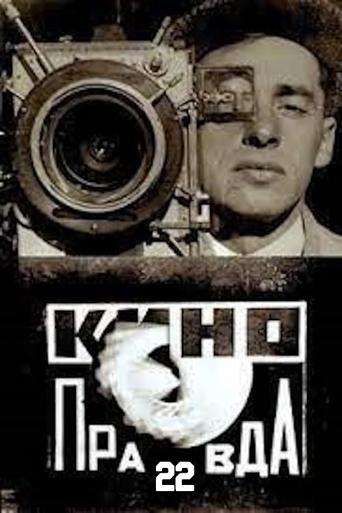
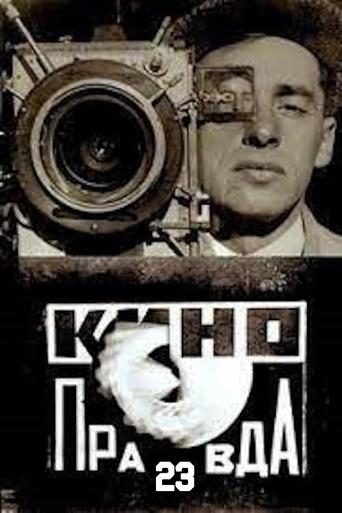
More about this film
About the production
Release dateNovember 7, 1918 (premiered on the first anniversary of the October Revolution)
Box officeUnknown - Box office tracking was not implemented in early Soviet cinema
ProductionNarkompros (People's Commissariat for Education) Film Department
Filmed inMoscow, Soviet Russia, Petrograd (St. Petersburg), Soviet Russia
This was one of Dziga Vertov's earliest directorial efforts, created when he was just 22 years old. The film was produced under extremely difficult conditions, with limited resources, film stock shortages, and the ongoing chaos of the Russian Civil War. Vertov and his small crew had to work with whatever equipment they could find, often using confiscated cameras from pre-revolutionary studios. The production incorporated both authentic newsreel footage from 1917 and newly filmed material, including staged recreations of key events. The film was edited by Vertov himself, who was already developing his theory of 'kino-glaz' or 'camera eye,' believing that the camera could capture truth more objectively than the human eye.
Themes
Revolution and social transformationClass struggle and proletarian triumphHistorical determinism and Marxist teleologyThe power of collective actionThe role of cinema in political education
Themes & topics
Russian RevolutionBolshevikOctober RevolutionDocumentaryPropagandaCivil WarPolitical upheavalHistorical reenactmentNewsreelSoviet UnionLeninKerenskyProvisional GovernmentWinter PalaceRed Guards
Historical background
Audiences in 1918 encountered Anniversary of the Revolution at a point when the silent era was reshaping what movies could say and show.
Why this film matters
Anniversary of the Revolution continues to attract interest because it captures a distinctive silent era approach to character and spectacle.
Making of
The production of Anniversary of the Revolution took place during among the leading tumultuous periods in Russian history, with the country still in the grips of civil war and economic collapse. Vertov, working for the newly formed Film Department of Narkompros, had to scrounge for equipment and film stock, often relying on confiscated materials from the former imperial film industry. The crew worked in makeshift studios, sometimes converting basements and abandoned buildings into editing rooms. Vertov's innovative approach involved combining authentic newsreel footage with staged sequences, a technique that would later become known as docudrama. He employed multiple cameramen to capture different perspectives of the revolutionary events, sometimes having them film the same scene from various angles to create more dynamic editing possibilities. The film's political message was carefully crafted under the guidance of Bolshevik officials, who saw cinema as a crucial tool for educating the largely illiterate population about the revolution's significance. Vertov's wife, Elizaveta Svilova, who would later become his primary editor, worked alongside him during production, beginning their lifelong creative partnership.
What critics said
Later criticism frames Anniversary of the Revolution through restoration quality and its director or studio filmography.
Did you know?
- This was Dziga Vertov's directorial debut, made when he was only 22 years old and had been working in film for less than two years
- The film was commissioned by the Soviet government specifically to celebrate the first anniversary of the October Revolution
- Vertov's real name was Denis Arkadievich Kaufman; 'Dziga Vertov' was a pseudonym meaning 'spinning top' in Ukrainian
- The film features actual footage of Alexander Kerensky, who was then in exile after being overthrown by the Bolsheviks
- Much of the original footage was shot by different cameramen during the actual 1917 events, which Vertov then compiled and edited
- The film was one of the first attempts to create a comprehensive documentary account of a revolution as it was happening
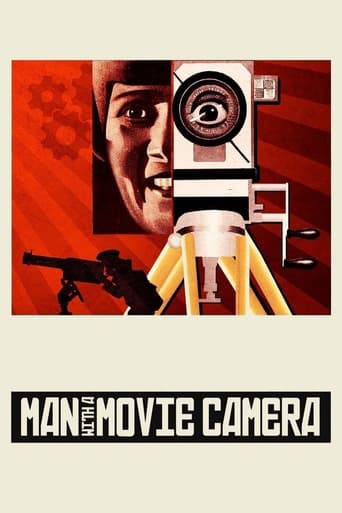
- Vertov would later reject this early work as too conventional, developing more radical techniques in films like 'Man with a Movie Camera' (1929)
- The film was shown in mobile 'agit-trains' that traveled across Soviet Russia to spread revolutionary propaganda to rural areas
- Only fragments of the original film are believed to survive today, as many early Soviet films were lost due to poor preservation conditions
- The film's editing style was influenced by Vertov's background as a journalist and poet, with rapid cuts and juxtapositions creating a rhythmic narrative
Awards & recognition
- None - The Soviet award system for cinema was not yet established in 1918
Visual style
The cinematography in Anniversary of the Revolution reflects both the technical limitations and innovative aspirations of early Soviet filmmaking. Shot on whatever film stock was available, often using repurposed pre-revolutionary cameras, the footage varies considerably in quality and style. Vertov and his team employed a range of techniques including handheld camera work, static shots of crowds, and carefully composed images of revolutionary leaders. The film makes extensive use of actual newsreel footage from 1917, giving it an authentic documentary feel despite some staged sequences. Vertov's emerging theory of 'kino-glaz' is evident in his attempts to capture reality from unexpected angles, including low-angle shots emphasizing the power of the masses and close-ups highlighting the emotions of individual revolutionaries. The contrast between dark, shadowy images of the old regime and bright, clear footage of Bolshevik rallies creates a visual metaphor for the transition from oppression to liberation. Despite technical imperfections, the cinematography succeeds in conveying the scale and energy of the revolution, using movement and composition to create a sense of historical momentum.
Innovations
Anniversary of the Revolution pioneered several technical and formal innovations that would influence documentary filmmaking for decades. Vertov's approach to combining authentic newsreel footage with staged material created a hybrid form that blurred the line between documentary and fiction, a technique that would become known as docudrama. The film's editing style, with its rapid cuts and juxtapositions of different perspectives, represented an early exploration of montage theory that Vertov would later develop more fully. Vertov also experimented with multiple camera angles for the same scene, creating more dynamic visual sequences than was typical in contemporary documentary work. The film's use of intertitles to provide historical context and political commentary established a template for educational documentary films. Despite the technical limitations of the period, Vertov managed to create a coherent narrative from disparate footage sources, demonstrating remarkable skill in post-production. The film also represents an early example of state-sponsored documentary production, establishing institutional practices that would be adopted by film industries worldwide.
Music
As a silent film, Anniversary of the Revolution was originally presented with live musical accompaniment, typically performed by pianists or small ensembles in theaters. The score likely included popular revolutionary songs of the period, such as 'The Internationale' and 'Varshavianka,' which audiences would have recognized and sung along with. Some screenings may have featured original compositions specifically written for the film, though no written scores survive. The musical accompaniment was designed to enhance the emotional impact of key scenes, with martial music accompanying the October Revolution and more somber melodies for periods of struggle. In later years, various composers have created new scores for surviving fragments of the film, attempting to recreate the musical atmosphere of early Soviet cinema. The absence of recorded sound forced Vertov to rely entirely on visual storytelling, a limitation that actually contributed to the development of his innovative cinematic language.
Famous quotes
The camera eye is more perfect than the human eye for exploring the chaos of visual phenomena" - Dziga Vertov's theoretical statement that informed his approach to this film
We are proclaiming the old art dead and the new art born" - From the film's intertitles, reflecting the revolutionary ethos
The camera is a mechanical eye that perfects the natural eye" - Vertov's manifesto-like statement about the nature of cinema
History moves forward not by chance but by necessity" - From the film's Marxist interpretation of events
The working class has seized power and will not relinquish it" - Political message conveyed through the film's narrative
Memorable scenes
- The storming of the Winter Palace sequence, which combines authentic footage with staged elements to create defining images of the Russian Revolution ever captured on film
- The appearance of Alexander Kerensky addressing the crowds, providing a rare moving image of this key historical figure
- The mass rally scenes showing thousands of workers and soldiers with red flags, emphasizing the scale of popular support for the revolution
- The contrast between dark, shadowy images of Tsarist oppression and bright, triumphant footage of Bolshevik victory
- The final anniversary celebration sequence, showing the new Soviet society celebrating its first year of existence
What audiences thought
The film was received enthusiastically by Soviet audiences in 1918, who were hungry for images of their recent revolutionary triumph. Screenings often became political events, with audiences cheering the appearances of revolutionary heroes and booing the representatives of the old regime. The film was particularly effective in reaching rural populations through the agit-train program, where mobile cinemas brought the film to peasants who had never before seen motion pictures. Many viewers reportedly wept during scenes of the October Revolution, seeing their own struggles and aspirations reflected on screen. However, the film's impact was limited by the practical difficulties of distribution during the civil war, with many regions unable to receive copies due to damaged infrastructure and fighting. Illiteracy among much of the population also limited understanding of the film's more complex political arguments, though the visual storytelling was generally accessible. Despite these challenges, the film succeeded in its primary goal of reinforcing popular support for the Bolshevik regime and celebrating the revolution as the defining moment of the new Soviet era.
Film connections
Influenced by
- Soviet avant-garde art movements
- Marxist-Leninist theory
- Dziga Vertov's background in journalism
- Eisenstein's theories of montage (later reciprocal influence)
- European newsreel traditions
- Russian revolutionary literature
- Constructivist art principles
- Futurist cinema experiments
This film influenced
- Man with a Movie Camera (1929)
- Three Songs About Lenin (1934)
- The Fall of the Romanov Dynasty (1927)
- Turksib (1929)
- October: Ten Days That Shook the World (1928)
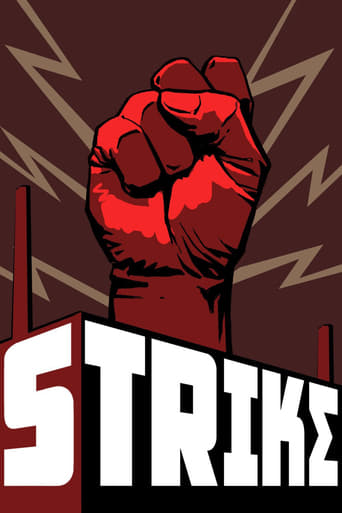
- Strike (1925)
- Battleship Potemkin (1925)
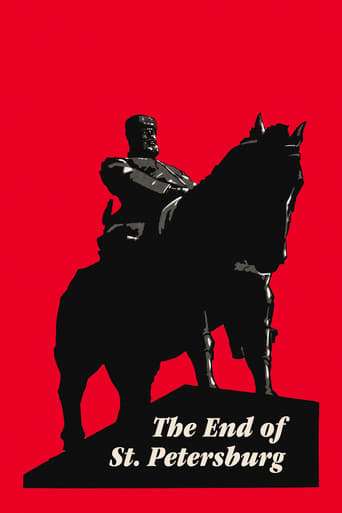
- The End of St. Petersburg (1927)
Film restoration
Anniversary of the Revolution is considered a partially lost film, with only fragments and excerpts surviving in various archives. The complete original version is believed to have been lost due to the poor preservation conditions of early Soviet films and the degradation of nitrate film stock. Surviving footage is held in the Russian State Film Archive (Gosfilmofond) and has been partially restored by film historians. Some fragments have been incorporated into documentaries about Vertov and the history of Soviet cinema. The loss of this early Vertov work is particularly unfortunate given its historical significance as his directorial debut and its documentation of the immediate aftermath of the revolution. Efforts continue to locate missing footage in private collections and international archives, though the chances of finding a complete print are considered remote.
Where to watch
- Due to its partially lost status, the complete film is not commercially available. Surviving fragments can sometimes be found in specialized film archives and museum collections. Some excerpts are included in documentaries about Dziga Vertov and early Soviet cinema, such as 'Vertov: The Man with the Movie Camera' (1995) and 'Cine Manifesto' (2008). Film enthusiasts may be able to view surviving footage at the Russian State Film Archive in Moscow or at special screenings during film festivals focusing on cinema history. The British Film Institute and the Museum of Modern Art in New York occasionally include fragments in their Vertov retrospectives. Online platforms specializing in rare films may occasionally host clips, though these are typically of poor quality given the age and condition of the surviving material.