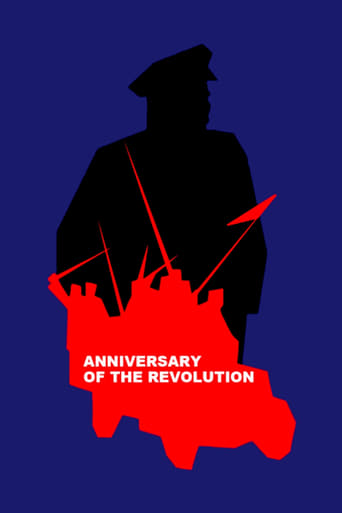
Films
1 film
About Mikhail Stakhovich
Actor from the very early period of Soviet cinema, known primarily for his appearance in the 1918 film 'Anniversary of the Revolution.' His career appears to have been exceptionally brief, with documented film work limited to a single year during the tumultuous period following the Russian Revolution. As one of the actors in the nascent Soviet film industry, Stakhovich contributed to the cinematic documentation of political transformations of the 20th century. Unfortunately, detailed records about his life, training, and broader career have been largely lost to history, a common fate for many early film actors from this era. His work represents the foundational period of Russian and Soviet cinema, when filmmakers were first exploring the medium's potential for political and artistic expression.
The Craft
Milestones
- Appeared in 'Anniversary of the Revolution' (1918) during the foundational period of Soviet cinema
Best Known For
Must-See Films
Why They Matter
Impact on Culture
Mikhail Stakhovich represents the generation of Soviet actors who helped establish the foundation of Russian cinema during its most formative period. His participation in 'Anniversary of the Revolution' places him among the first performers to appear in films specifically created to document and celebrate the Bolshevik Revolution, a genre that would become central to Soviet cultural policy. While his individual contribution may have been modest, he was part of the broader movement that transformed cinema from entertainment into a tool for political education and social change in the Soviet Union.
Lasting Legacy
The legacy of Mikhail Stakhovich is primarily historical, representing the countless actors and crew members who participated in the birth of Soviet cinema but whose names have been largely forgotten. His work in 1918 places him at the very beginning of what would become one of the world's most influential national cinemas. While individual films and performances from this period are often lost or fragmentary, the collective efforts of actors like Stakhovich helped establish the artistic and political foundations that would later be built upon by legendary Soviet directors such as Eisenstein, Pudovkin, and Vertov.
Who They Inspired
Due to the brevity of his documented career and the lack of extensive records about his work, it is difficult to trace Mikhail Stakhovich's direct influence on subsequent generations of actors. However, as an early participant in Soviet cinema, he contributed to the development of acting styles and techniques that would evolve alongside the theoretical innovations of Soviet filmmakers. His work represents the experimental period before the establishment of the more formalized acting methods that would characterize later Soviet cinema.
Off Screen
Very little is documented about Mikhail Stakhovich's personal life, which is typical for many actors from the very early Soviet cinema period. The chaos of the Russian Revolution and subsequent civil war, combined with the experimental nature of early Soviet filmmaking, meant that detailed records about many film personnel were not preserved.
Did You Know?
- Appeared in cinema during the first year after the Bolshevik Revolution, a time of enormous political and social upheaval
- His film active years covered only one documented year, 1918, making him
- Worked during the period when Soviet cinema was just beginning to establish itself as a national industry
- Participated in films that were among the first to explicitly celebrate the Russian Revolution
- His name appears in film databases but with minimal biographical information, typical of many early Soviet film workers
Frequently Asked Questions
Who was Mikhail Stakhovich?
Russian/Soviet with credits in this catalog.' His documented career was exceptionally brief, limited to a single year during the foundational period of Soviet cinema.
What films is Mikhail Stakhovich best known for?
Titles linked here include Anniversary of the Revolution (1918).
When was Mikhail Stakhovich born and when did he die?
Specific birth and death dates for Mikhail Stakhovich are not documented in available historical records, which is common for many early Soviet film actors whose detailed biographical information has been lost to time.
What awards did Mikhail Stakhovich win?
There are no documented awards or nominations for Mikhail Stakhovich, which is typical for actors from the very early period of Soviet cinema before formal award systems were established.
What was Mikhail Stakhovich's acting style?
Due to the lack of surviving films and detailed documentation about his work, Mikhail Stakhovich's specific acting style cannot be determined. He would have worked during the transitional period when Russian cinema was developing its unique artistic voice.