Films
1 film
About Marjorie Kay
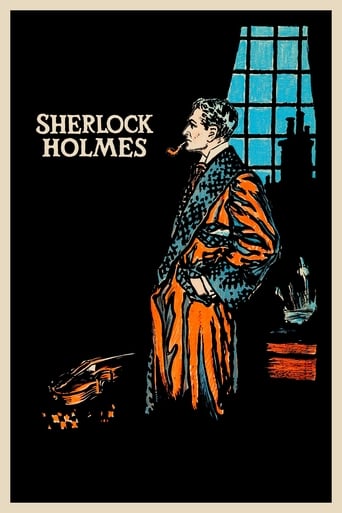
This archive lists one role for Marjorie Kay: Sherlock Holmes (1916). Her most notable and perhaps only significant role was in the 1916 film adaptation of Sherlock Holmes, which starred William Gillette in the title role. This film was particularly significant as it was one of the earliest feature-length adaptations of Arthur Conan Doyle's famous detective character. Kay played Alice Faulkner, a key character in the story who becomes involved in Holmes' investigation. The film itself was considered lost for decades until a complete copy was discovered in France in 2014, making her performance accessible to modern audiences for the first time in nearly a century. Her career appears to have been limited to this single production, as no other film credits have been documented for her before or after 1916.
The Craft
Milestones
- Appeared as Alice Faulkner in Sherlock Holmes (1916)
- Participated in one of the earliest feature-length Sherlock Holmes adaptations
Best Known For
Iconic Roles
Must-See Films
Working Relationships
Worked Often With
Studios
Why They Matter
Impact on Culture
Marjorie Kay's cultural impact is primarily tied to her participation in the historically significant 1916 Sherlock Holmes film. Though her career was brief, her performance as Alice Faulkner contributes to the historical record of early cinema and the evolution of Sherlock Holmes adaptations on screen. The rediscovery of this film in 2014 has renewed interest in her work and the contributions of other early film actors who might otherwise have been forgotten. Her role represents the typical casting choices of the silent era, where actresses often played damsels in distress or romantic interests to the male leads.
Lasting Legacy
Marjorie Kay's legacy is that of a representative actress from the earliest days of feature filmmaking in America. While she did not achieve lasting fame, her preserved performance in Sherlock Holmes (1916) serves as an important artifact of silent cinema history. The film's rediscovery has ensured that her work, however brief, will be studied by film historians and appreciated by silent film enthusiasts. She represents the countless actors and actresses from the silent era whose contributions to cinema, though small, collectively shaped the foundation of the film industry.
Who They Inspired
Given her extremely brief career, Marjorie Kay did not have a significant influence on other actors or directors. However, her work in the 1916 Sherlock Holmes film contributes to the understanding of early 20th century acting techniques and the evolution of screen performance during the transition from stage to film. Her performance style, typical of the period, helps modern scholars study how theatrical acting techniques were adapted for the silent screen medium.
Off Screen
Very little is known about Marjorie Kay's personal life, as her film career was extremely brief and she did not achieve the level of fame that would have generated extensive biographical documentation. Like many early film actors who had short careers, personal details about her life outside of her single known film appearance have been lost to time.
Did You Know?
- The 1916 Sherlock Holmes film was considered lost for nearly 100 years until a complete copy was discovered at the Cinémathèque Française in Paris in 2014
- William Gillette, who played Sherlock Holmes in the film, was the actor most associated with the role on stage before Basil Rathbone
- The film was produced by Essanay Studios, one of the early major film production companies
- Marjorie Kay played Alice Faulkner, a character created specifically for the stage adaptations and not appearing in Conan Doyle's original stories
- The 1916 film was the first feature-length Sherlock Holmes movie made in America
- The film's rediscovery was announced at the San Francisco Silent Film Festival in 2014
- Essanay Studios was also famous for producing early Charlie Chaplin films
- The film was directed by Arthur Berthelet, who primarily worked as a director during the 1910s
Frequently Asked Questions
Who was Marjorie Kay?
Silent film actress who had an extremely brief career in 1916, best known for playing Alice Faulkner in the feature film Sherlock Holmes starring William Gillette. Her career appears to have been limited to this single production, making her one of many early film actors whose work was nearly lost to history.
What films is Marjorie Kay best known for?
Titles linked here include Sherlock Holmes (1916).
When was Marjorie Kay born and when did she die?
Unfortunately, specific birth and death dates for Marjorie Kay are not documented in historical records, which is common for many actors who had very brief careers in the early silent film era. Her entire known film career was confined to the year 1916.
What awards did Marjorie Kay win?
Marjorie Kay did not receive any documented awards or nominations for her work. The Academy Awards were not established until 1929, well after her brief career had ended, and formal award systems for film achievements were not common during the silent era.
What was Marjorie Kay's acting style?
Based on the typical acting style of the 1916 period, Marjorie Kay likely employed the theatrical, exaggerated gestures and facial expressions common to silent film acting of that era. Her role as Alice Faulkner would have required the dramatic techniques necessary to convey emotion and story without spoken dialogue.