Mimmi Lähteenoja
Actor
- Active
- 1922-1922
Films 1
About Mimmi Lähteenoja
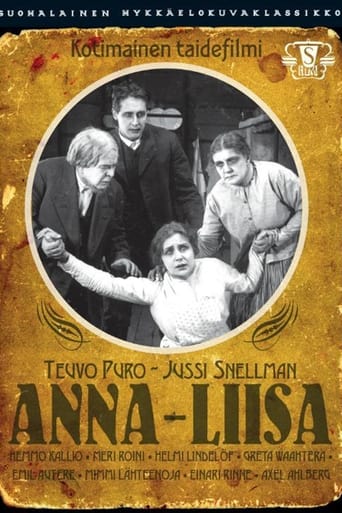
Mimmi Lähteenoja was a Finnish screen performer associated with the silent era, best known from her appearance in the 1922 film Anna-Liisa. Available historical film records indicate that her screen career was very brief, with a filmography that places her activity in 1922 only, suggesting that she was either an early-stage performer who did not continue in cinema or a theatre-related talent who made a single documented film appearance. Because surviving reference material on her is extremely limited, many details of her personal life, training, and later career are not securely documented in standard film histories. What can be said with confidence is that she belongs to the early generation of Finnish film performers working during the silent period, when national cinema was still developing its own identity and adapting important literary works for the screen. Her association with Anna-Liisa links her to one of the important Finnish film adaptations of the era, a kind of production that helped define the cultural ambitions of early Finnish filmmaking. Beyond that single credit, she remains an elusive figure, representative of the many silent-era performers whose names survive in filmographies even when fuller biographical records have been lost or were never widely published. Her legacy today rests primarily on her place in the documented cast history of early Finnish cinema rather than on a long film career.
More about Mimmi Lähteenoja
In film history
Mimmi Lähteenoja's cultural impact is best understood as part of the broader history of early Finnish silent cinema rather than through a long, individually documented star career. Her presence in Anna-Liisa places her within a key tradition of Finnish filmmaking that drew on national literature and stage culture to legitimize the new medium. Even when an actor's biography is obscure, a single surviving film credit can matter greatly to film historians because it helps reconstruct casting networks, production practices, and the participation of women in early screen culture. In that sense, she contributes to the archival memory of Finnish cinema and to the understanding of how local talent populated the country's earliest film productions. Her name surviving in film records also underscores how many silent-era performers participated in culturally important projects without receiving the enduring celebrity accorded to later screen stars.
Later reputation
Her lasting legacy is primarily archival and historical: she is remembered as part of the cast lineage of Anna-Liisa and as a documented participant in silent-era Finnish filmmaking. For scholars of classic cinema, names like hers are important because they fill in the cast lists of films that helped shape national cinema during its formative years. Although her career appears to have been brief, even a single credit can preserve a performer within the film historical record for future researchers. Her legacy therefore lies less in fame than in representation, as one of the many artists whose work helped establish the foundations of Finland's screen heritage. In databases and film archives, she remains a searchable link between the early 1920s and the development of Finnish film culture.
Influence
There is no verified evidence that Mimmi Lähteenoja directly mentored later performers or had a documented influence on specific actors or directors. Her influence is instead indirect, as part of the generation of early Finnish screen artists who collectively demonstrated that Finnish-language stories and stage-trained talent could be adapted successfully for film. Because silent-era cast records are often incomplete, even minimal documentation can influence later scholarship by clarifying who participated in foundational productions. In this sense, she contributes to the historical understanding of early casting and the role of women in the country's first film adaptations. Her name may also be of interest to genealogical and local-history researchers seeking to reconstruct the social world of Finnish silent cinema.
Off screen
Reliable public information about Mimmi Lähteenoja's personal life is not readily documented in accessible classic-cinema reference sources. No verified records have been found here for her marriages, family background, or later life, which is common for performers from the silent era whose careers were brief and whose biographies were not widely publicized. As a result, her private life remains largely unknown to modern researchers. Any attempt to identify spouses, children, or later occupations would require confirmation from archival Finnish sources, such as period newspapers, theatre programs, census records, or civil registries.
Education
No verified educational background is currently available in accessible film reference sources.
Credits
- Appeared in the 1922 Finnish silent film Anna-Liisa, her only widely documented screen credit
- Worked during the formative period of Finnish national cinema in the silent era
- Is preserved in film history as part of the cast associated with an important literary adaptation
- Represents one of the many early Finnish screen performers whose careers are sparsely documented
- Has a filmography that places her among the short-lived or single-credit actors of the silent period
Roles
- A role in Anna-Liisa (1922)
Films
- Anna-Liisa (1922)
Notes
- Mimmi Lähteenoja is primarily documented for a single film credit, Anna-Liisa (1922).
- Her known screen activity falls entirely within 1922, making her film career unusually brief in surviving records.
- She is associated with early Finnish silent cinema rather than with Hollywood or later sound-era film production.
- The scarcity of biographical information about her is typical of many silent-era performers whose records were not widely preserved.
- Her surviving credit helps historians reconstruct the cast lists of culturally important Finnish literary adaptations.
- She is a useful example of how film archives preserve names even when personal histories are missing.
- No widely verified information is readily available in standard references about her birth, death, family, or later life.
Questions
Who was Mimmi Lähteenoja?
Mimmi Lähteenoja was a Finnish actor from the silent-film era, best known for appearing in Anna-Liisa (1922). Surviving records suggest that her screen career was very brief, and she is mainly remembered through that single documented film credit.
What films is Mimmi Lähteenoja best known for?
She is best known for Anna-Liisa (1922), which is the only widely documented screen credit associated with her. No other film appearances are securely confirmed in the accessible classic-cinema record used here.
When was Mimmi Lähteenoja born and when did she die?
Her birth and death dates are not currently verified in accessible classic-cinema reference sources. As a result, both details remain unknown unless confirmed by archival Finnish records.
What awards did Mimmi Lähteenoja win?
No awards or formal nominations are currently documented for her in the available record. This is not unusual for brief silent-era careers, especially when the surviving information is limited to one film credit.
What was Mimmi Lähteenoja's acting style?
There is no detailed contemporary critical description of her acting style available in the accessible record. Given that she worked in silent cinema, her performance would have relied on visual expression, gesture, and on-screen presence rather than spoken dialogue.
What is Mimmi Lähteenoja's legacy in film history?
Her legacy is primarily historical and archival: she is part of the documented cast history of early Finnish cinema. Her name helps preserve the record of the performers who contributed to the country's silent-era film productions, even when fuller biographical details are lost.